Getting into a car accident with an ambulance can feel different from a normal crash. The ambulance may have been responding to an emergency, transporting a patient, moving through an intersection, or using lights and sirens. That can make a car accident claim more complicated, but it does not automatically mean you are at fault or that you cannot recover compensation. While ambulances are allowed to use certain traffic privileges during emergency responses, those privileges are not unlimited, and understanding what to do in the event of an accident is crucial.
Quick Answer: Are Ambulance Accidents Handled Differently From Regular Car Accidents?
Car accidents with ambulances are treated differently, but only under certain circumstances. If the ambulance was not responding to an emergency, the accident may be handled much like any other motor vehicle collision and the ambulance driver and the ambulance company may be liable for the accident.
However, if the ambulance was responding to an emergency with lights and sirens, the legalities becomes more fact-specific. Emergency vehicle drivers may have limited privileges to proceed through red lights, exceed speed limits, or move around traffic, but they still must slow down when necessary and take reasonable steps to prevent a collision, if not they can be held liable for the accident.
What Should You Do Immediately After an Ambulance Accident?
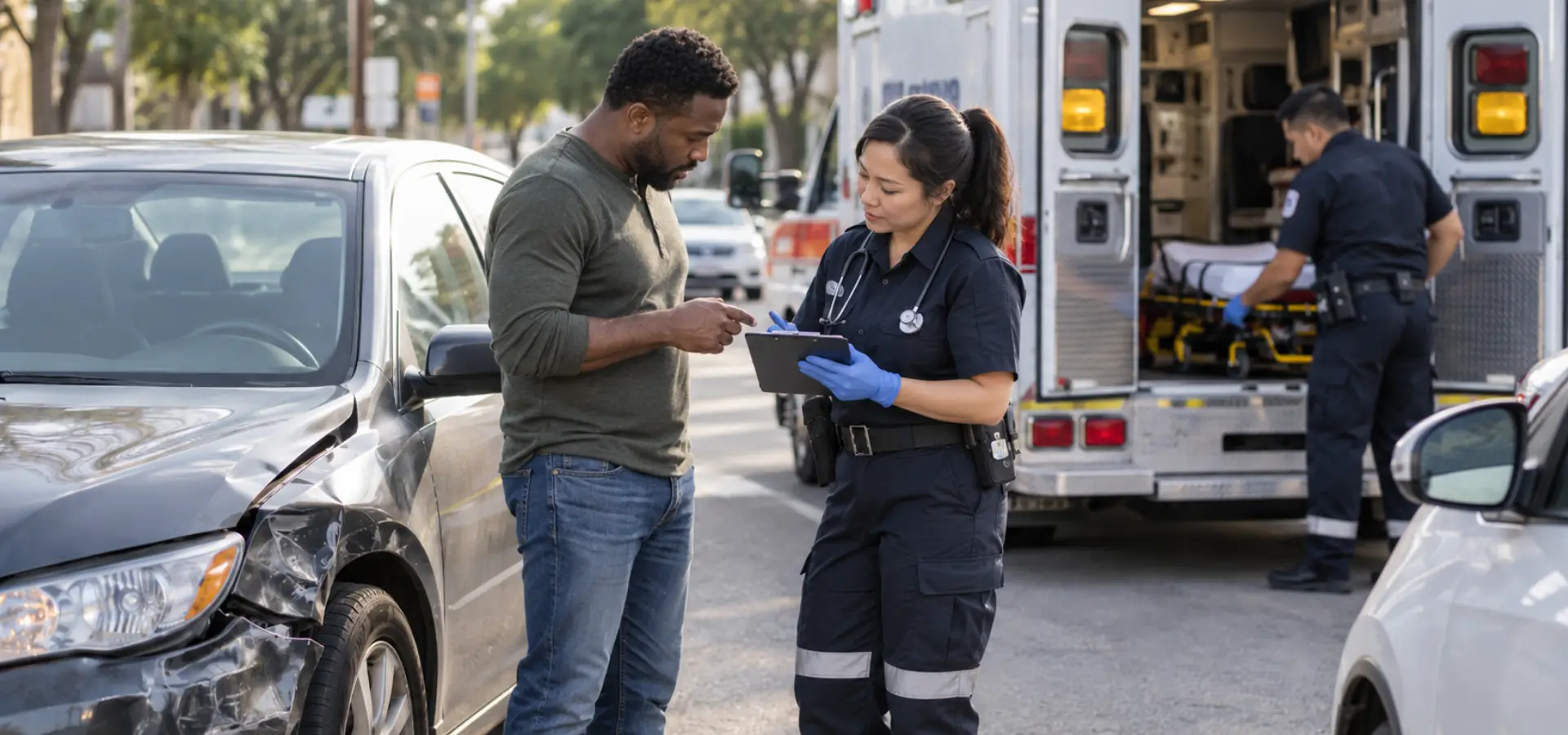
If you are involved in a crash with an ambulance, your first priority should be safety. Move out of traffic if you can do so safely, check yourself and others for injuries, and call 911. Even though an ambulance is already at the scene, you should still report the collision and make sure a separate law enforcement response is requested.
Depending on the circumstances, the ambulance crew may need to continue transporting a patient or respond to an existing emergency, so another unit may be sent to handle medical care or transport. If you are physically able, try to gather the following information:
- The ambulance agency or company name
- The ambulance unit number
- The ambulance license plate
- The ambulance driver’s name, if available
- Whether the ambulance had lights or sirens activated
- The direction the ambulance was traveling
- The intersection, lane, or roadway where impact occurred
- Witness names and contact information
- Photos of vehicle damage, skid marks, signals, lane positions, and road conditions
- Any nearby cameras, including businesses, traffic cameras, dashcams, or doorbell cameras
What if You Hit an Ambulance While a Patient Is Inside?
If you hit an ambulance while a patient is inside, do not panic or try to leave the scene. Call 911, stay where law enforcement can find you, and follow instructions from emergency responders, because the patient’s care may need to continue immediately.
Another ambulance may arrive to complete the transport, or the original ambulance may leave if the patient’s condition requires urgent care. If that happens, write down as much identifying information as possible before the ambulance leaves. Furthermore, you should not interfere with medical care or argue with paramedics at the scene.
What Does it Mean from a Legal Standpoint?
From a liability standpoint, the fact that a patient was inside does not automatically decide fault. The crash still has to be evaluated based on how it happened, whether the ambulance was responding to an emergency, whether lights and sirens were used, whether other drivers yielded properly, and whether anyone acted negligently.
For instance, in Lopez v. City of Los Angeles (2017), the plaintiffs Ubaldo and Leobardo Lopez successfully argued that their injuries were due to the negligence of a city ambulance driver when they caused an accident without turning on the emergency lights or sirens while on the way to the hospital.
Who Can Be Liable for an Ambulance Accident?
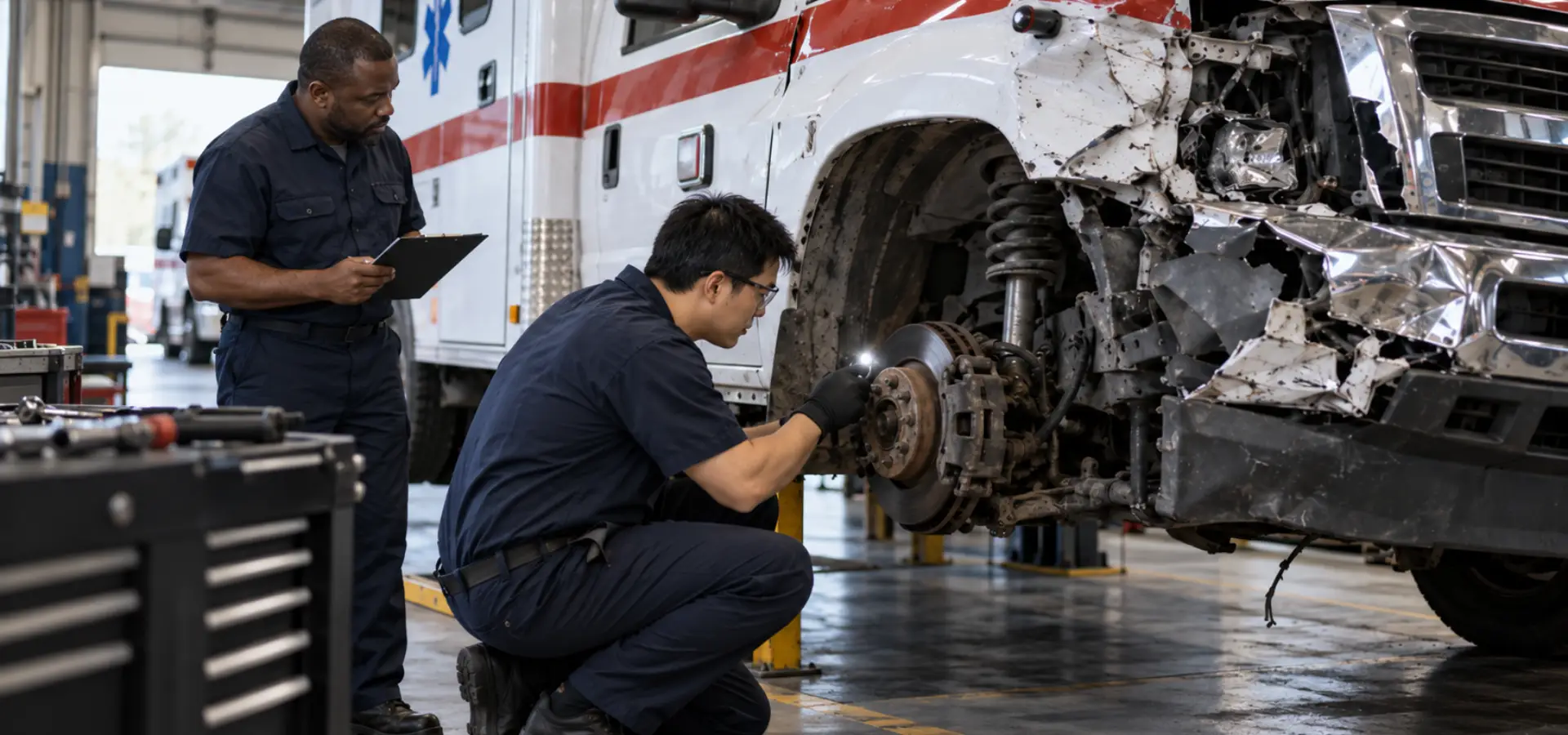
Liability depends on who caused the crash and who operated the ambulance. While the ambulance’s emergency status matters, it does not give the driver complete immunity. As such, potentially responsible parties may include:
- The ambulance driver
- A private ambulance company
- A city, county, fire department, or public EMS agency
- Another negligent driver who caused the ambulance to swerve or collide
- A maintenance company responsible for brakes, tires, lights, or mechanical systems
- A vehicle or equipment manufacturer if a defect contributed to the crash
- A hospital or medical transport provider, depending on the relationship and facts
However, in many ambulance accident cases, more than one party may share fault like for example, an ambulance driver may have entered an intersection too quickly while another driver failed to yield.
How Fault Is Determined in an Ambulance Accident
Fault in an ambulance accident usually depends on the evidence and some important questions may include:
- Was the ambulance responding to an emergency call?
- Were emergency lights activated?
- Was the siren used when reasonably necessary?
- Did the ambulance slow before entering an intersection?
- Did other drivers have enough time to yield?
- Was the ambulance speeding beyond what was reasonable?
- Did the ambulance driver check for cross traffic?
- Was the ambulance transporting a patient?
- Was the driver distracted, fatigued, or poorly trained?
- Did mechanical failure contribute to the crash?
As emergency vehicle cases often come down to details, a few seconds of video footage, a dispatch log, or a witness statement can change the entire claim. If you are involved in an ambulance accident, it is important to seek legal representation regarding the matter, because depending on state laws, it may affect a person’s chances of recovering compensation.
State-by-State Differences in Ambulance Accident Claims
Most states give emergency vehicles limited traffic privileges, but the exact rules, warning-signal requirements, and public-entity claim procedures vary. These differences matter if the ambulance was operated by a government agency.
The most important takeaway: emergency status changes the legal analysis, but it does not erase liability. If the ambulance driver acted carelessly, entered an intersection unsafely, failed to use proper warning signals, or drove with reckless disregard, you may still have a claim.
What if the Ambulance Driver Was Not Using Lights or Sirens?
If an ambulance was not using lights or sirens, that can be an important fact that could alter liability. In many states, emergency vehicle privileges depend on whether the vehicle was responding to an emergency and using required warning signals.
For example, California Vehicle Code § 21055 requires a siren “as may be reasonably necessary” and a lighted red lamp visible from the front for the emergency vehicle exemptions to apply. If an ambulance entered an intersection without proper warning, the driver or agency may have a harder time arguing that emergency privileges applied. However, the absence of lights or sirens does not automatically prove liability, as the full investigation still needs to consider where the ambulance was going, whether it was on an emergency call, how fast each vehicle was moving, and whether other drivers had time to react.
What if the Ambulance Was Privately Operated?

Private ambulance companies can still be sued like other any other private business especially if their driver caused a crash through negligence. A private company may be responsible for the driver’s conduct if the driver was working at the time of the collision and if it they exhibited any of the following actions:
- Negligent hiring
- Poor driver training
- Unsafe emergency response policies
- Failure to maintain the ambulance
- Fatigue-related scheduling practices
- Failure to supervise employees
- Violation of company safety rules
What if the Ambulance Was Operated by a City, County, or Fire Department?
If the ambulance was operated by a public agency, the claim may involve government claim requirements which can be strict, and missing a deadline can seriously harm your case. For example, in California, injury claims against public entities require a government claim to be presented within six months. Meanwhile states like Arizona and Colorado has a 180-day notice-of-claim rule for claims against public entities and employees.
Because these deadlines are shorter than the ordinary personal injury statutes of limitations, you should not wait to speak with an attorney if the ambulance belonged to a city, county, fire department, public hospital, or government EMS provider.
Injured in a Car Accident With an Ambulance?

A crash with an ambulance is not automatically your fault, and emergency vehicle status does not give an ambulance driver unlimited protection. These cases require a close look at lights, sirens, speed, intersection conduct, dispatch records, video footage, agency ownership, and government-claim deadlines.
West Coast Trial Lawyers can investigate the crash, preserve key evidence, identify the ambulance operator, and determine whether a private company, public agency, driver, or third party may be responsible.
Call (213) 927-3700 or use our online contact form to schedule a free consultation.