In the days after a car accident, you are juggling a dozen things at once: doctor visits, a wrecked vehicle, insurance adjusters calling, and the slow realization that this is going to be a long process. Somewhere in that pile of to-dos is one document that quietly matters more than almost any other: the police report.
It is the official record of what happened, and it shapes how your insurance claim and any injury case unfold. The good news is that getting it in Washington is more straightforward than in most states, once you understand how Washington handles these records.
How Do I Get a Copy of a Police Report in Washington State?
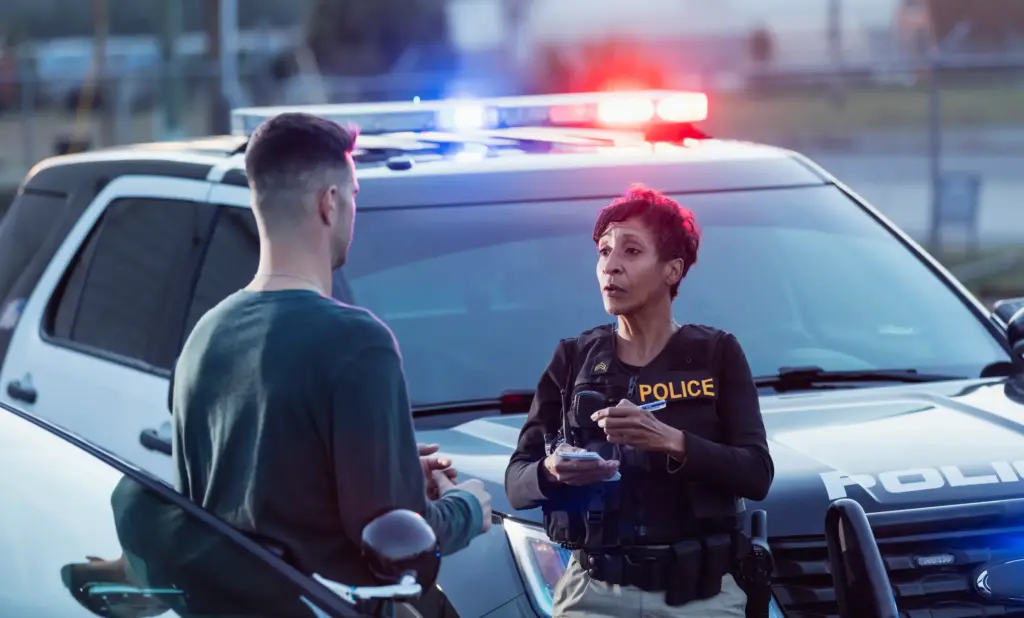
In Washington, the Washington State Patrol (WSP) is the central custodian for every collision report in the state. It does not matter whether the Seattle Police Department, the King County Sheriff’s Office, a small-town police department, or a WSP trooper responded to your crash. Every law enforcement agency in Washington is required to forward its collision reports to WSP.
What that means is you do not have to track down the specific department that showed up at your accident. No matter the county or jurisdiction, the report ends up in one place, and that is where you request it. This is a meaningful contrast with many other states, where you have to chase down the individual responding agency.
The Three Ways to Request Your Report
WSP keeps these reports on file for 10 years, so even older records are retrievable. With that in mind, the WSP gives you three options to get a copy. Notably, they will not take requests over the phone, so plan on one of these:
- Online (the fastest option)-Use the Washington State Patrol Requests for Electronic Collision Records (WRECR) system. You can search for your report for free by entering the name of one involved party and the date or date range of the collision. Once you find it, you add it to your cart, confirm your relationship to the accident, and pay the fee. You receive an email confirmation and the report shortly after.
- By mail- Complete WSP’s Request for Copy of Collision Report form and mail it with a check or money order for the fee to the Collision Records Section, P.O. Box 42628, Olympia, WA 98504.
- In person- You can visit WSP in Olympia and use the lobby kiosk to search for and order your report. Staff are there to help you locate it, though they will not place the order for you, and the kiosk accepts credit cards only.
Is There a Fee to Get a WA Crash Report?
The current fee for a collision report is $10.50. If you need a certified copy (sometimes required for legal purposes), WSP can issue one, but expect roughly five to seven business days for that version.
How Long Until the Report Is Ready
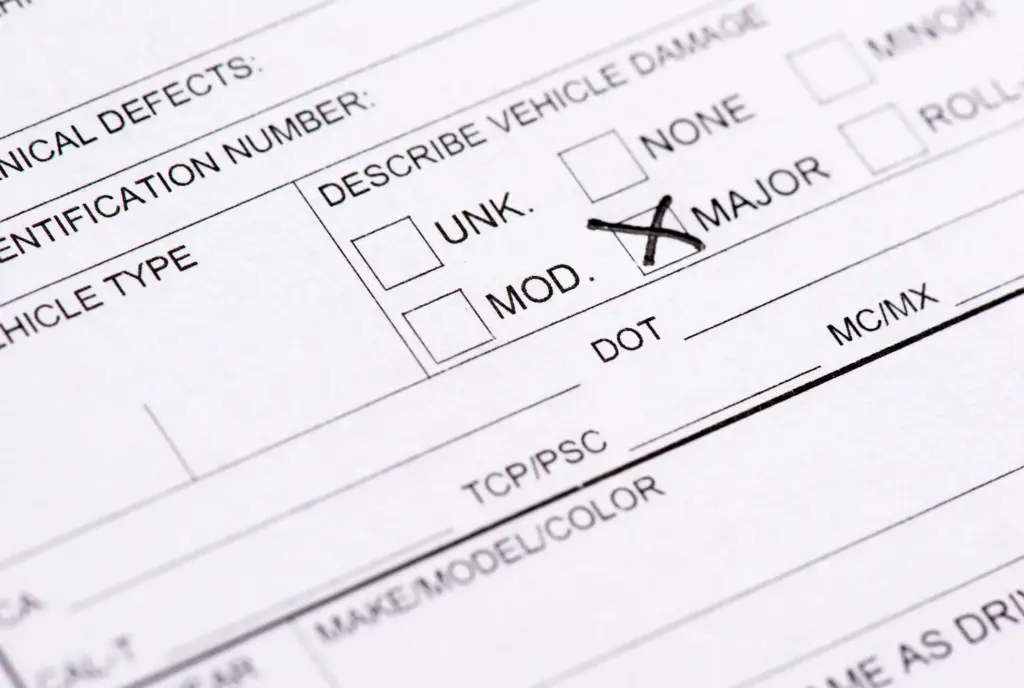
Your report will not be available the moment you go looking for it. The investigating officer generally has two to four weeks to complete the investigation and get the report approved by a supervisor before it enters the system. If you search WRECR a few days after your crash and find nothing, that is normal and it is recommended to wait a couple of weeks and try again.
A practical tip when searching: the system looks up reports by the driver’s name and the date of the collision, not by an agency case number. If a sheriff’s deputy gave you a case number at the scene, that number will not work in the WSP search, so search by name and date instead.
What If No Officer Came to the Scene?

Not every accident gets an officer response, especially minor ones or times when police are stretched thin. Under Washington law, if law enforcement did not investigate your collision, and there was an injury or the total damage exceeds $1,000, you are required to file your own report.
The easiest way to file your own report is through the Online Motor Vehicle Collision Report (OMVCR) system, which lets you complete and submit the report and gives you your collision report immediately. This self-filed report is what most insurance companies will need to process your claim.
Important Tips About Self-Filing
There are two things to keep in mind about self-reporting:
- Washington law sets a short window to file, so do not put it off. Filing promptly protects both your legal compliance and your claim.
- A self-filed civilian report is useful for insurance and documentation, but because no officer investigated, it does not carry the same weight as an officer-completed report that includes a trained investigator’s observations.
Who Is Allowed to Get the Full Report
Washington limits who can obtain a complete collision report. Under RCW 46.52.080, the full report is available to “interested parties”. This includes the drivers involved, anyone injured in the crash, the owners of damaged vehicles or property, the legal guardian of an involved person, the parent of a minor driver, and the attorneys or insurers representing those parties. If you were involved in or injured by the accident, you qualify in getting the full police report and can use it to file a personal injury claim.
How the Police Report Affects Your Personal Injury Claim
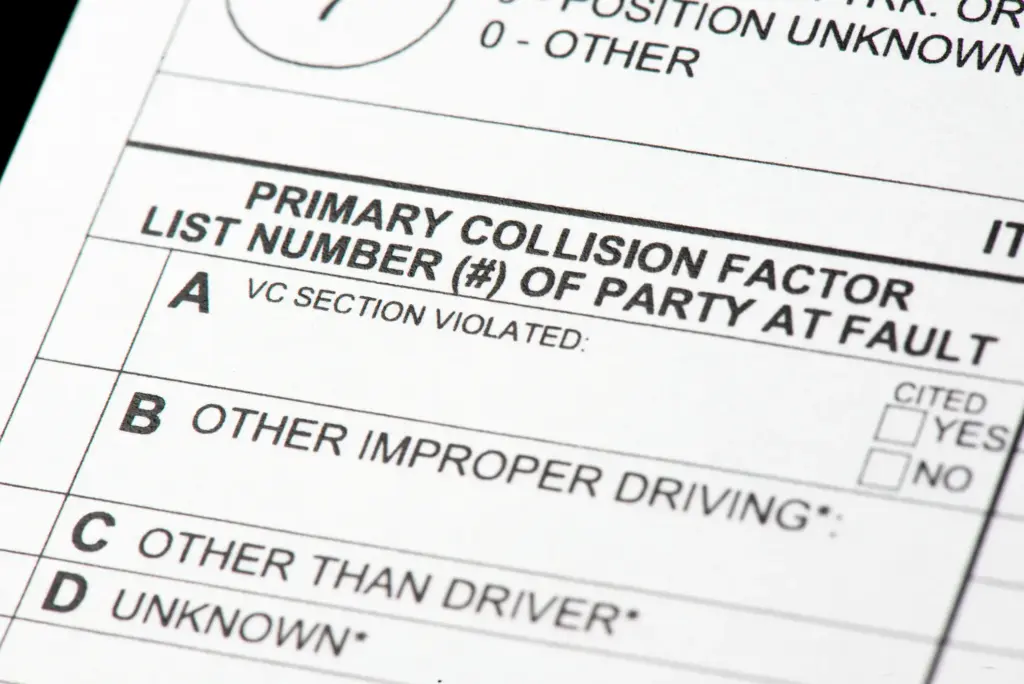
A Washington collision report is enormously useful to a personal injury claim, but probably not in the way you think. The report typically documents:
- The date, time, and location of the crash
- The drivers, vehicles, and their insurance information
- Names and contact details of witnesses
- A diagram of how the collision occurred
- The responding officer’s observations and, often, an assessment of contributing factors or fault
For the insurance phase of a claim, insurance adjusters rely heavily on the police report when evaluating fault and deciding how to handle a claim. Having the officer’s documentation of the other driver’s role, the witness list, and the insurance details can be the foundation of your entire case. This is especially vital because Washington follows a pure comparative negligence system where the percentage of fault assigned to each party directly reduces or shapes recovery.
One Exception When Using a Police Report in a Personal Injury Claim
There is one impactful exception that affects many personal injury claims in Washington. Under RCW 46.52.080, the collision report itself generally cannot be used as evidence in a trial, civil or criminal. The document is treated as confidential and inadmissible in court, but that does not make it useless for litigation. The report points you and your attorney to the evidence that is admissible and the underlying facts can be proven through proper channels.
While the police report is one of the most valuable documents for building your claim and resolving it with an insurer, the paper itself will not be handed to a jury. That is exactly why having an experienced attorney who knows how to use the report, and how to convert what is in it into admissible evidence, matters so much.
What to Do With Your Report Once You Have It
Once you obtain your collision report:
- Read it carefully and check for errors- Misspelled names, wrong insurance information, an incorrect diagram, or a mistaken detail can affect your claim.
- Save multiple copies and store the report with your other accident documentation, medical records, photos, and correspondence.
- Do not hand it straight to the other driver’s insurer without thinking- Adjusters use the report to build their position too. What you say about it can matter.
- Get legal eyes on it before you rely on its conclusions, particularly if it assigns you any share of fault.
Talk to West Coast Trial Lawyers About Your Washington Accident

A police report is just the first piece of a much larger puzzle, and how that puzzle gets assembled often determines whether you are fairly compensated or left covering costs that were never your fault. The report can point to the witnesses, the insurance coverage, and the officer’s observations that make or break a case, but turning all of that into a real recovery takes knowing how Washington law actually works.
At West Coast Trial Lawyers, the firm has recovered over $1.7 billion for injury victims, and we know how to take what is in a collision report and build it into a claim that holds up. If you were injured in a crash anywhere in Washington, our Washington car accident attorneys can handle the report, the adjusters, and the legal fight while you focus on recovering.
Call us at (213) 927-3700 or fill out our online contact form for a free consultation. On top of it all, we operate on a contingency fee basis, meaning there is no fee unless we win your case.