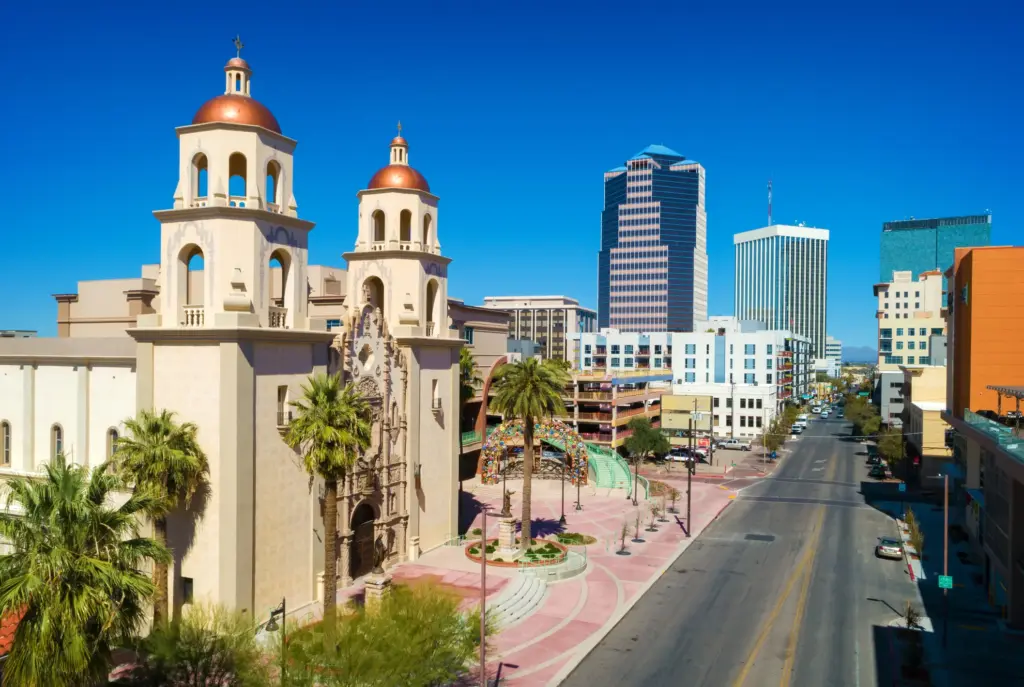
Tucson has a traffic problem that most cities its size do not. There is no crosstown freeway or an interstate that cuts east-west through the metro. Instead, every long trip across town happens on the same roads everyone else is using, which means streets like Broadway, Golf Links, Grant, and Valencia are doing double duty as local streets and as the city’s de facto highway system.
According to the Tucson Sentinel’s review of NHTSA data, Tucson ranks among the deadliest large American cities for motor vehicle crash deaths per capita, with pedestrian fatalities up more than 40 percent since 2017. The Tucson Police Department logged 5,273 crashes in 2025, with about 75 percent of them happening at or near intersections. That last number is the one that should make every driver in Pima County pay attention, because the chances of getting involved in an intersection accident is very likely.
With that in mind, here are the five intersections that consistently rank as the deadliest in all of Tucson.
1. Golf Links Road & Swan Road (East Tucson)
This is the intersection that has anchored the top of TPD’s most-dangerous list for years. Since 2018, more than 233 crashes have been logged here, the highest cumulative total of any Tucson intersection. In 2024 alone there were 32 crashes at this single corner, more than any other location in the city. Both roads carry steady commuter volumes from East Tucson into the central core, and Golf Links serves as a major access route to Davis-Monthan Air Force Base just south of here.
What makes it dangerous is the combination of geometry and traffic mix:
- Multiple turn lanes in each direction force drivers to make split-second judgment calls about lane positioning
- High commuter speeds along Golf Links collide with slower local traffic accessing nearby strip malls, restaurants, and gas stations
- Davis-Monthan shift changes create predictable surges of military and civilian commuter traffic at peak hours
- Left-turn sightlines are partially blocked at certain times of day by glare and signal pole positioning
- A consistent share of crashes involve drivers running yellow or red lights trying to beat heavy cross-traffic
In April 2025, two people were killed in a single week of incidents on this stretch of Broadway/Golf Links, including a pedestrian who had been sitting in the road. TPD attributed the driver’s involvement in part to speeding. That kind of fatal sequence is unfortunately consistent with the long-term pattern at this intersection.
2. Nogales Highway & Valencia Road (South Tucson)
Tied at the top of the 2025 most-dangerous list with 23 crashes in a single year, this intersection sits in Tucson’s busy southern corridor near Tucson International Airport, the Port of Tucson rail terminal, and a heavy concentration of warehouses, commercial trucking, and industrial logistics businesses. The mix of vehicle types alone makes it different from any of the other intersections on this list.
The danger factors stacking up here include:
- Active railroad crossing very close to the intersection. In January 2025, a train struck a car at this corner. Everyone walked away that time, but the layout creates ongoing risk every time a train passes
- High concentration of commercial trucks entering and leaving warehouses, with longer stopping distances and larger blind spots than passenger vehicles
- Airport-bound traffic moving at higher speeds along Valencia Road, often unfamiliar with the area
- Industrial driveways and curb cuts close to the intersection, creating constant sudden lane changes
- Limited pedestrian infrastructure despite a working-class residential population on both sides of the highway
Nogales Highway also carries a steady flow of cross-border commercial traffic moving north from Mexico via I-19, which feeds into this intersection. That international logistics dimension is unique to Tucson among Arizona cities and contributes to the unusual driver mix here.
3. Grant Road & Alvernon Way (Midtown)
Anyone who has driven Midtown Tucson in the last decade has watched the Grant Road Improvement Project slowly chew through this corridor in phases, and the Grant-Alvernon intersection is currently in the middle of one of the most disruptive ones. Nearly 300 crashes have happened here since 2017 according to the Tucson Sentinel’s analysis. The intersection was designed and built more than 50 years ago, when Tucson was a fraction of its current size, and the road’s basic configuration has barely changed since.
The current pain points here are a mix of permanent design problems and active construction chaos:
- The intersection is being rebuilt with an indirect left turn, also called a Michigan Left, which permanently bans left turns at the intersection itself and forces drivers to go straight and make a U-turn. Until drivers fully adapt, expect confusion at the new configuration
- Grant Road is currently down to one lane in each direction through this stretch as crews install underground utilities, sewer, and a 96-inch storm drain system
- The intersection sits next to Tucson Botanical Gardens, the Boys & Girls Clubs of Tucson Midtown Club, multiple medical offices, and a long string of small businesses, all of which generate constant turning traffic
- Pedestrian and bike infrastructure has been disrupted throughout construction, pushing some users into traffic lanes
- Detour traffic from drivers trying to avoid the construction is overwhelming neighboring side streets like Country Club and Alvernon, raising crash risk one block away from the actual intersection
The good news is that the completed project, scheduled for late 2026, will replace much of what makes the corner dangerous: more lanes, protected pedestrian crossings, buffered bike lanes, ADA-compliant sidewalks, transit pullouts, and the indirect left turn configuration. The bad news is that the next year of construction is still ahead, and the corridor will be a hazard until it is finished.
4. Broadway Boulevard & Wilmot Road (East Tucson)
Broadway and Wilmot is the kind of intersection where everything happens at once. East Tucson commuter traffic, retail traffic for the surrounding shopping corridor, students moving between schools and businesses, and through-traffic using Broadway as a de facto crosstown alternative all converge here. According to Tucson Police Department data, this corner saw 27 crashes in 2024, more than almost anywhere else in the city, and Zanes Law’s 2025 dangerous intersections analysis ranks it among the top five hazardous intersections in the city.
The design and use patterns that drive crashes here:
- Broadway runs east-west as one of Tucson’s busiest commuter routes, and Wilmot crosses as a major north-south retail corridor
- Multiple shopping centers, restaurants, and big-box stores line all four corners, generating constant turning movements into and out of parking lots
- Yellow-light running is a documented problem, with drivers under time pressure during morning and evening commutes
- Left turns from Broadway onto Wilmot involve crossing multiple lanes of fast-moving opposing traffic, with sightlines partially blocked by signal poles and other vehicles
- Distracted driving is a particular issue at this corner because of the concentration of retail and dining destinations, which means more drivers checking phones or navigation while approaching the intersection
This is the kind of intersection where small mistakes turn into significant crashes quickly. T-bone collisions and rear-end crashes from sudden stops are both common patterns. The Tucson Sentinel’s 2025 crash analysis noted that more crashes happened at Broadway and Wilmot last year than anywhere else in the city, confirming the corner’s spot near the top of the data.
5. Valencia Road & 12th Avenue (South Tucson)
This intersection is on this list for one specific reason: six fatal crashes in seven years, more than any other intersection in Tucson. That number alone tells you what you need to know. Total crash counts at other intersections may be higher, but Valencia and 12th has a documented pattern of producing crashes that kill people.
Several factors contribute:
- Valencia Road is a wide, multi-lane arterial with high posted speed limits in this stretch, and actual driver speeds often exceed the posted limit, especially at night
- Limited pedestrian crossing infrastructure on a road with a significant pedestrian population on both sides
- Lighting conditions at night are inconsistent, particularly during the late evening and early morning hours when most fatal crashes happen
- The corridor has fewer traffic-calming features than midtown or downtown intersections, which means there is little to slow drivers approaching the intersection at speed
- Reports indicate that 65 percent of pedestrian fatalities in Tucson in 2023 involved intoxicated individuals, either drivers or pedestrians, and South Tucson sees a disproportionate share of those incidents
Valencia 12th is a stark example of what happens when a wide, fast-moving arterial passes through a neighborhood where pedestrians need to cross. The car-centric design wins, with predictable consequences. If a pedestrian is hurt at one of these locations, the rules under Arizona’s car accident laws and Arizona’s comparative negligence framework shape what kind of recovery is possible.
Why So Many Tucson Intersections Are Dangerous
Step back from the list and you can see the common thread. Tucson’s worst intersections are not random. They share a specific set of structural problems that the city’s history and geography keep producing:
- No crosstown freeway means arterials carry highway-volume traffic- Every major east-west or north-south trip across Tucson ends up on Grant, Broadway, Speedway, Golf Links, or Valencia. Those streets were never engineered to handle that load. The Tucson Sentinel’s 2025 traffic deaths analysis traces this back to past resistance to crosstown freeway construction
- Aging infrastructure- Many of the worst intersections were designed decades ago for a much smaller Tucson, with fewer lanes, simpler signal phasing, and no consideration for pedestrians or bicyclists
- Wide multi-lane arterials with high speed limits- Especially in South and East Tucson, that prioritize vehicle throughput over pedestrian safety
- Intoxication factors- In a significant share of fatal crashes, particularly involving pedestrians. According to TPD data cited in 2024 reporting, 65 percent of pedestrian fatalities in 2023 involved intoxicated individuals
- Construction churn- The Regional Transportation Authority works through its 20-year, $2.1 billion plan to fix corridors that should have been fixed twenty years ago
The RTA plan calls for six Michigan Left turn intersections along Grant Road alone, and similar projects on Valencia, Kolb, and Broadway. That work will eventually transform many of the intersections on this list. Until it does, the existing layouts continue producing the crashes the data has been documenting for years..
What to Do If You’re Hurt at a Tucson Intersection
Crashes at the worst Tucson intersections often involve more than one potentially responsible party. The other driver may be the obvious one, but a city or state agency responsible for road or signal design, a property owner whose negligent setup contributed (parking lot exits, blocked sightlines, missing signage), a trucking or rideshare company, or even an active construction contractor can all share liability depending on the specifics.
A few things to do if you have been in a crash at one of these intersections:
- Get medical attention even if you feel okay at the scene, because head and soft tissue injuries often surface a day or two later
- Photograph the scene, including signal positions, lane markings, signage, skid marks, and damage to all vehicles
- Get the names and contact information of any witnesses, especially pedestrians or bystanders
- Report the collision to Tucson Police if it involved injury or significant damage, and request the case number
- Note exactly where in the intersection your vehicle was and which direction you were traveling. Vague crash descriptions hurt cases later
- Avoid posting about the accident on social media
If you have been hurt as a pedestrian, Arizona’s pedestrian accident framework handles those cases differently than vehicle-on-vehicle collisions. Wrongful death claims involve their own specific legal track under Arizona law.
You’re Hurt In An Accident Call WCTL
If you have been hurt in a crash and want to talk through what happened, our team can be reached at (213) 927-3700 or through our contact page.
For broader context on related Tucson and Phoenix-area issues, our Phoenix dangerous intersections breakdown covers similar territory across the state’s other major metro.