A fix it ticket is a correctable violation citation issued when a police officer identifies a minor vehicle defect-such as a broken taillight, expired registration, or missing proof of insurance-that can be remedied rather than prosecuted. Unlike standard traffic violations like speeding or running a red light, a fix it ticket gives you the opportunity to repair the problem, submit proof of correction to the court, and have the citation dismissed for a small fee.
This guide covers everything a person needs to know after receiving a fix it ticket in California: which violation types qualify, the exact steps to get your ticket signed off, what fines and penalties you face if you ignore it, and how to avoid license holds or suspension.
Quick Answer: What is a Fix Ticket?
A fix it ticket are non-criminal violations that addresses correctable vehicle issues. These citations can be dismissed by fixing the issue, getting verification, and providing proof of correction to the court along with a $25 processing fee per violation.
Whether you’re dealing with an equipment violation for the first time or trying to resolve a missed due date, getting a fix-ticket is incredibly common and is relatively easy to process. However, it is important to understand which violations qualify and what penalties may accrue if you do not address the citation.
What is a Fix It Ticket in California?
A fix it ticket-formally called a correctable violation under California Vehicle Code § 40610 and is typically issued for a vehicle defect or documentation problem that can be corrected. For example, minor vehicle defects including lighting failures, registration lapses, and equipment problems are all correctable violations.
The purpose of a fix it ticket is straightforward: ensure vehicle safety and roadworthiness without burdening drivers with criminal records or insurance penalties for issues they can readily fix.
Additionally, under California Vehicle Code § 40303.5, arresting officers are legally required to treat eligible registration, driver’s license, and equipment infractions as correctable offenses unless specific disqualifying conditions apply such as evidence of fraud, persistent neglect, or an immediate safety hazard.
How Fix It Tickets Differ from Regular Traffic Citations
The distinction between a correctable violation and a standard traffic citation matters enormously for your driving record, your wallet, and your insurance rates.
A regular traffic ticket-for reckless driving, speeding, or running a red light are moving violations that carries fines, points on your DMV record, potential court appearances, and insurance premium increases. If you plead guilty or are found guilty, that conviction stays on your record.
A fix it ticket, by contrast, results in no points on your driving record and no insurance impact when properly resolved. You don’t need to attend traffic school or appear before a judge. You simply fix the problem, get verification, pay a $25 dismissal fee, and the court dismisses the citation. Proof of repair must be submitted to dismiss a fix-it ticket-without it, you lose the correctable status entirely.
Legal Consequences of Fix It Tickets
While fix it tickets start as minor issues, ignoring them triggers serious consequences. Ignoring a fix it ticket can lead to additional fines up to $325, including a $325 civil assessment under Penal Code § 1214.1 for failure to appear or failure to pay. The civil assessment alone can reach $100, and when combined with the full bail amount for the underlying violation plus penalty assessments, the total cost escalates rapidly.
Failure to address a fix it ticket may result in license holds, which can lead to suspension of driving privileges, effectively turning a $25 fix into a suspended license situation. Additionally, not responding to a fix it ticket can result in criminal charges in some circumstances. Courts may also refer unpaid amounts to collection agencies, potentially affecting your credit.
Common Types of Fix It Violations

Fix it tickets cover a range of equipment and documentation issues. Understanding which category your citation falls into helps you determine the correct correction and verification path. According to California’s self-help court resources, the most common correctable violations involve vehicle lighting, registration, insurance, and safety equipment.
Vehicle Lighting Issues
A broken taillight is one of the most frequently cited correctable violations in California. Headlight failures, non-functional turn signals, and defective brake lights also qualify. When a police officer pulls you over for a lighting issue, the fix is typically straightforward: replace the bulb or assembly, then have the repair verified. These violations fall under sections like Vehicle Code § 24250 and are among the simplest to correct-often requiring only a trip to an auto parts store and a few minutes of work.
Documentation Violations
Expired registration is another extremely common reason for receiving a fix it ticket in California. If your current registration has lapsed, you’ll need to renew through the DMV before seeking verification. Similarly, if you were cited for not having your driver’s license in your possession or for carrying an expired license, you must obtain or renew the proper documentation.
Insurance proof violations are typically cited under Vehicle Code § 16028 and require showing proof that you had valid coverage on the date of the traffic stop. Simply purchasing insurance after the citation may not satisfy this requirement because courts may require evidence that coverage was active at the time you were pulled over.
Vehicle Equipment Defects
Beyond lighting and documentation, fix it tickets cover a range of safety equipment problems: cracked or damaged windshields, missing or broken mirrors, illegal window tint, defective or modified exhaust or muffler systems, and other mechanical defects that affect vehicle safety.
Note that certain violations are excluded from correctable status. For example, motorcycle exhaust violations under Vehicle Code § 27151(a) may not qualify. Additionally, if the officer determines the defect poses an immediate safety hazard-such as severely worn brakes or dangerously bald tires-the citation may not be issued as correctable.
Step-by-Step Process to Resolve Your Fix It Ticket
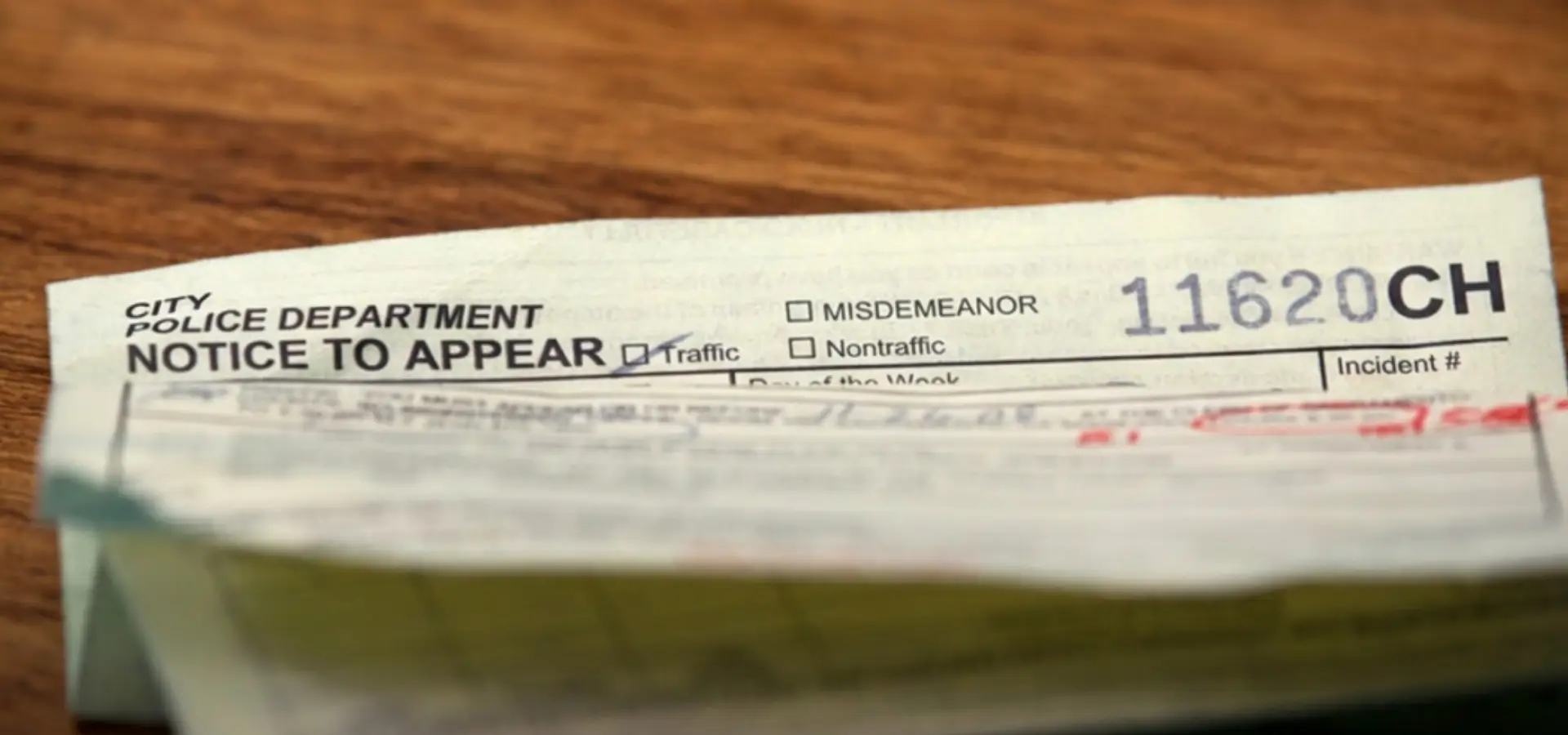
Proactive communication keeps drivers informed throughout the ticket resolution process-and the same principle applies to resolving your own fix it ticket. Act promptly, follow each step in order, and document everything. You must get the back of your ticket signed by an authorized person to complete the process.
Fixing the Violation
Fix-it tickets require proof of correction to dismiss. Here’s the process:
- Repair the defect immediately: Replace the broken taillight, renew your expired registration at the DMV, obtain valid insurance, or address whatever equipment violation appears on your citation. Complete all repairs before seeking verification.
- Gather proof of correction: Collect receipts, renewal confirmations, insurance declaration pages, or any documentation that proves the issue has been corrected. Documentation of fix-it ticket resolutions can improve future incident resolutions if you’re ever cited again.
- Get verification from authorized personnel: This is the critical step-you need an authorized person to inspect the repair and sign the certificate of correction on the back of your ticket. The signed off citation serves as your official proof and you don’t need to find the same officer who issued the original citation, just have any peace officer verify mechanical repairs.
- Submit proof to the court and pay the fee: Mail or deliver the signed certificate of correction to the courthouse listed on your ticket, along with the $25 processing fee per correctable violation. You can submit proof of correction online in some jurisdictions, for example, San Mateo County launched a fully digital proof submission program in September 2023.
Verification Options by Violation Type
The officer or court clerk who verifies your correction will sign the back of your ticket. When they do, keep copies of everything-the signed ticket, receipts, and any confirmation from the court. After the court processes your submission, verify through the court’s website or by phone that your case has been dismissed and no further payment is owed.
Common Challenges and Solutions
Even with a straightforward process, drivers frequently encounter obstacles when resolving fix it tickets. Prioritization of tickets involves evaluating urgency and business impact-and with fix it tickets, the urgency is defined by your due date.
Out-of-State Residents
If you received a ticket in California but live in another state, you may be able to have your local law enforcement sign the certificate of correction. However, not all California courts accept out-of-state verification.
Contact the issuing superior court directly-by phone, mail, or through their website-to confirm whether they’ll accept a signed off citation from your local police department. Some courts at the Sacramento Superior Court and other jurisdictions have specific procedures for out-of-state residents.
Multiple Violations on One Ticket
When one citation includes both correctable and non-correctable violations, each must be handled separately. The $25 fee applies per correctable violation-so three equipment violations mean $75 in processing fees.
Non-correctable portions (such as a speeding violation or other moving traffic violations) require separate resolution: you may need to pay the full bail amount, request a trial date, contest the citation through a written declaration, or consult an attorney.
If you’ve been cited multiple times for the same defect, it’s worth investing in a permanent repair rather than temporary fixes. Service Level Agreements (SLAs) are essential for guiding response and resolution times, and courts similarly impose strict deadlines you must meet.
Missed Deadlines
Under Vehicle Code § 40610(d), officers cannot set a correction deadline longer than 30 days. If you miss that date, your correctable violation converts to a standard infraction with full bail due. Ignoring a fix it ticket can lead to a $325 civil assessment on top of the original fine.
If you’ve missed your deadline:
- Contact the court immediately: Some courts allow retroactive proof or petitions to vacate civil assessments if you show good cause. You may reach the clerk’s office by phone or visit the courthouse in person.
- Check for civil assessment relief: Civil assessments issued before July 1, 2022 were automatically vacated under new California law. Post-2022 assessments are capped at $100 but still apply.
- Request an extension proactively: Some counties allow one 30-day extension, but you must request it before the original due date-not after.
- Explore a payment plan: If the converted fine creates financial hardship, ask the court about a payment plan to avoid collections or further penalties. You won’t necessarily need to appear before a judge to arrange this.
Ignoring a fix it ticket can lead to license suspension-don’t let a missed deadline compound into a far worse situation. A courtesy notice from the court may arrive by mail reminding you of outstanding obligations, but don’t rely on receiving one.
What Should I Do If I Receive A Fix It Ticket?
A fix it ticket is one of the most forgiving citations in California’s traffic system. Unlike parking tickets or moving violations that result in automatic fines and points, a correctable violation gives you a clear path to dismissal: fix the problem, get verification, submit proof, pay $25, and the court dismisses the case with no conviction, no points on your record, and no insurance impact.
Take these steps immediately:
- Check your ticket for the due date and confirm it’s marked as a correctable violation
- Complete all necessary repairs or obtain required documentation
- Have the back of your ticket signed by a police officer, DMV clerk, or court clerk as appropriate
- Submit your proof of correction to the court by mail, in person, or online where available, along with the $25 fee
- Verify dismissal through the court’s website or by contacting the clerk’s office
If your situation involves complex incidents that has resulted in injury or death, a personal injury lawyer from West Coast Trial Lawyers can help you by exploring your legal rights. Contact us today by calling (213) 927-3700 or by filling our contact form to schedule a free consultation with our compassionate and talented legal team.