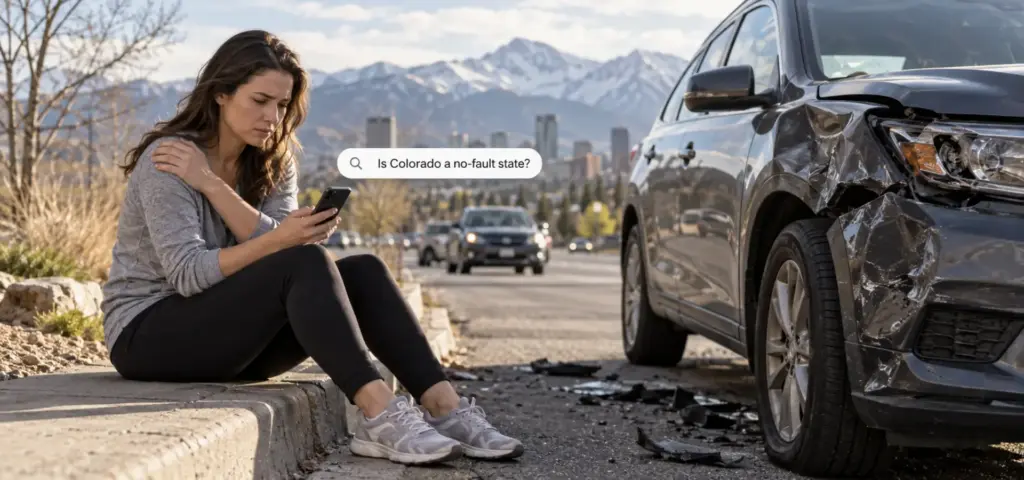
When it comes to identifying who is at-fault for a Colorado car accident, there are a number of factors that can determine who is responsible for causing the accident in question. However, when it comes to responsible for paying for the damage, the answer often depends on whether the state follows a no-fault or at-fault insurance system.
However, Colorado is an at-fault state for car accidents and this means the driver who causes a collision is generally responsible for the resulting injuries and property damage. In most cases, the responsible driver’s liability insurance pays those losses up to the policy limits and understanding the rules behind an at-fault system can help clear up any confusion surrounding liability.
At-Fault vs. No-Fault: What Is the Difference?
The biggest difference between an at-fault state and a no-fault state is whose insurance pays first after an injury crash. In an at-fault state, the driver who caused the crash is generally responsible for the injuries and property damage they caused, which means the injured person may file a claim against the at-fault driver’s liability insurance, use certain coverage under their own policy, or file a lawsuit if the claim cannot be resolved.
However, in a no-fault state, injured drivers and passengers usually turn first to their own insurance for certain medical bills and other covered losses, regardless of who caused the crash. This is often handled through personal injury protection, or PIP. Some no-fault states also limit when an injured person can sue the at-fault driver for pain and suffering unless the injuries meet a legal threshold.
Wasn’t Colorado a No-Fault State?
Colorado previously used a no-fault system, but the state allowed the Colorado Auto Accident Reparations Act to expire in 2003. When the act expired, the state changed its stance and allow fault to play a central role in determining whose insurance pays, what compensation is available, and whether an injured person can recover damages.
The historical distinction matters because drivers may still hear terms such as PIP, first-party benefits, or “no-fault accident”, but these terms do not change Colorado’s current classification as an at-fault state.
What Insurance Coverage Is Required in Colorado?

All Colorado drivers must carry minimum liability insurance to ensure any damages that has occurred in the event of the accident covers foreseeable damages. The state’s required minimum limits are written as 25/50/15 coverage which means:
- $25,000 for bodily injury or death to one person
- $50,000 for bodily injury or death to multiple people in one accident
- $15,000 for property damage in one accident
While these minimum limits may be enough for minor crashes, they can be far too low for accidents involving surgery, hospitalization, permanent injuries, multiple victims, or major vehicle damage. In those cases, an injured person may need to look at additional insurance coverage or other potentially responsible parties.
How Colorado’s Comparative Negligence Rule Affects Recovery
Fault is not always assigned entirely to one driver. As Colorado follows a modified comparative negligence system under C.R.S. § 13-21-111, an injured person can recover compensation if their negligence was less than the negligence of the party they are pursuing, but the recoverable amount will be based on their degree of fault.
For example, if your damages are worth $100,000 but you are found 20% responsible for the crash, your recovery may be reduced to $80,000. However, if your share of fault is equal to or greater than the other party’s negligence, you may be barred from recovering compensation from that party.
This is why insurance companies often focus on comparative fault, because even a small shift in percentage can reduce what they owe.
Whose Insurance Pays After a Colorado Car Accident?
The answer depends on who caused the crash, what coverage exists, and what type of loss is being claimed.
How Long Do You Have to File a Colorado Car Accident Claim?
According to Colorado’s statute of limitations, the state generally gives injured people three years to file a lawsuit for bodily injury or property damage arising from the use or operation of a motor vehicle. However, claims involving government vehicles, wrongful death, uninsured motorist benefits, insurance disputes, or other special circumstances may have different notice or filing requirements.
While it may be understandable to wait before filing a claim, it can also make it harder to prove. Video footage may be overwritten, vehicles may be repaired, witnesses may move, and physical evidence at the scene may disappear, so it is recommended to consult with an experienced as soon as possible.
Injured in a Colorado Car Accident? Protect Your Right to Compensation

Colorado’s at-fault system gives injured people the right to pursue the driver or other party responsible for causing a crash. It also gives insurance companies a financial incentive to dispute liability, minimize injuries, or shift part of the blame onto the person seeking compensation.
West Coast Trial Lawyers can investigate the collision, preserve video and physical evidence, interview witnesses, analyze insurance coverage, calculate your losses, and challenge unsupported allegations of comparative fault. Our legal team can also handle communication with the insurance companies while you focus on your medical treatment and recovery.
To get started, we invite you to book a FREE consultation by calling (213) 927-3700 or completing our easy online contact form.