Generative artificial intelligence is becoming increasingly common in professional workplaces, including the legal industry. Attorneys can use AI tools to organize information, assist with research, summarize documents, and prepare drafts, but relying on those systems also creates risks when confidential client information or inaccurate legal material is involved.
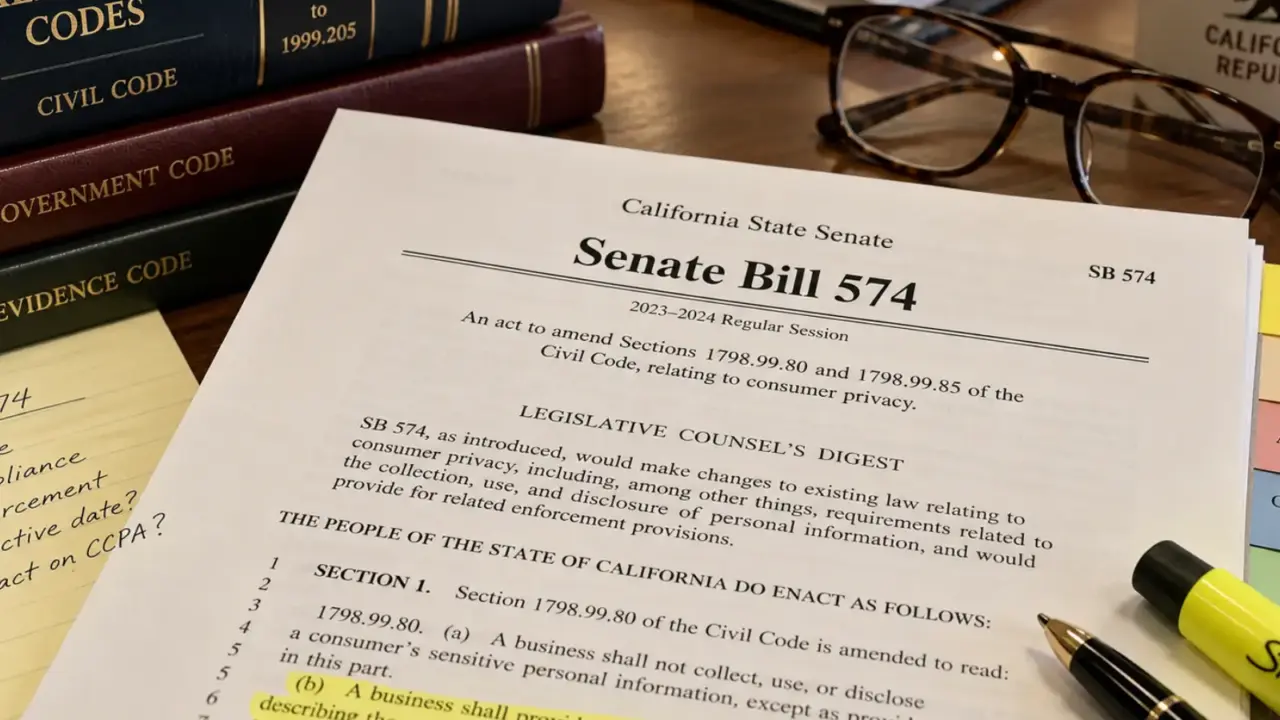
California has responded with Senate Bill 574 (SB 574), a new law establishing specific requirements for attorneys and arbitrators who use generative AI. Governor Gavin Newsom signed the bill on September 30, 2026, and the law takes effect January 1, 2027 and the law is intended to allow attorneys to use new technology while keeping human legal judgment, confidentiality, and accuracy at the center of the attorney-client relationship.
What Is California Senate Bill 574?

California Senate Bill 574 is a 2026 law that regulates how attorneys and arbitrators can use generative artificial intelligence or other llms in California legal proceedings. Spearheaded by Senator Tom Umberg, the senate bill touches three parts of California law:
- Adds a new section to the State Bar Act (Business and Professions Code section 6068.1) listing a lawyer’s duties when using generative AI.
- Rewrites California Code of Civil Procedure Section 128.7 by requiring attorneys to personally verify citations in court filings.
- Adds Code of Civil Procedure section 1282.1, which restricts arbitrators from delegating their decision-making to generative AI.
The law also directs the Judicial Council to revisit California’s existing standards governing judicial use of generative AI as the technology continues to develop. However, SB 574 does not ban lawyers from using AI, instead, it establishes boundaries around how the technology may be incorporated into legal work.
It passed through the Legislature without a single “no” vote and was established as Chapter 858 of the 2026 Statutes after Governor Newsom signed it on September 30, 2026, which tells people how little lawmakers stood for defending fake citations.
Why Are AI-Generated Legal Citations a Problem?
Generative AI systems can sometimes produce information that appears legitimate but is inaccurate or completely fabricated. This is commonly referred to as an “AI hallucination”, and in legal proceedings, a hallucinated case or quotation can have serious consequences and California courts have already encountered this problem.
In Noland v. Land of the Free, L.P. (2025), a California Court of Appeal found that 21 of the 23 case quotations in one lawyer’s opening brief were fabricated through the use of AI tools and that the lawyer has never read the cases. The court imposed a $10,000 sanction, directed counsel to provide the opinion to the client, and notified the State Bar.
The case illustrates why verification matters, because an attorney may use technology to assist with research or drafting, but they must remains responsible for confirming that the authorities actually exist and support the legal argument being made.
Do Lawyers Have to Verify Every Citation in a California Court Filing?
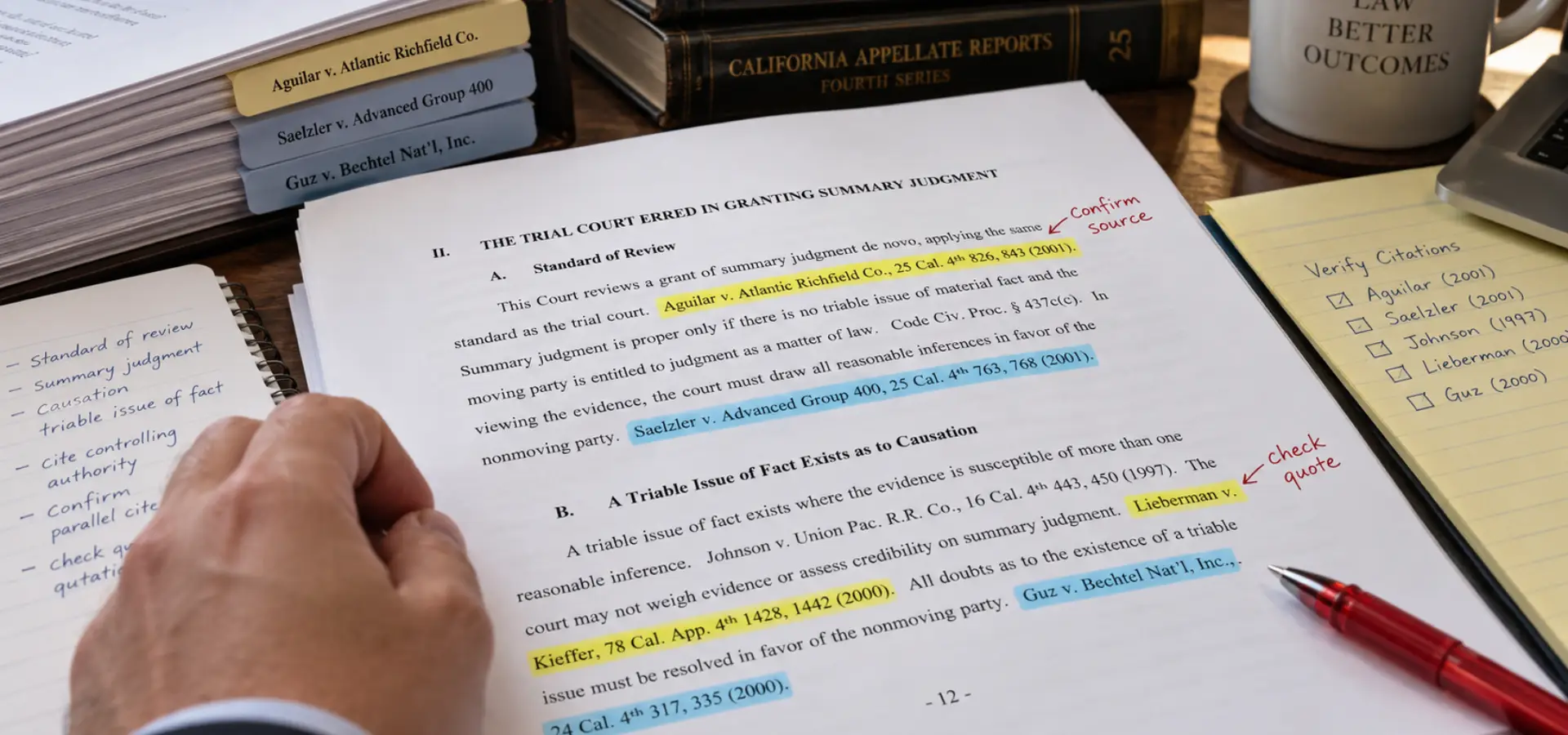
Beginning in 2027, an attorney responsible for a California court filing shall not delegate the practice of law to generative artificial intelligence and cannot include a citation that the attorney has not personally verified.
Lawyers and attorneys also have to take reasonable steps to check whatever the AI spits out, every case and statute citation included, and fix anything wrong or made up. That duty isn’t limited to court filings and covers any material the lawyer uses.
What Penalties Can Apply for Unverified Citations?
Attorneys and law firms can potentially face sanctions when court filings violate Code of Civil Procedure § 128.7. If a violation occurs, the court may impose sanctions designed to deter similar conduct and depending on the circumstances, those sanctions can include:
- Nonmonetary directives
- A monetary penalty paid to the court
- Payment of reasonable attorney’s fees and expenses caused by the violation
The statute also makes a law firm jointly responsible for violations committed by its partners, associates, or employees unless exceptional circumstances apply. However, California’s § 128.7 does provide attorneys an opportunity to withdraw or correct challenged material before a sanctions motion is filed with the court.
Furthermore, a represented client cannot be subjected to monetary sanctions for the attorney’s failure to comply with the new citation-verification requirement. For clients, that distinction is important, because the attorney should be responsible for ensuring that all legal authorities submitted to the court has been properly checked.
Can Arbitrators Use Generative AI Under SB 574?

Arbitrators are allowed to use generative AI under SB 574, but they cannot delegate any part of the actual decision-making process to generative AI. The California Courts newsroom also reports that arbitrators also can’t quietly lean on AI-generated information from outside the case record.
If they want to use it, they have to tell the parties first and give them an opportunity to comment on that information. That requirement can be particularly important because arbitration generally offers more limited opportunities for judicial review than traditional court litigation.
How the New AI Lawyer Law Affects Court Proceedings and Arbitration
Once the law kicks in, lawyers will be adding AI disclosures to their filings, and judges will start deciding how much detail they want. Some courts and individual judges already have their own AI rules, and those can be stricter.
Clients should also expect more push back over citations, because opposing counsel now has a clear statute to point to when a brief cites a case that doesn’t say what the brief claims. As a result, sanctions motions may get more common. (The law does let courts sanction someone who files a baseless sanctions motion just to harass the other side, so it cuts both ways.)
On the arbitration side, parties will probably start asking arbitrators directly whether and how they use AI and the arbitrator is legally required to give a straight answer before relying on outside AI material.
What SB 574 Means for Personal Injury Clients
For most personal injury clients, SB 574 should not change the basic process of pursuing compensation after an accident. Instead, it creates additional safeguards around the technology attorneys and arbitrators may use during that process. In fact, the law can affect several parts of an injury case:
- Your confidential information must remain protected- Attorneys using AI must account for how medical, financial, and other nonpublic information is handled.
- Your lawyer remains responsible for the legal work- An attorney cannot hand legal judgment over to an AI system.
- Court citations must be personally verified- A lawyer cannot rely on an AI-generated case simply because it appears legitimate.
- AI use in court documents requires disclosure- SB 574 increases transparency when generative AI contributes to documents submitted to California courts.
- An arbitrator must make their own decision- AI cannot replace the human judgment of the person deciding an arbitration.
Whether the claim is a rideshare dispute or a medical malpractice claim, these requirements ultimately reinforce duties lawyers already owe their clients and must provide them competence, confidentiality, diligence, and responsibility for the work performed on the client’s behalf.
Talk to a California Personal Injury Lawyer About Your Case
Technology may change how legal work is performed, but an injured person’s case still requires careful investigation, accurate legal analysis, and an attorney who is responsible for the decisions made on the client’s behalf. If you were injured because of someone else’s negligence and are worried that your attorney is too dependent on AI, West Coast Trial Lawyers can look over your case and give you the legal insight you need to make a proper decision surrounding your legal representation.
Our firm has over 25 years of experience representing personal injury clients from walks of life and our team of attorneys can investigate the circumstances of an injury, evaluate available insurance coverage, collect evidence, and pursue compensation on behalf of injured clients.
Call (213) 927-3700 or contact the firm through the online contact form for a free consultation.