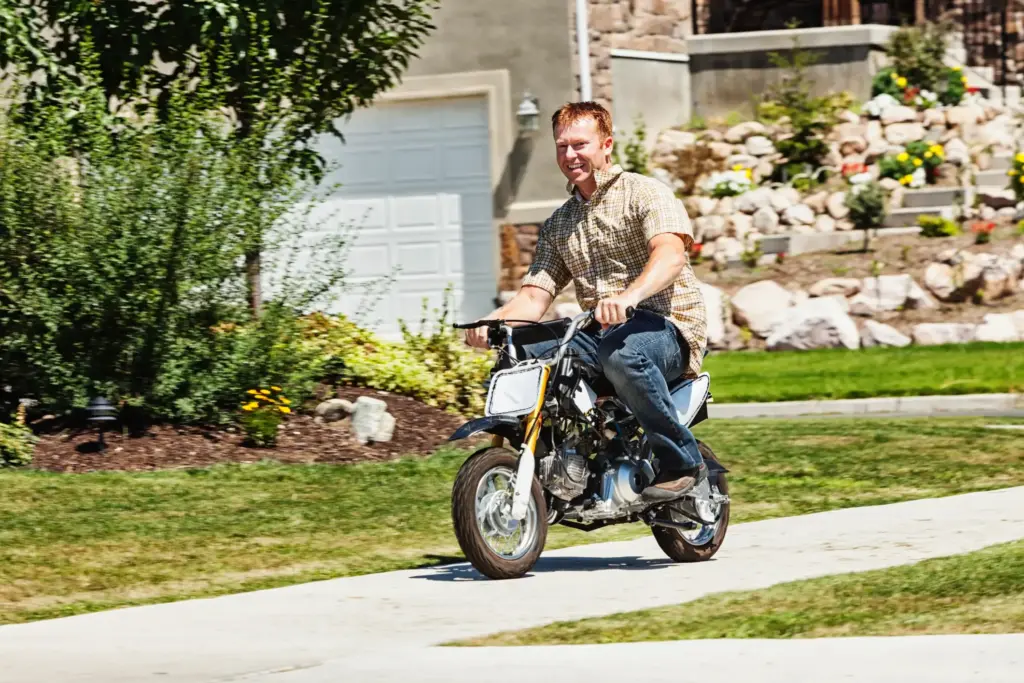
Mini bikes are an alternative means of travel of throughout California, however, to many people’s surprise, mini bikes are not street legal in California. Whether you own a gas-powered pocket bike or an electric mini motorcycle, this article addresses everything California riders need to know: the Vehicle Code definitions that govern mini bikes, where you can legally ride them, what a street legal conversion actually requires, and the penalties you face for illegal public road use.
Quick Answer: Are California Mini Bikes Street Legal?
In order for a mini bike to be street legal in California, it demands strict compliance with DMV equipment standards, CARB emissions requirements, proper registration with valid license plates, and a valid driver’s license with a motorcycle endorsement. Most minibikes fail these requirements at the factory level and cannot be converted.
What is Considered a Mini Bike Under California Law?
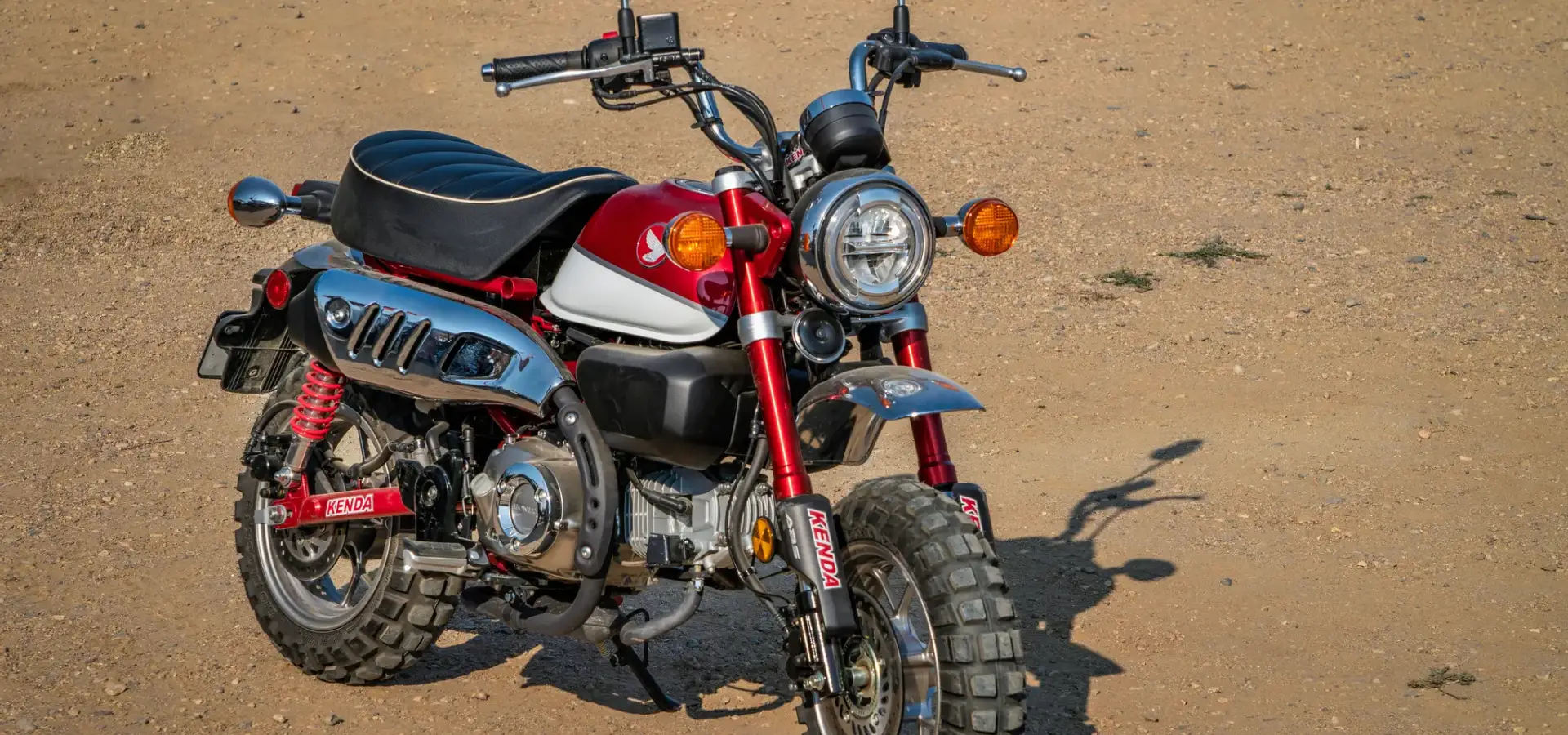
Mini bikes are small, low-profile motorized vehicles typically standing under two feet tall, weighing between 40 and 100 pounds, and powered by gasoline or electric motors. Despite their resemblance to motorcycles, they occupy a unique and largely prohibited position under California law.
California Vehicle Code Section 406 outlines the legality of mini bikes, and the DMV’s official registration handbook classifies them as miniature vehicles that cannot be registered or operated on public streets. Understanding why mini bikes fall outside legal vehicle categories requires examining how California distinguishes between similar-looking but legally distinct vehicles.
Legal Classification vs Other Vehicles
California law draws sharp lines between vehicle types, and mini bikes don’t fit neatly into any street-legal category:
- Motorcycles require full FMVSS compliance, proper engine size documentation, emissions certification, and a 17-digit Vehicle Identification Number. Stock mini bikes lack a proper Vehicle Identification Number for registration.
- Mopeds under California Vehicle Code §406 must have pedals or an all-electric motor, automatic transmission, produce less than 4 gross brake horsepower, and top out at 30 mph. Mini bikes lack pedals and often exceed these thresholds.
- Motor-driven cycles under California Vehicle Code §405 require engines under approximately 150cc, but also demand emissions labeling and safety compliance that most mini bikes simply don’t have.
- Motorized scooters under California Vehicle Code §407.5 are stand-on designs limited to 15 mph – a completely different form factor.
Because mini bikes don’t qualify as any of these recognized vehicle types, they cannot be registered as a motor vehicle for street use in California.
Off-Highway Vehicle (OHV) vs Street Legal Status
There is a critical distinction between OHV registration and street legal registration. Off-highway mini motorcycles may qualify for an OHV registration in California, which provides a Green or Red Sticker allowing operation in designated off highway vehicle parks and trails. However, OHV registration does not authorize public road use.
California does not recognize an off road vehicle that was street-licensed in another state for use on California roads. The DMV’s OHV handbook makes this separation explicit: OHV identification and street registration are entirely separate systems with different requirements.
This distinction is foundational to understanding California’s broader regulatory framework for mini bikes.
California’s Legal Framework for Mini Bikes
As of 2026, the California DMV explicitly states that “Miniature vehicles (also known as mini choppers or pocket bikes) cannot be registered or operated on public streets because they do not meet Federal Safety Standards.” Mini bikes must meet DMV standards to be street legal, and virtually none do from the factory. Additionally, this prohibition extends to sidewalks, bike lanes, and highway use.
CARB Emissions Standards
The California Air Resources Board imposes some of the nation’s strictest emissions requirements. For any motor vehicle to be registered for street use, it must carry proper emissions certification, either a CARB-approved label or, at minimum, a U.S. EPA certification label for motorcycles manufactured 1978 or later.
Most mini bikes fail this requirement entirely, because their engines typically carry a “small off-road engine” (SORE) label or no emissions label at all. Emissions restrictions prevent registering off-road engines for highway use. If the label reads “off-road only” or “off-highway only,” the bike is permanently disqualified from street registration.
Public Road Prohibition
California Vehicle Code § 21720 prohibits the operation of mini bikes on roadways, because the California Highway Patrol confirms that pocket bikes are illegal on highways, sidewalks, bikeways, neighborhood streets, and trails unless specifically it is designated for OHV use.
Local ordinances in many California cities add further restrictions, with some municipalities imposing additional fines or confiscation provisions beyond state law. In some instances, local law enforcement enforces a zero-tolerance policy for mini bikes on public roads and adding safety equipment to a mini bike does not make it legal for street use,
Where Can People Ride Mini Bikes Legally
Given the comprehensive prohibition on public roads, mini bike riders can only ride in areas such as private property with the landowner’s permission or designated off-highway vehicle areas. Provided the bike has proper OHV registration (Green or Red Sticker) and meets any applicable labeling requirements, some public lands permit mini bikes on trails and forest roads where OHV use is specifically authorized by the land management agency.
Can You Convert a Mini Bike to be Street Legal?
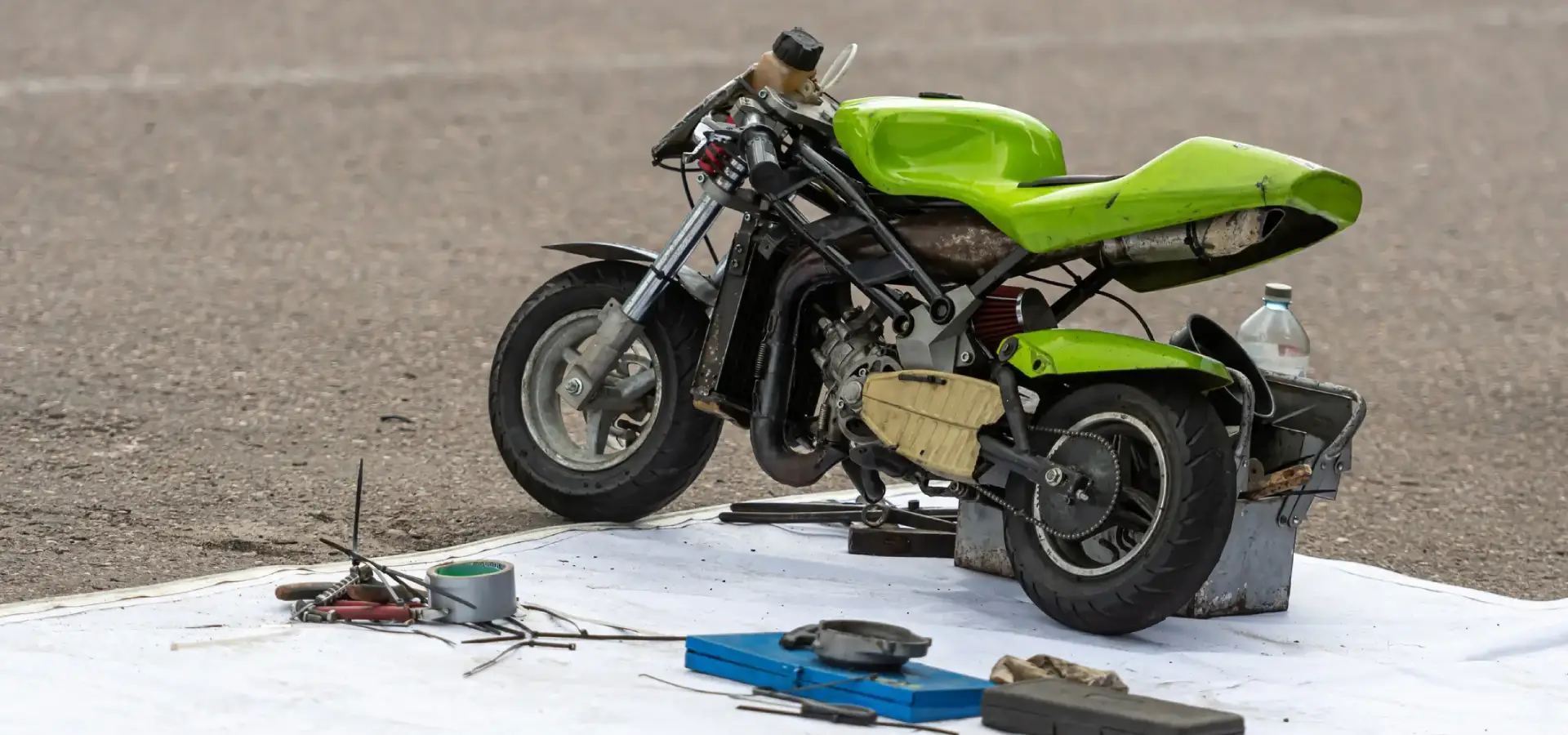
Converting a mini bike for street use is theoretically possible but practically unachievable for most minibikes. Even before addressing registration, a street legal mini bike must be fully equipped with all safety equipment required under California Vehicle Code and federal standards. Many mini bikes lack mandatory street equipment like headlights and turn signals from the factory.
Required equipment includes:
- Headlights with both high and low beams compliant with FMVSS-108
- Taillights meeting DOT visibility standards
- Brake lights necessary to signal stopping to other drivers
- Turn signals – front and rear, often mandatory for street legal mini bikes
- At least one rearview mirror (typically left side, per CVC §26709) – at least one rearview mirror is usually required on mini bikes
- A working horn required to alert others on the road
- Speedometer for speed monitoring
- DOT-approved tires rated for street use
- Front and rear brakes meeting highway safety standards
- Exhaust system with a proper muffler meeting noise and emissions limits
With that in mind, simply bolting on lights, mirrors, and wearing safety gear doesn’t address the underlying emissions and VIN deficiencies that disqualify most mini bikes.
Registration and Licensing Requirements
Mini bikes must comply with DMV standards for public road use. Here’s what registration requires:
A valid driver’s license is additionally required for street-legal mini bikes – specifically, an M1 endorsement for motorcycle-class vehicles or M2 for moped-class vehicles, depending on the bike’s final classification.
Common Challenges and Legal Consequences
California’s enforcement of mini bike regulations is strict, and the consequences of non-compliance are significant. Riders, parents, and owners can be held accountable and be fined by local law enforcement in the form of traffic citations, vehicle impoundment, and even criminal liability, especially if the rider was performing stunts such as wheelies or participating in street takeovers.
Parents or guardians can face additional liabilities if their children operate illegal motor vehicles. This is particularly relevant because mini bikes are often marketed to younger riders who may not understand the legal restrictions.
What Happens if a Mini Bike Rider Gets Into an Accident?
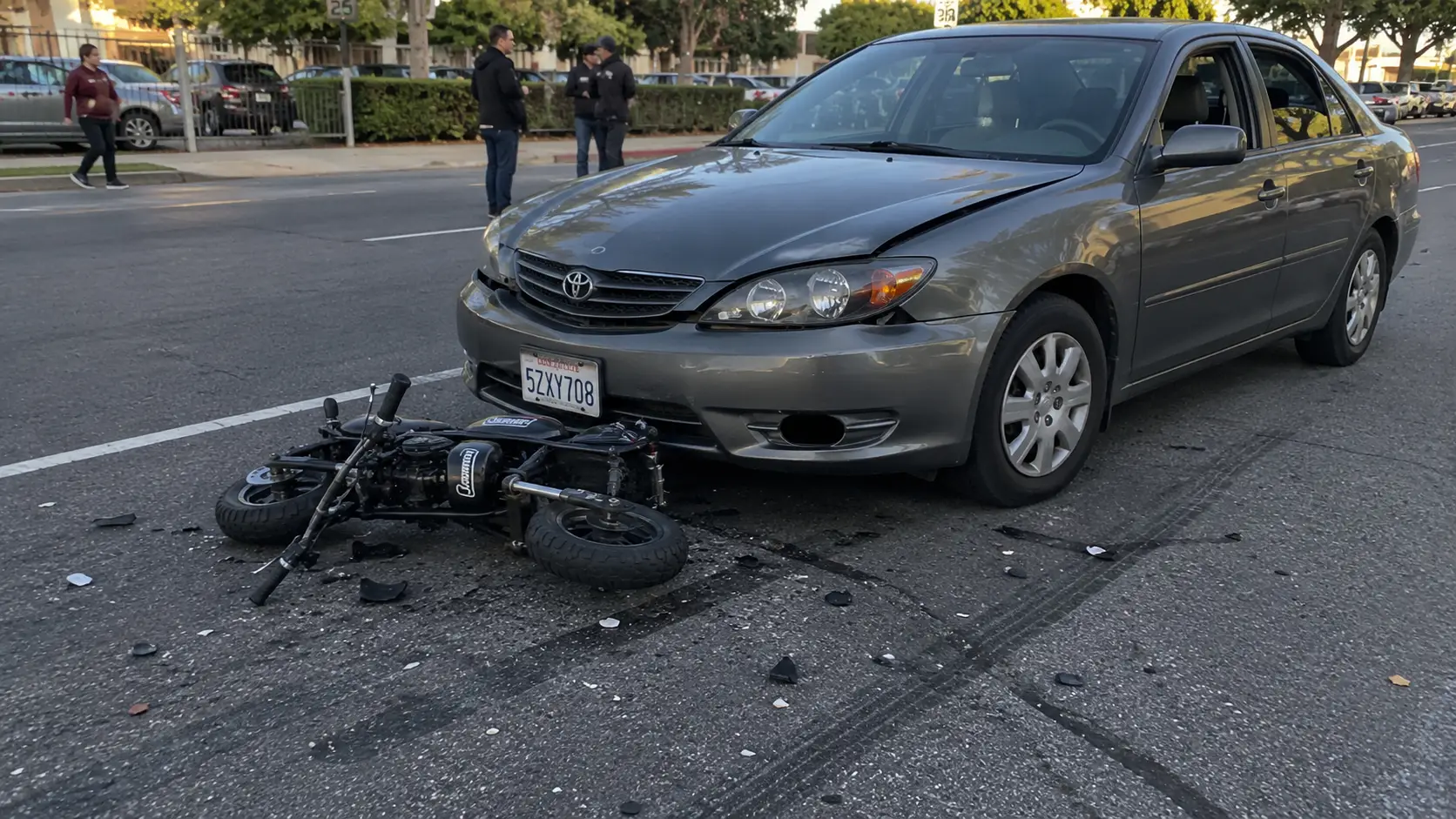
If a mini bike rider gets into an accident in California, fault generally depends on who caused the crash—not simply whether the mini bike was legal to operate on the road. As California follows a pure comparative negligence system, both the mini bike rider and another driver may share responsibility for the accident in question.
Mini bike riders can also face additional legal issues after an accident such as getting cited for illegal road use, registration, licensing, or not using required equipment. Furthermore, if the mini bike rider caused the crash and does not have applicable insurance, the injured party may instead need to pursue the rider directly or determine whether another insurance policy provides coverage.
California Laws That May Apply to Mini Bike Accidents
California law requires drivers and owners of motor vehicles to maintain financial responsibility under California Vehicle Code § 16020. Current minimum financial-responsibility limits generally include $30,000 for injury or death to one person, $60,000 for injury or death to multiple people, and $15,000 for property damage.
Whether these requirements apply to a particular mini bike can depend on how the vehicle is legally classified. California distinguishes between motorcycles, motor-driven cycles, mopeds, motorized scooters, and off-highway vehicles, so the exact rules may vary based on the bike’s engine, design, and intended use.
What to Do If You Have Been Involved in a Mini Bike Accident?

As mini bikes are not street legal in California, mini bike riders have a legal responsibility to ensure they are riding under the safest and lawful conditions or else they can be held accountable for their actions.
However, if you are mini bike rider and have been injured in a mini bike accident due to the negligence and recklessness of others, the legal team at West Coast Trial Lawyers is available to give you the legal guidance you need.
Call us today at (213) 927-3700 for a free consultation or fill out our online contact form. We’re available 24/7 to help you seek the compensation you deserve.