After a car accident, slip-and-fall, or hit-and-run, the moments captured on nearby security cameras can tell a story that no witness statement ever could. Surveillance footage can be used as evidence in legal cases if properly obtained, and video evidence acts as an unbiased witness-showing vehicle movements, traffic light status, pedestrian behavior, and road conditions with a precision that human memory simply cannot match.
The problem is that video evidence does not last forever. Many businesses and property owners automatically overwrite footage after a few days or weeks. If you were injured in an accident, this guide will walk you through to identifying and preserving video so you can build your personal injury claim.
Why Surveillance Video Matters in a Personal Injury Case
In many injury claims, both sides tell different stories. A driver may say you “came out of nowhere” and an insurance adjuster may question whether the accident happened the way you described. Surveillance video can support a personal injury claim by preserving details that witnesses may forget, miss, or describe differently later.
In Bradley v. Tietz (2024), porch-camera footage became central to a comparative-fault dispute after a residential intersection crash. Although the defendant failed to yield, the jury watched the video and still assigned the injured driver 45% fault after considering her speed, the rainy conditions, and whether she could have reacted sooner. The appellate court upheld the decision, finding that the video gave the jury enough evidence to evaluate fault and without that footage, liability would have been allocated much differently.
Main Types of Cameras That Might Have Your Incident on Video

CCTV (Closed Circuit Television) systems use cameras to capture video footage across virtually every commercial and public environment. Understanding the main types of cameras can help you know where to look. Modern CCTV can provide HD and 4K video quality, making even distant license plates readable.
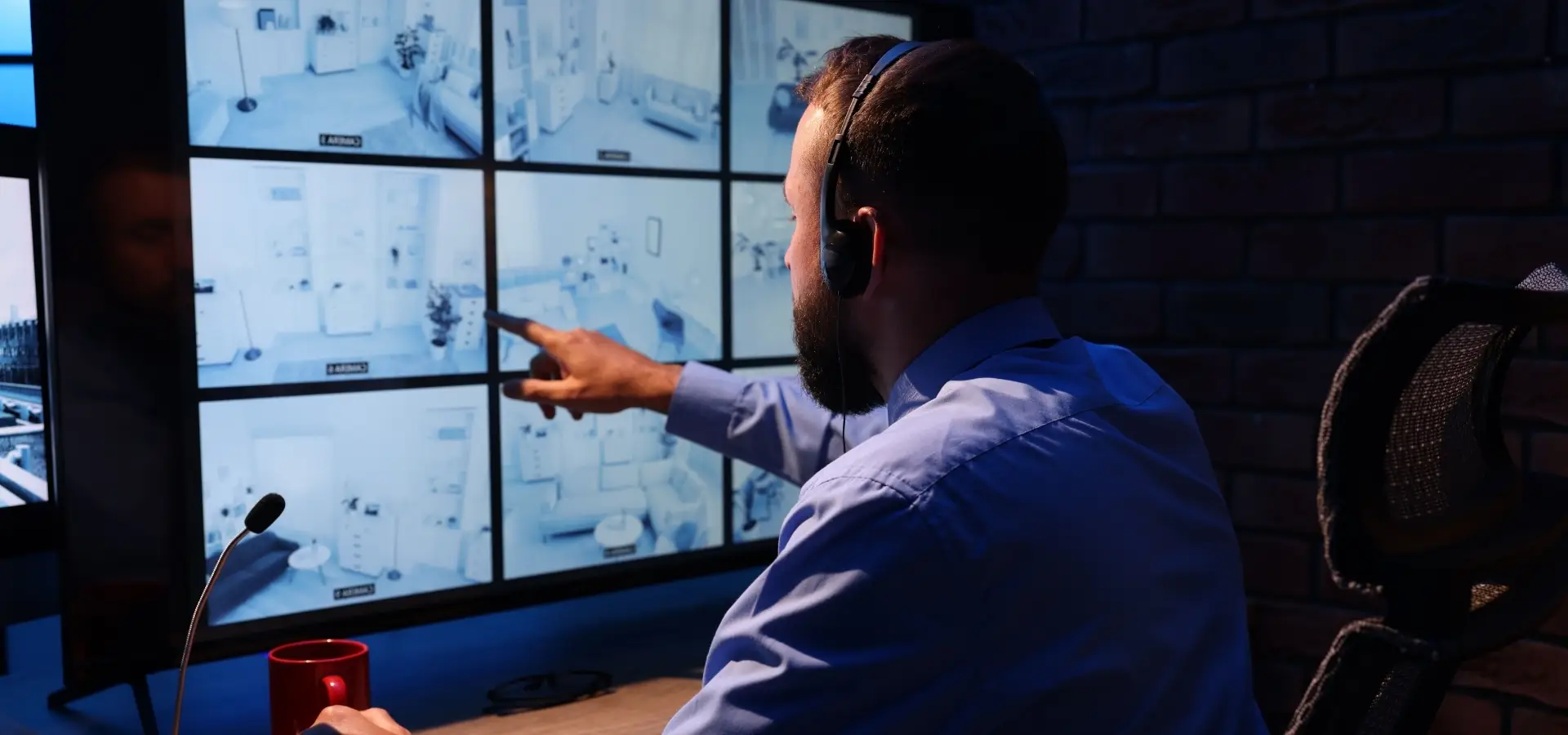
- Business security cameras: Banks, gas stations, pharmacies, convenience stores, and big-box retailers typically have fixed CCTV cameras facing entrances, sidewalks, parking lots, and storefronts. These are owned by the business or a security contractor.
- Parking garage and parking lot cameras: Systems installed in garages and lots often cover drive lanes, payment kiosks, stairwells, ramps, and entrance gates. License plate capture at entry/exit points is common.
- Municipal traffic cameras: Mounted on poles at major intersections and freeways, these are managed by city transportation departments or state DOTs. Some only provide a live monitor feed; others record continuously.
- Residential cameras and smart doorbells: Ring, Nest, and Arlo devices on homes and apartment buildings frequently catch hit-and-runs, sidewalk falls, and street crashes. Many are motion-activated with a short buffer of pre-event footage.
- Dash cams and body cams: Personal vehicles, rideshare cars, and police vehicles often carry cameras. Police body cam and dash cam footage is managed by law enforcement and accessed through a separate process.
How Long Do CCTV Systems and Security Cameras Keep Footage?
Surveillance footage may be overwritten faster than most people expect, because retention limits are the number-one reason people lose critical surveillance footage. Some systems save footage for 24 to 72 hours, meanwhile other security camera systems store footage up to 30 days.
With that in mind, it is important to act quickly to obtain surveillance footage for legal cases, and you should request footage within 24 to 72 hours after an incident whenever possible. Here’s a simple break down of some of the most commonly requested areas of security footage:
How To Request Surveillance Video For Your Case
Step 1: Identify Every Possible Camera Near the Scene and How to Contact Them
You need to identify potential sources of surveillance footage immediately after an incident-before the scene changes and before video is erased. If the accident happened near a business, write down the business name, address, phone number, manager’s name, and the exact location of any visible cameras. If the accident happened on public property, note nearby intersections, traffic signals, bus stops, city buildings, transit stations, and police response details.
Step 2: Send a Preservation Letter
A preservation letter, sometimes called a litigation hold letter, is a written request telling a person, business, or agency to preserve evidence because it may be relevant to a legal claim. It does not always force them to hand over the footage immediately, but it puts them on notice that the video may be evidence in a legal claim. The U.S. Department of Labor’s evidence preservation guidance provides useful context on why evidence collection and preservation should be handled carefully.
Step 3: Determine Whether You Need a Subpoena or Court Order
If the person or business refuses to provide the footage voluntarily, your attorney may need to use formal legal tools. A subpoena can require a person, business, or organization to produce records, documents, video footage, or testimony. Meanwhile, a court order is a directive issued by a judge requiring someone to do or stop doing something. It is also important to be mindful of rules of discovery, because depending on the state, different rules may apply.
Step 4: Be Careful With Audio and Privacy Issues
Video and audio are not always treated the same way, because every state has different privacy laws. For example, under California Penal Code § 632, it is generally unlawful to intentionally record a confidential communication without the consent of all parties.
However, this does not mean every surveillance video is illegal, because security camera recording visible activity in a public store, parking lot, sidewalk, or roadway may raise different issues than secretly recording a private conversation.
What if the Business Says the Video Was Deleted?
If the footage was deleted before anyone requested preservation, it may be difficult to recover. However, the timing matters, because if a business deletes or overwrites footage after it knew or should have known the video was relevant to a claim, that can create a serious evidence issue.
In some cases, an attorney may argue that the destruction of evidence supports sanctions, adverse inferences, or other remedies. Even if the original video is gone, other evidence may still help prove the case such as witnesses, photographs, medical records, police reports, repair records, and even phone data.
How Requesting Video Footage Differs by State
The basic strategy is similar across states: act quickly, identify the camera owner, send a preservation letter, request the footage, and use legal tools if the footage is not voluntarily provided. The legal process, however, changes depending on where the accident happened.
These deadlines are not the same as video-retention deadlines. Footage may be deleted long before the legal filing deadline expires.
Common Mistakes That Cause People to Lose Crucial Video Evidence
These errors are avoidable but surprisingly common after accidents:
- Waiting too long- Assuming the business will hold footage without a written request is the fastest way to lose it. Systems overwrite automatically-no one is watching out for your claim.
- Relying solely on insurance adjusters- Insurance adjusters may delay or fail to contact every camera owner. Take initiative yourself.
- Requesting too broad a time range- Asking for “all video from that day” invites confusion or refusal. Narrow, precise windows are more likely to be honored.
- Recording a screen with your phone- This produces missing timestamps, poor visibility, and credibility challenges at settlement or trial. Always request the native file.
- Posting clips on social media- Sharing video before speaking with a lawyer can create discovery issues and give the other party a strategic advantage.
Get Help Retrieving Surveillance Video for Your Case

Surveillance footage can disappear quickly. If you were injured in an accident, the safest approach is to identify potential cameras, send preservation requests, and get legal help before important evidence is overwritten.
West Coast Trial Lawyers handles personal injury cases throughout California, Nevada, Arizona, Washington, and Colorado. Our attorneys can investigate the scene, preserve video evidence, request public records, subpoena private footage when necessary, and use the footage to help prove liability and damages.
Call (213) 927-3700 or fill out our contact form to schedule a free consultation.