

Getting sideswiped on Sahara or tapped at a Summerlin light is stressful enough. Add in insurance forms, medical bills, and endless delays, and the situation can quickly become overwhelming. The good news? Nevada’s car accident laws give you more leverage than you might think, that is, if you understand them.
This guide breaks down the 10 most important rules after a crash in the Silver State. From comparative negligence and reporting duties to uninsured motorist coverage and statute of limitations deadlines, we’ll cover what really matters for your claim.
Why Nevada’s Car Crash Laws Matter for Your Claim

Nevada is an at-fault (tort) state. This means the driver who causes a crash is financially responsible for all resulting damages. Understanding this framework helps you make the right moves in the critical first few days after an accident—gathering the right photos, identifying witnesses, and avoiding statements that could hurt your case.
In Nevada, “full compensation” includes much more than car repairs. You can pursue medical expenses, lost wages, pain and suffering, and even punitive damages in serious cases. If you were partially at fault, your payout may still stand thanks to Nevada’s modified comparative negligence rule.
For a full overview of insurance claims in the state, visit our guide on Nevada car accident claims.
Law #1: Nevada’s Modified Comparative Negligence (51% Bar Rule)

Nevada’s comparative negligence system allows injured drivers to recover compensation even if they share some fault—so long as they are 50% or less responsible. Once fault reaches 51%, the right to recover is lost.
For example, if your total damages are $100,000 and you’re found 20% at fault, your recovery would be $80,000. This is why insurers often try to inflate your percentage of fault. Solid evidence like photos, witness statements, and crash diagrams can protect you.
Law #2: Statute of Limitations in Nevada

Deadlines can make or break your claim. Under Nevada law, you generally have:
- Two years from the date of the accident to file a personal injury or wrongful death lawsuit
- Three years to file a property damage claim
If the crash involves a government entity, additional notice requirements and shorter deadlines can apply. Waiting too long can permanently bar you from recovery.
To avoid missing critical filing dates, check our page on Nevada’s statute of limitations.
Law #3: Minimum Auto Insurance and Optional Coverages
Nevada requires minimum liability coverage for all drivers:
- $25,000 for bodily injury per person
- $50,000 per accident
- $20,000 for property damage
These limits are often insufficient for serious injuries. Optional coverages such as Uninsured/Underinsured Motorist and Medical Payments (MedPay) can fill that gap.
UM/UIM coverage pays when the other driver lacks adequate insurance, while MedPay covers your medical bills quickly (regardless of fault). Both can significantly speed up treatment and reduce out-of-pocket costs.
You can learn more about how UM/UIM and MedPay affect claims on our insurance coverage guide for Nevada drivers.
Law #4: Hit-and-Run Duties (NRS 484E)
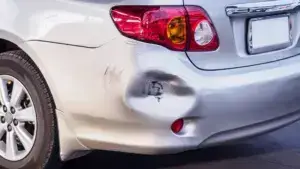
Under Nevada Revised Statutes 484E, every driver involved in an accident must stop, exchange information, and render aid when injuries occur. Leaving the scene of an injury crash is a felony; leaving after a property-only accident is a misdemeanor.
If you’re the victim of a hit-and-run, document everything: vehicle descriptions, plate numbers, and nearby businesses that may have surveillance cameras. Report the incident immediately to law enforcement.
The Nevada State Police Crash Reporting page offers up-to-date procedures for reporting hit-and-run collisions.
If the driver can’t be found, your Uninsured Motorist policy may cover your losses.
Law #5: Reporting and Post-Crash Duties
After any crash involving injuries or major property damage, you must contact police or the Nevada Highway Patrol to file a report.
If law enforcement doesn’t respond, Nevada law may require you to file a Report of Traffic Crash (SR-1) with the Nevada Department of Motor Vehicles within 10 days. The most current reporting instructions can be found on the Nevada DMV crash reporting page.
Even in minor collisions, exchanging insurance and license information is mandatory. Always photograph both vehicles, traffic signals, and nearby landmarks for documentation.
For guidance on what to do immediately after an accident, visit What to Do After a Car Accident in Las Vegas.
Law #6: Recoverable Damages in Nevada

Nevada law allows victims to recover both economic and non-economic damages, including:
- Medical bills and future treatment costs
- Lost wages and diminished earning capacity
- Property damage and loss of use
- Pain, suffering, and emotional distress
In cases involving reckless or intoxicated drivers, courts may also award punitive damages to punish extreme misconduct. For DUI-related crashes, Nevada law lifts the usual caps on punitive damages entirely.
The Nevada Department of Transportation (NDOT) regularly publishes crash data showing that alcohol remains one of the leading causes of serious collisions statewide, underscoring why these laws exist.
Law #7: Diminished Value and Total Loss Claims
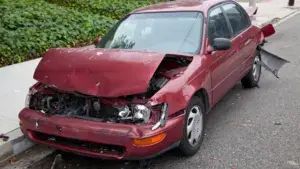
Even after professional repairs, a damaged car loses resale value. Nevada allows drivers to pursue diminished value claims against the at-fault driver’s insurer.
To prove diminished value, gather before-and-after appraisals or comparable vehicle listings in your area. If your car is declared a total loss, the insurer must pay its actual cash value (ACV) which is the fair market price before the crash.
Law #8: Insurance Tactics and Bad Faith
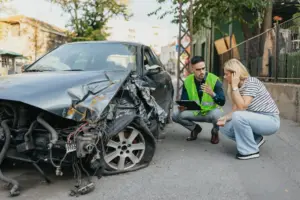
Insurance companies have a legal obligation to handle claims fairly, but many delay, deny, or lowball payouts. Nevada’s Unfair Claims Practices Act prohibits insurers from misrepresenting facts, failing to investigate promptly, or offering substantially less than justified.
If an insurer refuses to act in good faith, you may be entitled to additional damages for bad-faith conduct. Keep detailed records of every communication, and avoid giving recorded statements until you consult an attorney.
Law #9: Rideshare and Commercial Vehicle Crashes

Accidents involving Uber, Lyft, or delivery fleets are governed by both personal and commercial insurance policies. Coverage depends on the driver’s app status at the time of the crash:
- App off: the driver’s personal policy applies
- App on, waiting for a ride: limited contingent coverage applies
- Ride accepted or passenger onboard: commercial coverage with higher limits applies
These cases often involve multiple insurers and data sources like telematics and dashcams. Our Nevada rideshare accident lawyer page explains how these coverages overlap and how we secure compensation when corporate carriers delay or deny.
Law #10: Third-Party Liability in Nevada
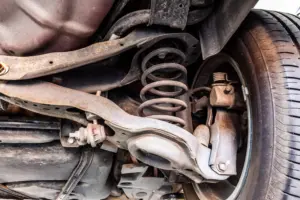
Sometimes the at-fault driver isn’t the only responsible party. Road design defects, faulty car parts, and negligent entrustment (loaning a car to an unsafe driver) can all contribute to an accident. Government agencies can be liable for dangerous intersections, while auto manufacturers may face product liability claims for defective brakes, tires, or airbags.
If alcohol service played a role, note that Nevada generally limits “dram shop” liability, though bars can still face penalties for serving minors. The National Highway Traffic Safety Administration maintains a vehicle defect database where you can check recalls related to your crash.
How West Coast Trial Lawyers Helps Nevada Crash Victims

At West Coast Trial Lawyers, we protect car accident victims across Las Vegas, Henderson, and the greater Clark County area. Our team handles everything:
- Gathering police reports, surveillance footage, and witness statements
- Coordinating medical care and documenting long-term injuries
- Negotiating with insurance companies and filing lawsuits when needed
- Calculating full economic and non-economic damages
On top of it all, you pay nothing upfront, because we only collect legal fees if we win your case. If you’re struggling with injuries, lost wages, or insurance pressure, let our experienced Las Vegas car accident lawyers fight for your recovery.
For a free case consultation call (213)-927-3700 or fill out our easy online contact form.