
Suffering a dog bite is not only painful experience, but it is something victims will need to keep a close eye to ensure their injury is recovering well. While a dog bite can look manageable at first, it can quickly become a serious health issue days later, because a dog bite that barely breaks the skin can still send bacteria deep into muscle, tendon, and bone.
Once an infection develops, the injury may require urgent care, antibiotics, wound cleaning, follow-up appointments, hospitalization, or even surgery. That matters for your health and your legal claim, because a dog owner or insurance company may try to describe the injury as a “minor bite,” but an infection can can increase medical costs, extend recovery time, and affect the overall value of a dog bite case. With that in mind, if you have been bitten by a dog, it is vital to keep an eye out on the most common infections that are associated with dog bites.
Key Takeaways About Dangerous Dog Bite Infections
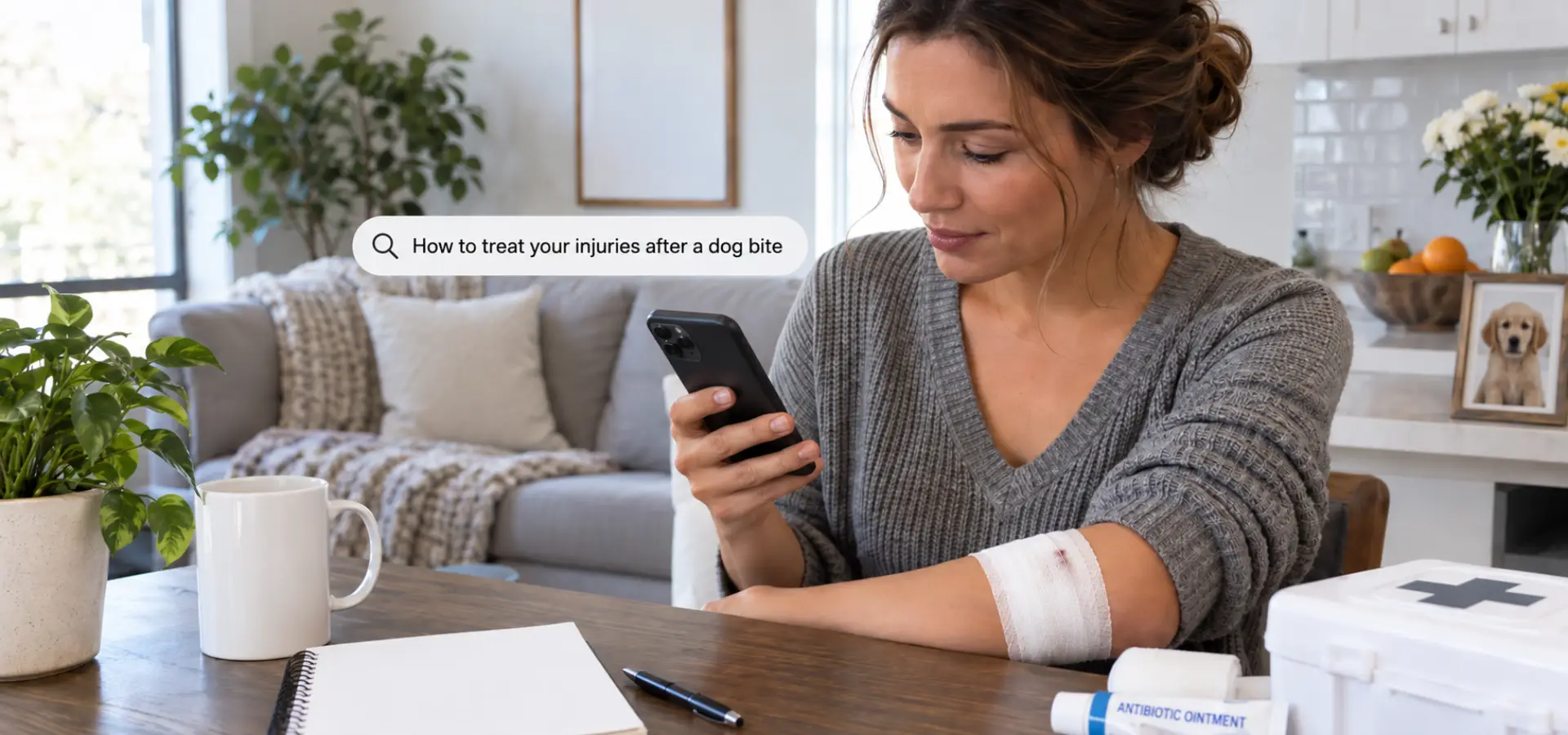
Roughly 4.5 million dog bites occur annually in the U.S. and of those, about 800,000 dog bite victims seek medical attention each year. The risk of infection from a dog bite sits at roughly 15% to 20% overall, but bite injuries can introduce over 64 species of bacteria into a wound in a single bite event, making infections from dog bites frequently polymicrobial.
Here is what matters most in the event of a dog bite:
- Infection risk is real and common- About 1 in 5 dog bite wounds becomes infected. Dog bites can introduce over 64 species of bacteria, including Pasteurella, Capnocytophaga, Staphylococcus, and anaerobes.
- Speed matters- Pasteurella can cause cellulitis within 12 to 24 hours. Capnocytophaga can cause sepsis within days. Rabies is nearly 100 percent fatal once symptoms appear.
- Red-flag symptoms demand emergency treatment- Spreading redness, wound fever, inability to move fingers, confusion, and rapid heart rate are not “wait until Monday” symptoms.
- Seek medical attention the same day– For any bite that breaks the skin, especially on the face, hands, or feet, and especially in children, older adults, and people with a weakened immune system.
- Proper wound care starts immediately- Wash under running water for 10 to 15 minutes. Do not close the wound at home. Go to emergency medicine or urgent care.
Furthermore, children ages 5 to 9, adults over 65, and people with a weakened immune system face the steepest risk of severe infections, sepsis, and death. If you are a victim of a dog bite and are part of any of these groups, it is highly urged to seek same-day medical attention for any bite that breaks the skin.
How Dog Bites Become Infected
Dogs cause 85% to 90% of animal bites in U.S. emergency departments and while other animal bites can be just as dangerous, dogs deliver more crushing force compared to others. As large dogs can generate bite pressure up to 450 pounds per square inch, that force crushes tissue layers below the skin surface, creating oxygen-poor pockets where bacteria thrive, even when the visible wound looks small.
Since dog bites can introduce bacteria deep into tissues within seconds of contact, there are three bacterial sources that can contaminate the wound simultaneously:
- The dog’s oral flora (Pasteurella, Capnocytophaga, Neisseria, Fusobacterium)
- The victim’s own skin bacteria (Staphylococcus, Streptococcus, Corynebacterium)
- Environmental organisms from soil, saliva, or debris
6 Common Dog Bite Infections That You Should Be Aware Of
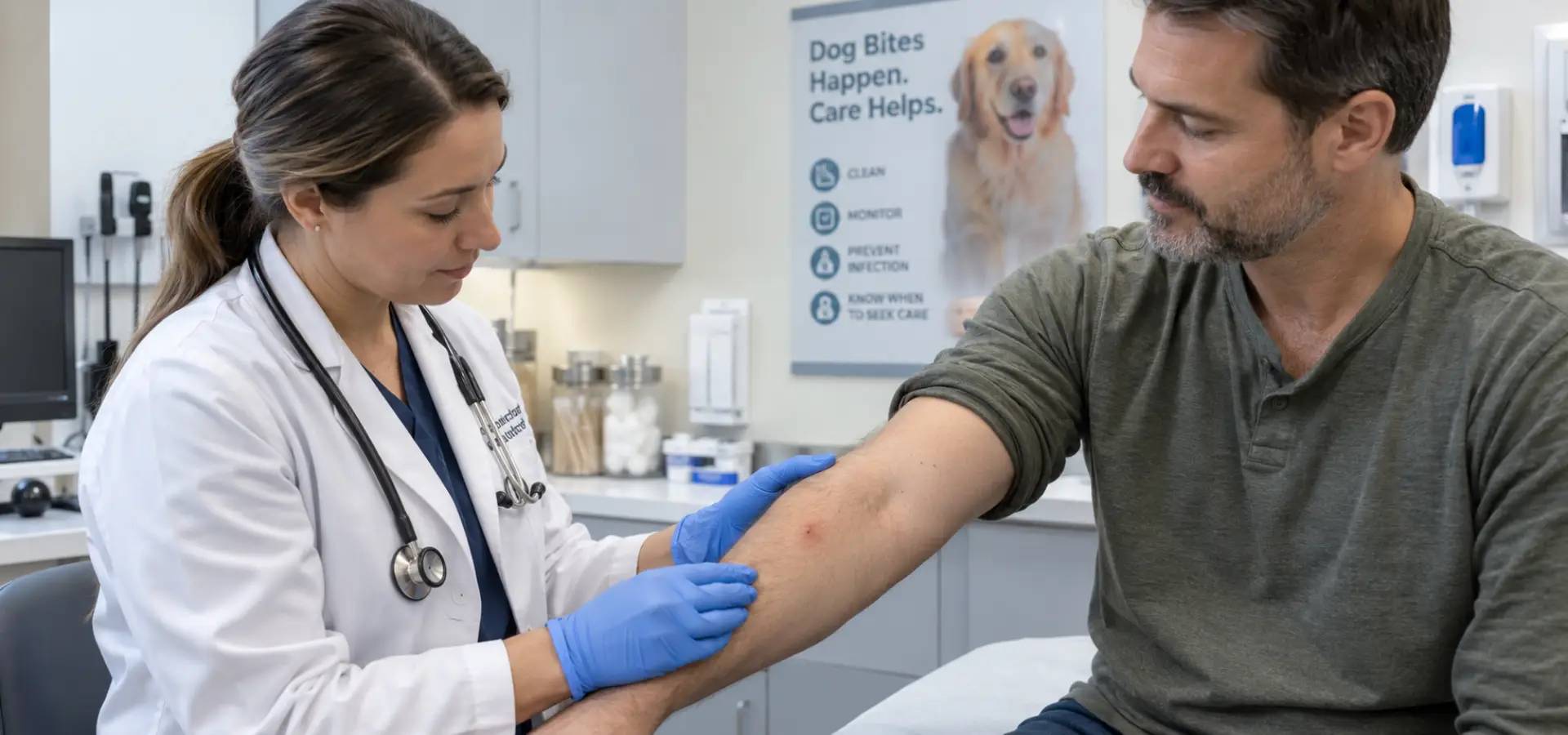
No matter what kind of breed the dog is, doctors may evaluate a dog bite for several types of bacterial infection and disease exposure. The exact diagnosis and treatment plan should come from a medical professional.
1. Pasteurella
Pasteurella bacteria are the most frequently isolated bacteria from infected dog bites. What distinguishes Pasteurella from other common bacteria is speed, because within 12 to 24 hours of a dog bite, patients often develop severe pain, swelling, and cellulitis that progresses faster than a typical wound infection. In more serious cases, the infection may spread into deeper tissue or cause an abscess, as such this type of infection is one reason why wound cleaning and medical evaluation are important after a bite that breaks the skin.
2. Staph and Strep Infections
Staphylococcus and Streptococcus bacteria can cause skin and soft tissue infections after a dog bite and tend to dominate in late infections, appearing more than 24 hours after the bite. These infections may lead to worsening redness, swelling, drainage, pain, and fever and if the infection spreads, it may require stronger antibiotics, additional testing, or emergency care.
3. Cellulitis
Cellulitis is a bacterial skin infection that can spread through the surrounding tissue. It often causes expanding redness, warmth, swelling, and tenderness and if left untreated, cellulitis can become serious and may spread to the bloodstream. For dog bite claims, cellulitis can be significant because it may turn a basic wound-care case into a longer medical timeline involving urgent care, medication, follow-up visits, and missed work.
4. Capnocytophaga
Capnocytophaga is a bacteria that can be found in up to 74% of dog mouths and in many cat mouths. Most people bitten by a dog will not develop this infection, but it can become dangerous for certain people, especially those with weakened immune systems, diabetes, alcohol use disorder, or no spleen. Those who may have capnocytophaga will experience flu-like symptoms (fever, vomiting, diarrhea, muscle aches, joint pain) in about 1 to 14 days after the bite.
5. Rabies
Rabies is a viral disease distinct from the bacterial infection types, but it belongs in any discussion of dog bite infections because of its near-total fatality rate. While rabies from domestic dogs is rare in the United States, but it is still an emergency-level concern when the dog is unknown, unvaccinated, acting strangely, or unavailable for observation.
A doctor or local health department may evaluate whether rabies post-exposure prophylaxis is necessary, but the decision may depend on the animal’s vaccination status and whether the dog can be quarantined or observed.
Red-Flag Signs That a Dog Bite Wound Is Infected
How an Infection Can Affect a Dog Bite Claim
An infection can change the value and complexity of a dog bite claim, because the insurance company may initially treat the case as a simple puncture wound, but infection-related complications can add real damages. Furthermore, a dog bite infection may increase damages by adding:
- Emergency room or urgent care bills
- Antibiotic prescriptions
- Wound cleaning or debridement
- Follow-up appointments
- Drainage procedures
- Hospitalization
- Surgery
- Lost wages
- Scarring or skin sensitivity
- Pain, anxiety, and sleep disruption
- Long-term limitations if the infection affects nerves, tendons, joints, or mobility
As the value of dog bite claims can become disputed very quickly, providing proof is a reliable way to ensure your claim doesn’t get devalued.
Can an Insurance Company Blame You for the Infection?
Insurers can blame you for getting an infection because they often argue that the infection became worse because the victim waited too long to get medical care, failed to follow wound-care instructions, missed follow-up appointments, or did not take medication as prescribed.
However, that does not mean the argument is true, but it is a common way insurers try to reduce payouts. With that in mind, it is recommended to get medical care quickly, follow your provider’s instructions, attend follow-up visits, and keep records of every symptom. If the infection worsens despite treatment, that should be documented as well.
Bitten by a Dog? Talk to West Coast Trial Lawyers Today

A dog bite infection should not be minimized or treated as a minor inconvenience. What starts as a puncture wound can turn into days or weeks of pain, medication, follow-up care, missed work, and permanent scarring.
At West Coast Trial Lawyers, our firm represents dog bite victims and we help them document the full impact of the attack, including infection-related complications. With over 25 years of experience, our dog bite attorneys can investigate the incident, identify the owner, gather animal control records, review insurance coverage, and push back when the insurance company tries to downplay the injury.
Call us today (213) 927-3700 or contact us through our online contact form for a free consultation.