

As riders continue to expand within the cycling community, conversations surrounding bicycle safety have become highly important. Despite efforts implemented, accidents still happen, leaving many injured cyclists with unexpected challenges. Under such circumstances, knowing what your legal options are and when to seek support from a bicycle accident attorney can play an effective role.
When a bike accident occurs, the focus will shift from prevention to recovery and liability. During this time, having the right legal support matters. At West Coast Trial Lawyers, we can help review the situation, defend your rights, and take reasonable steps to move your case forward. At our law firm, bicycle accident lawyers are equipped to handle such circumstances with the utmost level of care and professionalism, working diligently to fight for fair outcomes and provide effective guidance from start to finish.
To schedule a free consultation, please contact our 24/7 legal team by calling (213) 927-3700 or filling out our quick contact form.
Why Choose WCTL For Your Bicycle Accident Claim
For bicycle accident victims, the right legal team makes all the difference. At West Coast Trial Lawyers, our in-person attorneys, including Harvard graduates and nationally recognized legal analysts, manage your case directly. We never outsource, inflate fees, or add hidden costs.
Our team has represented injured clients in cases involving careless drivers and complicated liability issues. With a proven track record of winning over $1.7 billion in combined settlements for our clients, you can be sure that your case will be taken seriously and handled professionally by qualified bike accident lawyers.

Here are just some of the benefits of working with us:
- Our team has more than 20 years of experience handling personal injury cases and understands what kind of evidence needs to be collected to prove liability.
- We prepare all paperwork related to filing an insurance claim or lawsuit so you do not have to worry about it yourself.
- We help navigate disputes between parties involved in the collision, especially when insurance companies try to shift blame or lessen your claim.
We strive to take away as much stress from our clients as possible by keeping them informed every step of the way during the legal process. We believe in justice for those who have been wrongfully injured.
Leading Causes of Bicycle Accidents Every Rider Should Know
Bicycle accidents can happen as a result of repeated behaviors on the road. From how motor vehicle drivers interact with cyclists to visibility issues and equipment failures, some risks tend to show up more often than others. Let’s take a closer look at each one below:
- Negligent drivers: This is one of the most consistent causes, and it shows up when drivers fail to comply with traffic rules. For instance, turning across a bike lane without checking or opening a car door directly into a cyclist’s path. Even a quick lapse in attention can result in a situation where a cyclist has limited time or space to react promptly.
- Inadequate visibility: Circumstances like this happen during early mornings, evenings, or in areas that have poor street lighting. Cyclists may assume they are visible to others, but if they are wearing dark clothing, especially when it is nighttime, it can make it difficult for a driver to notice them.
- Riding under the influence: Whether drugs or alcohol are involved, it can heavily affect the way a bicyclist travels, specifically their balance, coordination, and decision-making abilities. Keep in mind that road conditions are always changing. If under the influence, even a small delay in reaction time can raise the likelihood of a crash with a driver or fixed object.
- Defective bicycle: Worn brake systems, improperly installed components, or sudden tire failure can complicate matters, like making a stop or maneuver when it matters most. These particular issues tend to be overlooked until they trigger an accident.
The Importance of Finding a Local Bike Accident Lawyer
When you have been involved in a bike accident, hiring a local attorney can make all the difference in navigating your case effectively. They understand the specific laws, regulations, and court systems in your area, giving you an edge when it comes to building a strong case. Beyond legal knowledge, regional attorneys often have connections with nearby experts, investigators, and resources that can be crucial to your claim.
Here are just a few of the benefits of working with a local bike accident lawyer:
- In-depth knowledge of local laws: Each state has its own nuances when it comes to handling bike accidents.
- Familiarity with local courts and judges: An area-based attorney knows the preferences and tendencies of judges and other legal professionals in the area.
- Accessibility and personalized service: Meeting your attorney in person can provide peace of mind and foster clear communication throughout the process.
If you are looking for an experienced local bike accident lawyer, we proudly serve in:




Do not settle for generic legal representation. Work with someone who understands the unique challenges and opportunities in your local area.
What the Body Endures in a Bicycle Crash

Bicycle crashes can result in various types of bodily harm depending on how the incident happened and whether a motor vehicle is involved. Common injuries include:
- Broken bones
- Road rash
- Soft tissue injuries
- Spinal cord injuries
- Head injuries
- Traumatic brain injuries
In some cases, affected individuals may not notice symptoms immediately after the impact. Regardless, it is important to seek prompt medical treatment to get yourself evaluated and treated, even if you believe your condition is minor at first. This can help detect any issues that may worsen if no appropriate care is provided.
What Recent Bicycle Accident Data Means for Cyclists
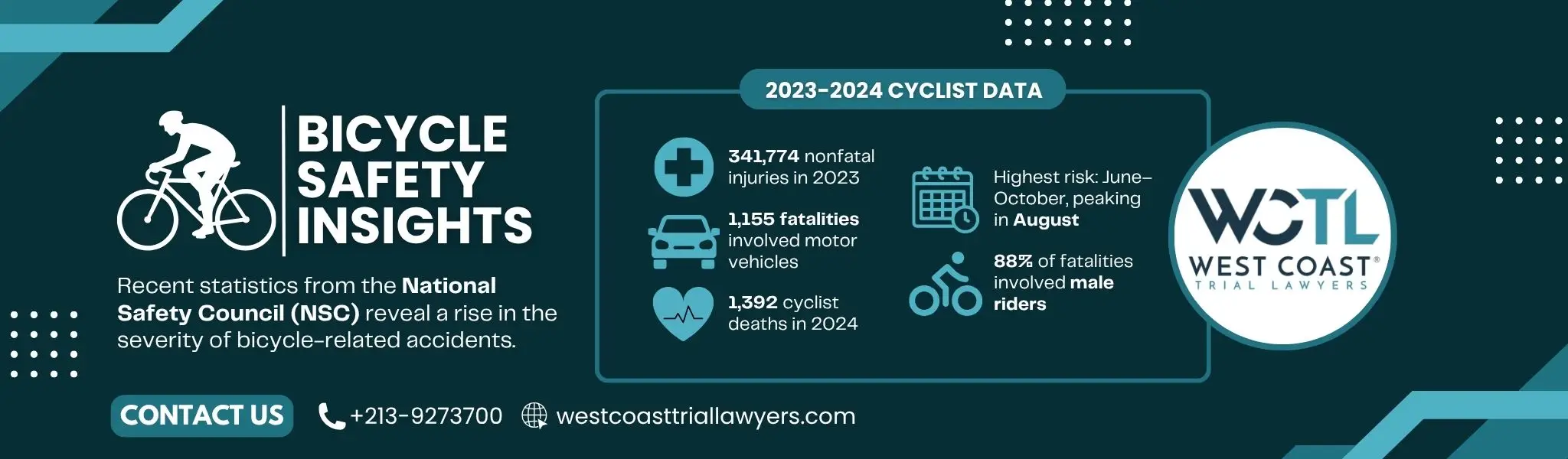
National Safety Council (NSC) data shows that, in 2024, about 1,392 cyclists died, representing a 37% increase over the past decade. While nonfatal injuries decreased to 341,774 in 2023, crashes continue to become more severe. Most deadly collisions involve a motor vehicle, with 1,155 fatalities in traffic crashes reported in 2023. Risk also rises between June and October, peaking in August. In addition, 88% of deaths involved male riders.
What to Do After a Bicycle Accident to Protect Your Claim
What you do after a bicycle accident can affect your ability to recover compensation later. Taking the following steps will help you gather evidence early on and prevent important information from being lost:
- Move to safety: Head to a safer place, if possible, and reach out to emergency services.
- Seek prompt medical treatment: Even if injuries seem minor, symptoms may develop later. An evaluation by a medical expert will help identify any notable concerns that may require short- or long-term treatment. Official health records will be saved and stored on file, in which you can request a copy to use as a way to connect the harm you suffered to the accident.
- Document the scene: Gather as much evidence as you can. This includes taking photos of your bicycle crash, your injuries, and the surrounding conditions. Try to acquire surveillance footage, as well. Be sure to request a copy of your medical records and the police report, and gather witness information, as well, to strengthen your claim.
- Exchange information: Collect the driver’s name, contact details, license plate, and insurance details.
- Consult with a bike accident lawyer: Legal assistance can help you understand your rights, manage communication with insurers, acquire evidence, and build a strong claim to ensure you get the best possible outcome.
Considering these steps will help you preserve evidence and put you in a stronger position to move your claim forward with effective guidance and support.
Who May Be Responsible in a Bicycle Accident Case?
Responsibility in a bike crash is not always straightforward. While some cases come down to a single responsible party, many crashes stem from multiple factors occurring all at once. Determining fault will require looking at how each side contributed to the situation, including what they did leading up to the impact. Based on the circumstances presented, responsibility can extend further from the people who are directly associated with the incident.
Common parties that may be held liable include:
- Other bicyclists
- Government entities
- Bicycle or parts manufacturers
- Motor vehicle drivers
- Other third parties, like cyclists or pedestrians
How Insurance Coverage Applies in Bicycle Accident Cases
Insurance coverage in a bicycle accident will depend on how the situation happened and whether a motor vehicle was involved. Typically, the at fault driver’s auto insurance applies first, however, coverage is limited.
A cyclist may rely on their own uninsured or underinsured motorist (UM/UIM) policy. Other coverages may also apply, including health insurance, or in some cases, homeowners or commercial policies. Since multiple policies can overlap, determining coverage will typically depend on the details surrounding the incident.
What Compensation Can You Recover After a Bicycle Accident?

Compensation after a bicycle accident is determined by the extent of its physical, financial, and personal impact. In most cases, recovery will include economic damages and non-economic damages. This can apply whether the incident involves a traditional bicycle or an e-bike.
Economic damages cover measurable financial losses, including:
- Medical bills
- Lost wages
- Property damage
Non-economic damages refer to the personal impact of the injury, such as:
- Emotional distress
- Loss of enjoyment of life
- Pain and suffering
Working with a firm connected to a wider bike law network can help ensure these damages are properly identified, documented, and pursued based on the specifics of your case.
How West Coast Trial Lawyers Can Help With Your Bicycle Accident Case

If you were involved in a bicycle crash, you may be entitled to pursue legal action against the at fault party to recover compensation. At West Coast Trial Lawyers, our experienced bicycle accident attorneys are readily available to guide you every step of the way. We will document your injuries, manage insurer communication, and build a strong claim that accurately reflects the full extent of the impact, positioning you for a full recovery financially.
To book a FREE consultation with a skilled bicycle lawyer, you can reach out to us by calling (213) 927-3700 or completing our easy online contact form.
Frequently Asked Questions About Bicycle Accident Claims
What If a Bicycle Accident Involves a Hit-and-Run?
A hit-and-run can complicate a bicycle accident case, especially if the driver is not identified. Affected individuals are encouraged to gather details at the scene, like:
- Vehicle description
- Location
- Witness information
Even if the driver is not found, you may still recover compensation through uninsured motorist (UM) coverage. Prompt medical treatment and early documentation can help strengthen your claim.
Can a City Be Liable for a Bicycle Crash?
A city may be liable for a bicycle crash if unsafe road conditions contributed to the incident. This can include certain issues, like:
- Potholes
- Missing signage
- Poorly designed bike lanes
- Malfunctioning traffic signals
Local governments are required to maintain public roads and ensure they meet basic safety standards under applicable traffic laws. If a hazard was known, or should have been known, and not properly addressed, the city could be held liable.
These claims will require victims to show that the condition of the area had an unreasonable risk presented and that the city did not act in a timely manner to have it resolved.
What Happens When a Cyclist Is Hit in a Crosswalk?
When a cyclist is hit in a crosswalk, liability will come down to how the rider was using the crossing and whether the driver complied with traffic laws. If the cyclist was walking alongside their bike, they are generally treated as pedestrians with right-of-way protections. If they were riding through, the approach would be different depending on local rules.
These cases will focus on whether the driver failed to yield or ignore road signals. Since they occur in marked crossing areas, evidence, including witness statements and surveillance footage, are used to determine fault.
What If a Bicycle Accident Involves a Rideshare Driver?
When a bicycle accident involves a rideshare driver, coverage will become effective depending on what the driver was doing moments before the impact. Rideshare companies use different insurance tiers that are based on the driver’s app status. If they were offline, personal auto insurance will apply.
If they were logging in and waiting for a ride, limited rideshare coverage may be effective. When the driver is actively transporting a passenger, higher commercial coverage will usually apply. These cases tend to involve multiple insurance policies, making it important to determine the driver’s status at the time of the incident.
Can a Cyclist Be Sued for Causing an Accident?
A cyclist can be sued if their actions caused an accident. Similar to drivers, cyclists are required to comply with traffic laws and operate with reasonable care while on the road. If they act negligently, like ignoring signals or failing to yield, they may be held responsible for injuries or damages stemming from the crash.
This applies in cases that involve pedestrians, motor vehicle operators, or even other cyclists. Liability is different in each state. Some will allow financial recovery even if they are partially at fault whereas others will bar you entirely if you contributed to the incident.
What Happens If the At Fault Driver Is Uninsured?
If the at fault driver is uninsured, you may still have available options to recover compensation. Many cyclists rely on their own uninsured motorist (UM) coverage, which can help pay for medical treatment and other related losses after a bike crash. Other coverage could also apply depending on the situation presented.
For instance, health insurance, medical payments (MedPay) coverage, or other applicable policies. Since these cases involve limited or missing coverage, documenting the event and seeking care shortly after will play a critical role in supporting your claim.
What Impacts the Timeline of a Bicycle Accident Settlement?
The timeline of a bicycle accident settlement can vary based on how difficult the case is and how long it will take to have a full grasp of the extent of injuries incurred. Notable factors that can affect timing include the following:
- Severity of injuries
- Liability disputes
- Available evidence
- Multiple parties involved
Since each case develops differently and has its own unique factors involved, settlements will range from either a few months to longer timelines.
Can You Still Recover If You Weren’t Wearing a Helmet?
You may still recover compensation even if you were not wearing a helmet at the time of the incident. Lack of protective gear does not automatically prevent you from filing a claim. But, it can affect how damages are assessed.
If the injuries, specifically head trauma or a TBI, could have been reduced with a helmet on, the opposing side may argue that your financial recovery should be lessened. This is handled under comparative fault rules, where liability is shared or restricted depending on which state the accident occurred in.