If you were injured in an accident that wasn’t your fault and want to file a claim, you have to file a claim before the statute of limitations takes into effect. Every state sets their own statutes of limitations and in Oregon, failing to have your claim submitted before the applicable deadline can result in your case getting dismissed regardless of the seriousness of your injuries or the strength of your evidence.
Since different claims have unique filing deadlines and exceptions, it is important to know the correct time limitations that may apply as soon as possible. Taking prompt legal action can help you acquire critical evidence early on, protect your rights, and better your likelihood of receiving the compensation you deserve.
Quick Answer: Oregon Injury Victims Have Two Years to File a Claim
For most Oregon personal injury claims, the statute of limitations is two years from the date of injury or the date the claim accrues. However, several exceptions can change the deadline while some may extend the time to file, while others may shorten the time you have to take action. Here is a brief overview.
When Does the Statute of Limitations Begin in Oregon?
Under Oregon law, injury victims have two years from when the injury occurred to file a claim as per Oregon Revised Statutes (ORS) § 12.110. For example, if you are injured in a car crash on January 1, 2026, the general two-year deadline would usually require the lawsuit to be filed by January 1, 2028.
But not every case is that simple, because some injuries are not immediately obvious. In other cases, an injured person may know they are hurt but may not immediately understand what caused the injury or who may be legally responsible and that is where the discovery rule may become important.
How Do I Know if the Discovery Rule Applies to My Case?
The discovery rule may apply in cases where an injury or how it was caused is not immediately known. In plain English, the question is often when the injured person knew, or reasonably should have known, enough facts to understand that they had a potential claim.
Under Oregon law, the deadline to seek legal action will depend on when a person discovers, or reasonably should have discovered an injury and the conduct that triggered it. Determining whether the discovery rule applies may involve looking into circumstances surrounding the situation, such as physical evidence in addition to other information that can help establish when harm was discovered.
What Are the Deadlines for Filing a Claim Against the State Government?

Any accident claims involving a government entity, law enforcement agency, or public officer acting within the scope of their employment are subject to the requirements of the Oregon Tort Claims Act (ORS § 30.275). Which means, if you need to file a claim against local government you will need to provide a formal written Tort Claim Notice to the appropriate government entity.
For most claims relating to personal injury or property damage, this notice must be submitted within 180 days of the incident. If the claim involves wrongful death, it will be extended to one year from the date of the person’s death.
However, if the injured person is a minor or unable to give a notice because of serious injury, state law may allow the 180-day window to be extended by up to 90 additional days. Furthermore, the notice must include notable details about the claim itself, such as the incident and the severity of the injury. Not providing proper notice within the required timeframe may prevent you from pursuing a claim against a government entity.
What Is the Statute of Limitations for Wrongful Death in Oregon?
A wrongful death claim may be brought when a person is killed as a result of someone else’s negligence (ORS § 30.020). The lawsuit must be brought by the decedent’s personal representative, who acts on behalf of eligible beneficiaries and the estate.
Under ORS § 30.020(1), the claim must generally be filed within three years after the injury causing death is discovered or reasonably should have been discovered, provided that it is also submitted within three years of the death itself in standard filing windows.
How Does the Statute of Limitations Work if the Injured Person Is a Minor?
Under ORS § 12.160, the statute of limitations is paused (or “tolled”) if the victim is younger than 18 years of age. However, Oregon implements a strict statutory limit on this extension, meaning the deadline cannot be pushed back for more than five years nor can it extend more than one year after the minor is 18 years of age, whichever occurs first.
Do Parents Receive the Same Extension for Medical Expense Claims?
If a child is injured, they may have extra time to bring a personal injury claim because of their age. If the child’s parent also has a separate claim for expenses they paid, like medical bills, the parent gets the same amount of additional time to bring that related claim (ORS § 12.160(5)).
Are There Additional Requirements for Injuries Involving Abuse or Neglect?
If the injury comes from abuse, neglect, or unlawful harm, Oregon’s juvenile dependency laws impose mandatory safety and reporting obligations. Under ORS § 419B.010, specified public and private officials (like physicians, teachers, and social workers) who have reasonable cause to think a child has experienced mistreatment or have witnessed a child engaged in abusive conditions are legally required to report the situation immediately. Notices must be made to local law enforcement or to the Oregon Department of human services so that protective measures can be implemented.
Are There Exceptions to Oregon’s Statute of Limitations?
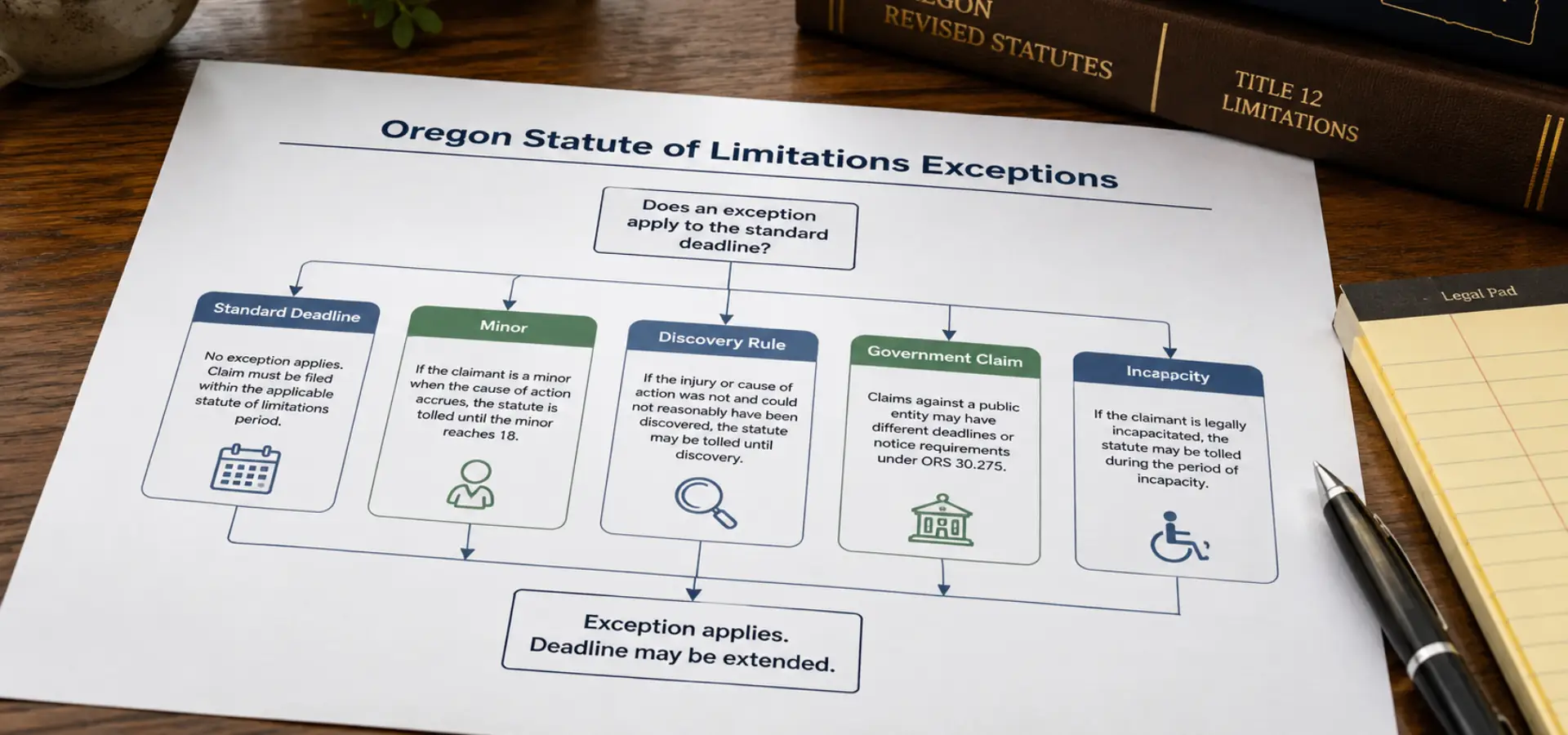
Although Oregon’s statute of limitations provides deadlines for seeking a personal injury claim, there are many exceptions that can impact how these rules apply in certain types of situations. For instance, the type of claim, the factors surrounding the situation, and other legal considerations may ultimately affect the applicable deadline for your particular case.
Under Oregon law, statutes may impose time limits for different types of claims. However, specific situations may be subject to different rules and knowing whether an exception applies can help injury victims have a better understanding of what their available options are in addition to figuring out what the appropriate steps for their situation would be.
Does Filing an Insurance Claim Pause the Statute of Limitations?
Submitting an insurance claim usually does not pause or extend the statute of limitations for seeking a personal injury lawsuit in Oregon. Insurance negotiations do not change the time frame for pursuing legal action, and missing the applicable deadline may affect your ability to recover compensation, even if you have a strong case.
However, there is one Oregon-specific issue involving advance payments. Under ORS 12.155, if an insurer or other party makes certain advance payments for injury, death, or property damage, the effect on the statute of limitations can depend on whether proper written notice of the deadline was given. This is a technical rule, and injury victims should not rely on it without legal advice.
As previously stated, under Oregon law, many personal injury claims must generally be brought within two years from the date of when the incident occurred.
What Happens if I Miss the Statute of Limitations Deadline?
If you miss the deadline for your case, you may lose your chances of recovering damages for the losses you incurred. Courts generally will not allow a claim to proceed after the time period has passed, even if another party may have breached a legal duty or caused harm onto you.
In some cases, exceptions may extend the deadline, like when the discovery rule applies or other factors that prevent a person from bringing a claim within the required period. However, if you wait more than two years for standard personal injury claims, or more than three years for specific actions like wrongful death under Oregon law, you may limit or lose your ability to pursue legal action.
Can I Still Negotiate a Settlement After the Statute of Limitations Has Passed?
Negotiating a settlement after the statute of limitations has passed is very difficult because you lose all legal leverage. Once the deadline has expired, a court will dismiss your lawsuit, thus leaving the insurance company with no financial risk and little reason to offer you a payout.
However, you could still have options if a material element of your timeline, like when the harm was actually discovered or whether the clock was paused because of minor age or defendant absence, shifts the official deadline.
Before you decide to walk away, look into sample comparisons of similar cases, because this will help determine if a tolling exception or insurer misconduct may be applicable. If so, this could keep your claim alive.
Discuss Your Personal Injury Case With Our Oregon Legal Team Today

Understanding and navigating Oregon’s legal deadlines can feel overwhelming, especially with different time limitations set in place for certain cases. Knowing how the statute of limitations applies in your situation is an important first step toward protecting your rights and avoiding unnecessary complications.
If you have any questions about your personal injury case or are in need of professional guidance, West Coast Trial Lawyers is here to help. Our Oregon legal team can assess the circumstances involved, explain the laws that are relevant to your case, and provide trusted support needed to move forward.
Backed by more than $2 billion in recoveries, award-winning attorneys, and client testimonials praising our dedication, communication, and case results, our law firm has built a reputation for trusted, client-focused legal representation. Our award-winning attorneys are determined to fight for the compensation you deserve, and because we work on a contingency fee basis, you pay nothing unless we win your case.
To book a FREE consultation, you can connect with us by calling (213) 927-3700 or completing our easy online contact form.