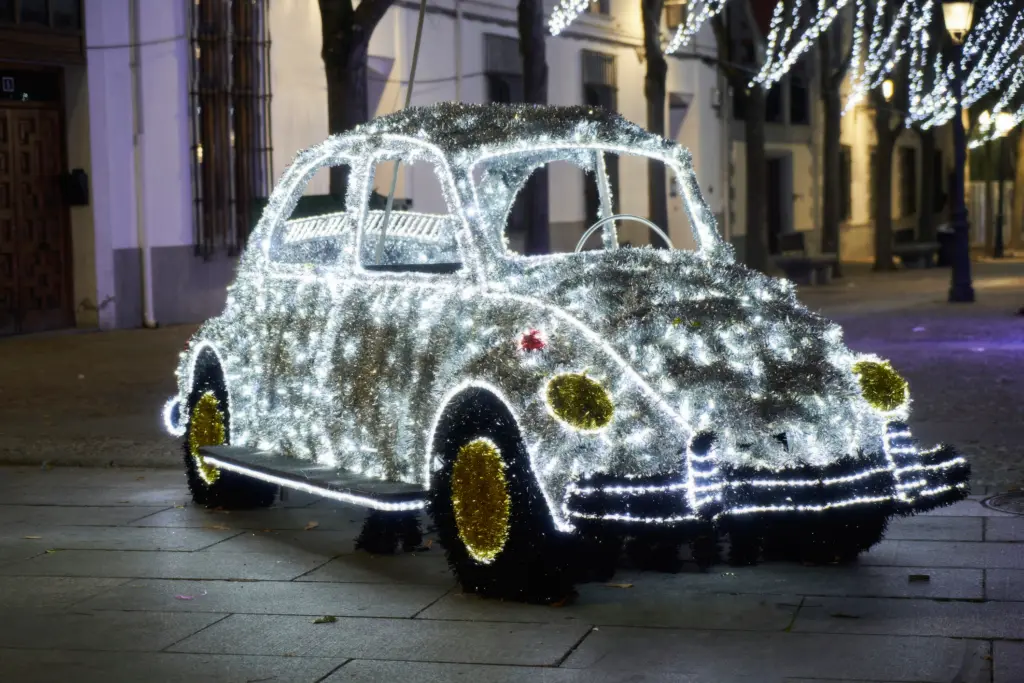
As the holiday spirit takes over neighborhoods across the United States, drivers are looking for festive ways to celebrate. Many people will consider installing lights, ornaments, or seasonal decor to their motor vehicles. While these creative, fun displays can bring joy to the road, they also raise important legal and safety questions that may differ from state to state. Knowing what is allowed and whether it may lead to consequences can help you stay festive without having to run into any trouble during one of the busiest travel seasons of the year.
Are You Allowed to Drive Around with Christmas Lights on Your Car?
Driving around with Christmas lights or decorative lighting on your car is generally not allowed on public roads. California law only allows lights that are legally required or specifically permitted, and most decorative lights do not meet these specific standards. Flashing, multicolored, or non-standard lights can be mistaken for emergency or hazard signals. Operating a vehicle with decorative lights outside of private property or a sanctioned event are prohibited and can lead to fines or citations.
Can Christmas Lights Be a Safety Hazard While Driving?
Christmas lights can create many safety hazards when they are used on a moving vehicle. Bright, multicolored, or flashing lights can distract nearby drivers, especially during the nighttime, drawing attention away from the road or mimicking emergency-vehicle-lighting.
Decorations scattered around windows, mirrors, or the front of the vehicle may reduce visibility or affect the driver’s ability to notice pedestrians or other vehicles close by. In some cases, loose wiring and battery packs can pose debris risks for other road users. Light stands or ornaments that are positioned around the license plate could also partially or fully block the tag, which is prohibited as it must be clearly visible at all times.
These concerns are a major reason as to why most states prohibit or restrict decorative lighting on cars while they are being driven.
What Vehicle Code Rules Apply to Decorative Lights?
According to California Vehicle Code § 24003, you are prohibited from equipping a vehicle with any lamp or illuminating device unless it is authorized by law. This means that decorative lights, like Christmas lights on your car, are usually not allowed unless it complies with the legal definitions of vehicle lamps.
The code also enforces color and placement of lights. Front-facing lights will have to be white or amber, whereas the rear-facing lamps and reflectors will need to be red. Flashing or blinking lights are generally permitted only in specific situations, such as using turn signals, hazard lights, or emergency-warning devices, as outlined in CVC §§ 25250 and 25251. Lights that do not meet these requirements, like multicolored or decorative flashing lights, can be illegal since they can confuse other drivers or resemble emergency vehicle signals.
Simply put, holiday decorations on vehicles, including LED strips, string lights, or any flashing lights, are likely prohibited while driving on public roads in California. Law enforcement typically allows these lights only in private property, stationary displays, parades, or organized shows. The California Highway Patrol (CHP) has issued warnings to motorists about risks associated with holiday lights, stating that specific colors, particularly red and blue lights that are visible from the front, are reserved for emergency vehicles and should not be used as decoration.
According to the most recent “Uniform Bail and Penalty Schedule,“ a violation of “Vehicle With Unauthorized Lamps” will be given a base fine of $25. But, with state and county court fees and assessments included, the total could rise significantly, roughly to around $186 to $197, depending on the county. Local courts may also implement higher penalties based on additional factors.
Do Laws Differ from State to State?
Laws on driving with Christmas lights will vary state to state.
Arizona
In Arizona, there is no specific ban on holiday lights. However, they do enforce rules that still restrict most decorative lighting once the car is in motion. Under ARS § 28-931, vehicle lighting will need to follow strict color and placement requirements. This includes white or amber in the front, red in the rear, and no unauthorized flashing lights.
Since Christmas lights are usually multicolored or flashing, these decorations can go against established standards and may result in a traffic stop. Fines may be up to $187, but the final amount will vary by jurisdiction and may include additional fees.
Nevada
In Nevada, the restrictions are more clear. NRS § 484D.145 regulates lighting equipment and prohibits any lamps or devices that do not meet required color and function rules. Police have publicly mentioned that Christmas lights on a moving car are prohibited because they appear to mimic emergency lights or distract other drivers on public roads. Because of this, driving with holiday lights illuminated on your car is illegal all throughout the state, and officers will cite drivers under improper equipment sections of the vehicle code.
Violating this regulation does not carry a fixed statewide fine by itself. Instead, it is usually enforced under the “unsafe vehicle” statute, and fines are set in accordance to local bail schedules. Depending on the county and the circumstances involved, penalties for improper lighting can be $50 to $250 (in addition to court fees and assessments).
Washington
In Washington, the law focuses on whether aftermarket lights are in use while driving. While the state does not specifically reference Christmas lights, rules detailed under WAC § 204-21-230 regulate aftermarket neon and decorative lighting. These lights can be installed, but they are not allowed to be turned on while the vehicle is in motion in a public setting.
Local law enforcement have confirmed that drivers may be cited if decorative lights are seen illuminated while driving. Such lighting is typically allowed, but only when the car is parked, part of a parade, or is on private property. While the law does not set a fixed statewide fine, but authorities may issue a citation under equipment violation laws. Fines could run around $124 depending on local enforcement and jurisdiction.
Are There Exceptions for Parades or Special Events?
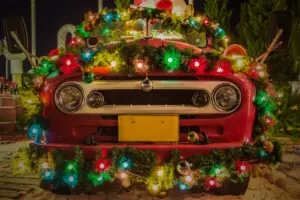
Police in certain states, such as California, Nevada, and Washington all allow decorative lighting and holiday accessories on vehicles when the car is part of an officially special event.
In California, vehicles involved in permitted events are exempt from lighting restrictions that would typically apply on public roads. Nevada law enforcement also highlighted that while holiday lights are illegal during a normal drive, they are permitted when involved in recognized parades or displays. Washington follows a nearly similar approach. Decorative or aftermarket lights can be used when the vehicle is stationary at an event or is engaging in a legally permitted parade.
Once the event has concluded, all standard lighting and equipment laws will immediately apply again.
How Can I Decorate My Car Safely and Legally?
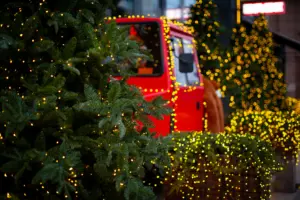
To decorate your car safely and legally, you should try to use non-illuminated items that do not tamper with your visibility or vehicle functions. For instance, reindeer antlers clipped to windows are usually allowed as long as it does not block your mirrors or obstruct your view of the road. It should be securely placed, restricting it from flying off at higher speeds. Avoid placing decorations near headlights, taillights, or the license plate, since anything that covers or changes the appearance of required lighting could result in citations.
To prevent confusion for other drivers, try not to use flashing, multicolored, or emergency red or blue lights while driving. These are illegal in most states and can be mistaken for law enforcement or hazard signals. Be sure to keep all decorations lightweight and have them placed properly. You should make sure that nothing tampers with windows, sensors, or safety equipment either. If you want to use holiday festive lights on your car, limit it to private property, parked displays, or have it used during sanctioned parades in which such decorations are specifically allowed.
How Can Legal Services Help Resolve Disputes Over Decorations in a Car Accident?

Legal services can help resolve disputes regarding vehicle decorations by evaluating whether the items used violate state laws or create safety concerns, especially during the holiday season when such issues become more common. An attorney can assess the citations or complaints involving vehicle decorations that may have caused trouble, such as blue lights visible from the front of the vehicle, which are not allowed since they mimic emergency lights.
A legal expert can also negotiate with law enforcement or local agencies, challenging improper tickets, and clarifying whether specific decorations actually go against certain vehicle codes. They may also advise clients on how to modify or remove decorations to avoid additional penalties, and can help resolve neighbor, HOA, or community disputes associated with seasonal displays.
How West Coast Trial Lawyers Can Help with Christmas Light Violations

If you are dealing with car accidents related to vehicle decorations, West Coast Trial Lawyers is here to help. Our team can assess the facts, explore your rights, and guide you toward a resolution that can protect your record and give you a peace of mind. Whether it is a misunderstanding about lighting laws or even a disagreement over seasonal displays, we will provide thorough support so you can focus on enjoying the holiday cheer without the need to worry about legal complications.
To book a FREE consultation, you can reach out to us by calling (213) 927-3700 or completing our easy online contact form.