
When someone is injured in an accident, medical treatment cannot wait and accident victims are treated with prompt medical care, surgery, and diagnostic testing which can result in thousands of dollars in medical expenses. In such scenarios, injury victims will likely not have enough money to pay for these bills and will have to wait for their insurance company to determine liability or negotiate a settlement.
However, depending on how those medical expenses are paid, a healthcare provider may later seek reimbursement from the compensation recovered through the personal injury claim. This is where medical liens and reimbursement claims can become an important part of the settlement process and understanding how these claims work is important because the amount an injured person settles a case for is not necessarily the amount they ultimately receive.
What is a Medical Lien?

A medical lien is a legal claim that allows a healthcare provider, health insurer, government program, or another entity that paid for accident-related medical treatment to seek reimbursement from your settlement when it is available.
For example, if you receive a $100,000 car accident settlement but have a $20,000 medical lien for treatment that you received right after the accident, that lien will need to be resolved and paid before the remaining settlement proceeds can be distributed to you.
How Does a Medical Lien Work?
A medical lien gives another party some portion of the compensation recovered through your personal injury claim. In the context of personal injury claims, hospitals may assert a lien for unpaid treatment, a health insurer may seek reimbursement for benefits it paid, or a government healthcare program such as Medicare or Medicaid may have statutory reimbursement rights for any medical bills they have taken care of.
The basic process may look like this:
- You are injured- You receive medical treatment after a car accident, slip and fall, or another incident.
- Someone pays for the treatment- This could be your health insurer, Medicare, Medicaid, or the medical provider may agree to defer payment.
- You pursue compensation- You file an insurance claim or personal injury lawsuit against the party responsible for your injuries.
- A lien or reimbursement claim is asserted- The provider or payer claims a right to recover certain accident-related medical expenses.
- Your personal injury case resolves- You receive a settlement, judgment, or other recovery.
- Valid liens are addressed- Applicable liens and reimbursement claims are addressed and the remaining funds can be distributed to the injury victim for their own personal use.
Is a Medical Lien the Same as a Medical Bill?
A medical bill and a medical lien are not the same, because a medical bill is an amount a provider says you owe for treatment. A medical lien, on the other hand, is a legal claim or contractual right that seeks payment from a particular source of recovery, such as a personal injury settlement. This distinction can become important when calculating what actually needs to be paid after a personal injury settlement.
What Are the Different Types of Medical Liens?

A “medical lien” is often used as a broad term, but there are several substantially different reimbursement arrangements that may affect a personal injury case.
Healthcare Provider Liens
A doctor, chiropractor, surgeon, physical therapist, or other provider may sometimes agree to treat an injured person while their personal injury case is pending. Rather than requiring immediate payment, the healthcare provider may agree to receive payment from a future settlement and the patient may be asked to sign a lien agreement acknowledging the provider’s right to payment.
This arrangement can help an injured person obtain treatment when they cannot afford substantial out-of-pocket expenses while waiting for their claim to resolve. However, it is important to remember that treatment on a lien is not free medical care, because the patient may remain responsible for the bill even if the personal injury claim produces less compensation than expected.
Hospital Liens
Hospitals may also have statutory lien rights under state law. In California, for example, the Hospital Lien Act (California Civil Code § 3045.1), allows qualifying hospitals to provide injury victims a lien in the event that they require immediate medical care and treatment.
However, California law limits how much a hospital may recover through this statutory lien, because under California Civil Code § 3045.4, the lien cannot exceed 50% of the amount recovered by the injured person after deducting prior liens. Hospital lien laws vary considerably between states, so the existence and enforceability of a hospital lien should be evaluated under the law governing the claim.
Health Insurance Liens and Reimbursement Claims
If private health insurance paid for treatments related to your accident, the insurer may claim a right to recover some of those payments from your personal injury recovery. Frequently referred to as subrogation claim, these claims are a contractual right that allows insurance companies to recover the money it paid on your behalf from the party responsible for the accident.
For example, California Civil Code § 3040 limits reimbursement by tying it to the amount actually paid by the insurance plan for medical services rather than the provider’s original billed amount and provides additional limitations based on the injured person’s recovery and attorney involvement. The rules can become significantly more complicated when an employer-sponsored health plan is governed by the federal Employee Retirement Income Security Act (ERISA).
Medicare Recovery Claims
People sometimes refer to Medicare’s reimbursement right as a “Medicare lien,” although the Centers for Medicare & Medicaid Services (CMS) explains that the more accurate term is a Medicare Secondary Payer recovery claim.
Under the Medicare Secondary Payer rules, Medicare should not ultimately bear the cost of medical treatment when another payer is responsible. Medicare may nevertheless make conditional payments while responsibility for payment is being determined. If the beneficiary later receives a settlement, judgment, award, or other payment, Medicare can seek reimbursement for qualifying conditional payments associated with the claim.
Medicaid and Medi-Cal Liens
Medicaid programs may also seek reimbursement when they paid medical expenses resulting from an injury caused by a third party. For instance in California, Medicaid is administered through Medi-Cal and has a right to recover medical expenses when Medi-Cal benefits were provided for treatment for injuries for which a third party may be liable. These claims can involve different rules from ordinary hospital or private health insurance liens and should be separately identified when resolving a settlement.
How Do Medical Liens Affect a Personal Injury Settlement?
Medical liens can directly affect your net settlement, meaning the amount you actually receive after deductions. Consider the following example:
While this example is only illustrative, the important distinction injury victims should be aware of is between gross settlement value and net recovery, because attorney fees, litigation expenses, medical liens, and other deductions vary substantially from case to case. Meaning a $100,000 settlement does not necessarily mean the injured person receives a $100,000 check and injury victims should be mindful of their expectations.
Can Medical Liens Be Negotiated?
Depending on the nature of the accident, some medical liens can potentially be reduced, but a reduction is not guaranteed. Whether negotiation is possible depends heavily on the type of lien involved, because a personal injury attorney may review a lien to determine whether:
- The amount being claimed is accurate.
- Every treatment listed actually relates to the accident.
- The lien was properly created or perfected.
- State law limits the amount that can be recovered.
- The lienholder is seeking charges it is not legally entitled to recover.
- Attorney fees or litigation costs affect the reimbursement calculation.
- The provider or lienholder is willing to accept a reduced amount.
- Paying the entire lien would consume an unreasonable portion of a limited settlement.
For example, if a medical provider asserts a $30,000 lien against a relatively small settlement, an attorney may attempt to negotiate the balance so the injured client is not left with little or no recovery.
What Happens If a Medical Lien Is More Than Your Settlement?
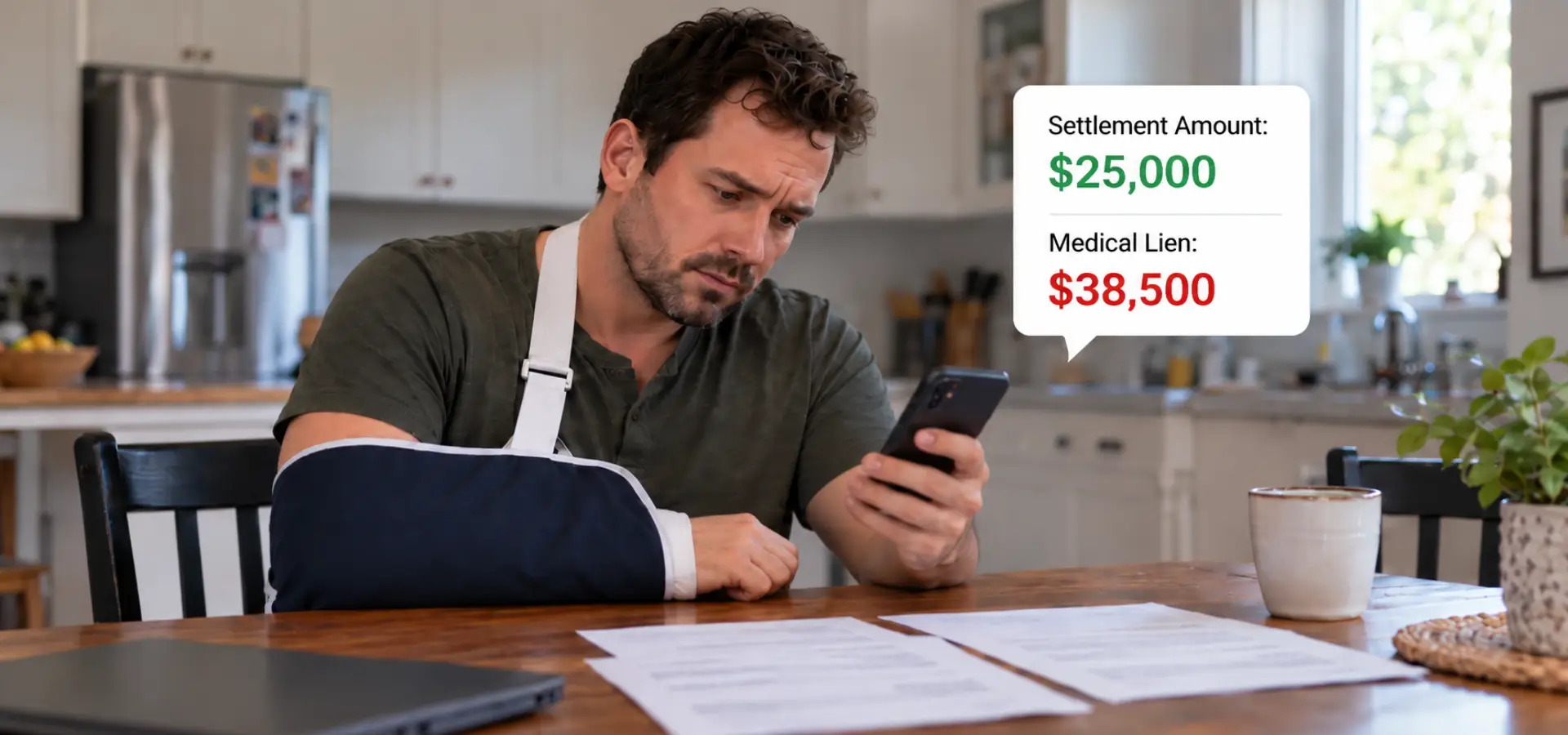
A large medical lien can create complications when the available insurance coverage is insufficient to compensate the injured person fully. However, this does not necessarily mean that the lienholder automatically receives the entire settlement, because the outcome can depend on factors such as the type of lien, state laws, lien limits, and whether the lien can be challenged or reduced. With that in mind, if you have a medical lien that is more than your settlement a personal injury lawyer can look into the details and provide a reasonable resolution.
Can You Ignore a Medical Lien?
Ignoring a valid medical lien can create serious financial and legal problems, because depending on the lienholder and applicable law, failing to properly resolve a lien could potentially result in collection efforts, reimbursement demands, litigation, and create other problems. For example, if you ignore paying a medical lien in a personal injury case, the lienholders can sue you and your attorney for the unpaid balance and you may receive financial penalties as a result.
Can a Medical Lien Affect How Long It Takes to Receive Your Settlement Check?
The amount of time it takes to resolve medical liens can definitely delay the final distribution of a personal injury settlement check, because reaching a settlement with an insurance company does not necessarily mean the injured person can immediately receive all of their settlement funds.
A personal injury attorney may still need to:
- Confirm outstanding lien balances.
- Request updated or final reimbursement amounts.
- Review disputed medical charges.
- Negotiate eligible provider liens.
- Resolve Medicare, Medicaid, or health insurance reimbursement claims.
- Obtain documentation showing that liens have been satisfied.
The purpose of this process is to prevent settlement funds from being distributed while an enforceable reimbursement obligation remains unresolved, because if all medical liens are not processed correctly, it can potentially result in fines and additional legal penalties.
How Can a Personal Injury Attorney Help With Medical Liens?
Resolving liens can have a substantial effect on how much compensation an injured person ultimately keeps. A personal injury attorney may help by identifying potential lienholders early in the case, reviewing whether asserted liens are valid, checking whether the amounts claimed are accurate, disputing unrelated charges, negotiating reductions when permitted, and coordinating payment when the case resolves.
For example, there can be a meaningful difference between a $100,000 settlement – $40,000 in liens = $60,000 before other deductions vs a $100,000 settlement – $25,000 in negotiated liens = $75,000 before other deductions. However, not every lien can be reduced, and the amount ultimately owed depends on the applicable law, lien type, healthcare plan, treatment, and circumstances of the individual case.
Contact West Coast Trial Lawyers About Your Medical Liens Today

Medical liens can make an already complicated personal injury claim even more difficult to navigate. Receiving a settlement is only part of the process, and making sure all other parties receive what they are owed is an important part of the legal process.
If you were injured because of someone else’s negligence and are concerned about medical expenses or liens against a future settlement, contact West Coast Trial Lawyers to discuss your legal options.
Call (213) 927-3700 or use our online contact form to speak with our legal team.
Frequently Asked Questions About Medical Liens
Can My Doctor Put a Lien on My Personal Injury Settlement?
A healthcare provider may sometimes provide treatment under a contractual lien arrangement that allows the provider to seek payment from a future personal injury recovery. State law can also create statutory lien rights for certain providers, including qualifying hospitals.
Can My Health Insurance Take Money From My Settlement?
Potentially, because a health insurer may have subrogation or reimbursement rights for medical expenses it paid because of the accident. The extent of those rights depends on the insurance plan and applicable state and federal law.
Does Medicare Have to Be Paid Back After a Personal Injury Settlement?
Medicare can require reimbursement for qualifying conditional payments made for treatment associated with an injury for which the beneficiary later receives a settlement, judgment, award, or other payment.
Can I Negotiate My Medical Bills After a Settlement?
Some medical provider liens and bills may be negotiable. Government reimbursement claims and health plan liens may be governed by specific statutory, regulatory, or contractual rules. A reduction therefore cannot be assumed.
What If a Medical Lien Includes Treatment Unrelated to My Accident?
The claimed charges should be reviewed. For example, Medicare specifically provides a process for disputing claims included in its conditional payment calculation when the beneficiary or representative believes the treatment is unrelated to the underlying claim.
Will a Medical Lien Reduce My Pain and Suffering Compensation?
A lien generally affects the proceeds available from the overall settlement rather than specifically attaching only to the portion characterized as pain and suffering. The exact effect depends on the lien, settlement structure, and applicable law.