
In the wake of a brain injury, life can feel like a relentless storm. It is not just about facing the injury itself, but also the wave of legal and financial uncertainties that follow. This is where we step in. As dedicated brain injury lawyers, we are not just here to guide you through the legal maze. We are here to light your path back to hope. With compassion at the heart of our practice, we understand the challenge you are facing both emotionally, physically, and financially.
Our mission is to shoulder the weight of these worries, focusing on securing the compensation you need for medical expenses, lost wages, and emotional suffering. We are more than legal advisors. We are your advocates, committed to ensuring you are given a fair settlement while also holding negligent parties accountable for the losses you incurred.
To schedule a FREE consultation with a skilled traumatic brain injury attorney, we invite you to reach out to us by calling (213) 927-3700 or completing our easy online contact form.
Why Clients Turn to Us

Clients turn to us for trusted legal representation because we are backed by over 20 years of experience managing personal injury cases. At West Coast Trial Lawyers, we have a team that holds a strong track record, with more than $1.7 billion recovered for those we represent. We offer 24/7 legal support, giving you access to professional guidance whenever you need it.
Our multilingual services ensure clear communication and support for clients from diverse backgrounds. You will also have direct access to a personal injury attorney so your case is given the attention it deserves, especially in matters involving a brain injury caused by someone else’s negligence. Our goal is to provide reliable support and help you seek accountability and fair compensation.
What Is a Traumatic Brain Injury (TBI)?

A traumatic brain injury (TBI) is a disruption in the brain’s normal function caused by a bump, blow, or jolt to the head, or a penetrating head injury. TBIs can vary in severity, from mild cases like concussions to severe traumatic brain injury that can lead to long-term disability or even death.
According to the Centers for Disease Control and Prevention (CDC), TBIs are a leading cause of death and disability in the United States. The impact of a TBI can be profound, affecting cognitive abilities, physical health, and emotional well-being.
Common Causes of Brain Injuries
Brain injuries can stem from various types of intense moments in which the head or body is struck with force that causes the brain to shake or move inside the skull. In many cases we see, this may happen because of:
- Slip and fall accidents: According to the Centers of Disease Control and Prevention (CDC), slip and falls are the leading cause of serious brain injuries, and are responsible for almost half of the TBI-related hospitalizations in the United States.
- Car accidents: Motor vehicle crashes are another notable factor, usually resulting in high-impact trauma and severe head injuries.
- Firearm-related suicide: This is the most common cause of a traumatic brain injury. Assaults, like physical violence or being hit by an object, are major contributing factors, leading to blunt force or in serious cases, life-threatening brain damage.
- Medical malpractice: While such an occurrence is less common, preventable medical errors, like delayed diagnosis or surgical mistakes, can lead to brain injuries.
- Explosions and blasts: Military personnel and civilians exposed to explosions and blasts can suffer from brain injuries. The pressure waves may cause significant brain trauma even without a direct blow to the head.
What the Data Shows About Brain Injury Cases
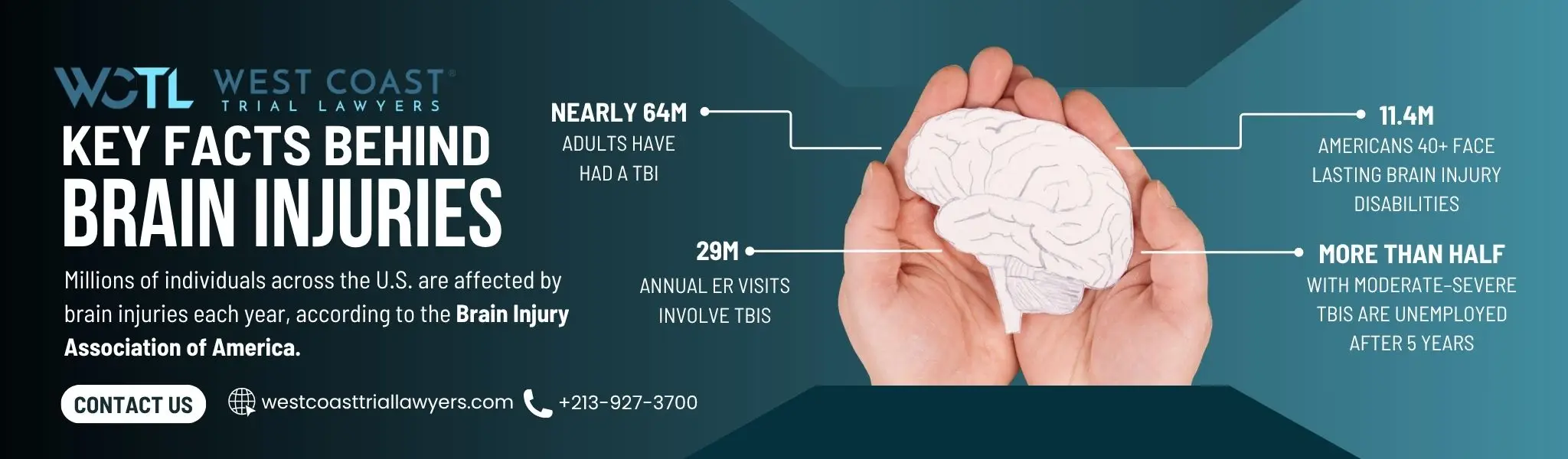
Brain injuries have affected millions of individuals across the United States. According to the Brain Injury Association of America (BIAA), approximately 64 million adults have experienced one or more TBIs in their lifetime. About 2.9 million TBI-related emergency department visits were reported each year. Furthermore, 11.4 million Americans who are 40 and older are living with a disability connected to a prior brain injury. Other additional information surrounding brain injuries include the following:
- Over 500,000 service members have been diagnosed with a TBI since 2000
- More than half of adults with moderate to severe TBIs are no longer working five years post-injury
- TBI rates among adults may exceed emergency data estimates by over 30 times
Types of Brain Injuries We Commonly See in Accident Cases
Not every brain injury has the same symptoms. In many of the cases handled, the severity will not be as noticeable in the beginning. Some individuals will walk away from the incident thinking they took minor harm from the impact, only to later realize that something doesn’t feel quite right.
One of the more common injuries is a mild concussion. This is typically dismissed early on. People will tend to experience brief confusion and headaches, or even sensitivity to light. But, they will resume with their day assuming the issue will resolve on its own. This, however, is not always the case. For some, symptoms may persist or start to interfere with daily responsibilities.
At the other end of the spectrum are cases involving widespread brain damage, which happens when the brain is deprived of oxygen or is met with significant trauma. This can affect several areas at once, resulting in more severe complications. Unlike a mild concussion, the effects can be more extensive and require ongoing medical care to improve quality of life.
The Importance of Finding a Local Brain Injury Lawyer
When a brain injury occurs in an accident, having someone on your side who is familiar with the local process can make a notable difference in how your case is being managed. A trial attorney who works in your area will know how to handle such claims and can adjust strategy in accordance with your specific legal circumstances.
Local attorneys also have established connections with nearby medical experts, investigations, and other resources that can help support the development of your traumatic brain injury (TBI) case. Here are some additional benefits of having a legal representative that specializes with local ordinances in your area:
- Knows how laws are applied: While state regulations set the framework, how they are handled will differ based on the brain injury claim presented and the legal factors involved
- Familiarity with courts and decision-makers: A trial attorney with local experience has insight into how cases are usually approached and what to expect throughout the process of your traumatic brain injury lawsuit
- More direct access and communication: Being able to meet in person will make it much easier for you to stay informed and remain actively involved throughout your case
If you’re looking for an experienced local brain injury lawyer, we proudly serve clients in the following states:




Subtle Signs of Brain Damage That May Not Show Up Right Away

Early signs of brain damage don’t usually show up right away. In most cases, people will leave the accident scene thinking that they are okay, only to notice subtle changes hours or even days later. Paying attention to these signs matters as early medical care can affect how the injury develops. Below are some conditions to keep an eye out for:
- Lost consciousness
- Headache
- Confusion
- Dizziness
- Blurred vision
- Sensitivity to light
- Slurred speech
- Unusual drowsiness
If either of these issues arise, it is important to seek medical attention as soon as possible even if you think it could be mild. Anything that is left untreated for an extended period of time may gradually progress and worsen.
How Can a Brain Injury Affect Daily Life?
A brain injury can affect every aspect of your life. Some people will experience temporary effects while others may be met with long-term complications that can interfere with their independence.
Cognitive
Brain injuries can disrupt cognitive function, affecting how a person is able to process information and retain memories. The following conditions can make it difficult to fulfill daily tasks or stay mentally organized:
- Trouble concentrating
- Memory loss
- Slower processing
- Difficulty making decisions
Physical Effects
Physical symptoms are one of the most notable changes after a brain injury and can continue over time. Symptoms may include:
- Ongoing headaches or fatigue
- Balance issues
- Sensitivity to light or noise
- Sleep disturbances
Emotional and Behavioral Changes
A brain injury can affect emotional regulation and behavior. Affected individuals may experience:
- Mood swings
- Anxiety
- Depression
- Impulsivity
- Irritability
Communication Difficulties
Damage to certain areas of the brain can tamper with communication skills, making it more difficult to express thoughts or understand others. This includes dealing with:
- Trouble speaking clearly
- Difficulty understanding conversations
- Struggling to read or write
Daily Functioning and Independence
Brain injuries can affect a person’s ability to live independently. Ongoing support or rehabilitation may be needed to enhance quality of life. Certain complications may include challenges met with completing routine tasks or reduced ability to go to work or attend school.
When Does a Brain Injury Turn Into a Personal Injury Claim?

A brain injury may turn into a personal injury claim when it is connected to someone else’s negligence. These cases are typically more serious than they initially appear since effects can be anywhere from short-term symptoms to lasting changes that may trigger a major impact to your daily lifestyle.
We often notice claims being filed after car accidents or unsafe property conditions. In each of these scenarios, the focus is on whether the other party failed to take reasonable steps to prevent harm and if that led to the injury. More specifically:
- The defendant owed you a duty of care
- The defendant went against their legal obligations
- The breach caused you to suffer injuries and damages
Evidence, like medical records, accident reports, and witness statements, are generally used in such claims. Given the complications that are associated with brain injury cases, it is important to consult with an experienced attorney who can look into your situation and help you understand the legal options you have available.
What Should You Do After a Brain Injury to Protect Your Rights?
After a brain injury, taking the right steps is important for your health in addition to any potential legal claim. Whether you are dealing with a mild condition or a severe brain injury, considering the actions listed below will help prevent complications and protect your legal rights:
- Seek medical care immediately- Even if you think your symptoms are minor, prompt action is important to prevent complications from arising.
- Gather key evidence- If you were involved in an accident, try to take photos or video footage of the scene, your injuries, and any hazards that may have triggered the impact.
- Get police reports- This helps establish the facts and assess fault.
- Collect witness statements- If you notice anyone who was nearby when the incident occurred, be sure to get their name and contact information.
- Reach out to an experienced attorney- They will guide you every step of the way, ensuring you gather evidence, understand your rights, and pursue appropriate compensation.
How Long Do You Have to File a Personal Injury Claim?

The time you have to file a personal injury claim will depend on the state in which the accident happened. This deadline, also referred to as the statute of limitations, enforces a strict window for pursuing legal action.
If you miss it, you will lose your opportunity to recover compensation even if you have a strong case. Consulting with an experienced TBI attorney early on can help you understand how much time you actually have to sue and what steps you should take before important deadlines are passed.
How Much Compensation Can You Recover for a Brain Injury?

The amount of compensation available in a traumatic brain injury case will depend on how the injury has affected your life. There is no exact value since each accident victim has their own unique circumstances that distinguish one from the other. In many cases, compensation is intended to cover economic and non-economic damages.
Economic damages are meant to cover measurable financial expenses. This can include compensation to cover medical costs, like:
- Hospital bills
- Ongoing medical care
- Rehabilitation
Other related expenses involve lost income and reduced earning capacity. Non-economic damages, on the other hand, addresses the personal effects of the brain injury, such as emotional distress and mental anguish.
Since brain injuries consist of financial strain and lasting personal complications, a full evaluation of current and future damages is usually needed in order to determine fair compensation.
Talk to a Brain Injury Lawyer About Your Case

Brain injury victims deserve compensation for the harm caused by someone else’s actions. Knowing your options early on can make a notable difference with how you move forward. At West Coast Trial Lawyers, our experienced brain injury lawyers can take a look at the details provided and determine whether there is a basis for a claim. Our team will work to identify liability, build strong claims, and seek outcomes that accurately reflect the full extent of the injury you suffered.
To book a FREE consultation with one of our knowledgeable traumatic brain injury lawyers, we invite you to reach out to us by calling (213) 927-3700 or completing our contact form.
Frequently Asked Questions About Brain Injury Claims
Can Brain Injuries Heal Over Time?
Brain injuries can improve over time. However, recovery is not always predictable. Some people will experience gradual progress with the right medical treatment whereas others may continue to deal with ongoing effects. The healing process usually consists of the following (depending on the extent of harm incurred):
- Speech therapy
- Physical therapy
- Surgical procedures
- Ongoing medical treatment
In more severe circumstances, a brain injury may result in a permanent disability. This can affect a person’s ability to work or manage day-to-day tasks. Since outcomes will differ for each affected individual, early treatment and consistency play a critical role in the recovery process.
Can Symptoms of a Traumatic Brain Injury Appear Later?
Symptoms of a traumatic brain injury can appear hours or even days later from the initial date of the incident. Delayed symptoms may include:
- Headaches
- Dizziness
- Memory loss
- Sensitivity to light and noise
In some cases, the effects can gradually worsen or start to interfere with day-to-day activities. Because of this, it is important to monitor how you are feeling after the impact. If you notice new symptoms emerging or existing ones getting worse, seeking medical attention can help detect the issue early and prevent ongoing complications.
What Should You Avoid After a Brain Injury?
After a brain injury, it is important to avoid doing anything that could worsen symptoms or slow down your recovery process. This includes:
- Returning to normal activities too quickly (working or exercising)
- Long periods of screen time (on a phone, television, or computer)
- Alcohol or unapproved medications
- Driving if you feel dizzy or unfocused
- Activities that require intense concentration or physical strain
- Ignoring symptoms or delaying medical treatment
Implementing proper care can ultimately reduce the risk of complications and optimize healing.
How Can You Tell if a Head Injury Is Mild or Severe?
It is not easy to tell if a head injury is mild or severe right away. Some will seem minor at first, but worsen over time. Mild cases will consist of headaches or dizziness that improves with rest. More severe injuries will involve loss of consciousness, trouble speaking, or repeated vomiting. If symptoms continue or feel odd, it is best to get yourself evaluated by a medical professional to rule out any serious complications.
How Long After a Head Injury Should You Monitor Symptoms?
You should monitor symptoms for at least 24 to 48 hours after a head injury since some signs will not be immediately noticeable. In many cases, changes will develop gradually over the first few days. Pay attention to headaches, confusion, or changes in behavior. If conditions are getting worse or new ones are appearing, it is encouraged to seek help from a physician who specializes in brain injuries.
How Can a Spinal Cord Injury Affect the Brain?
Spinal cord injuries can affect more than just the area of the body where the harm occurred. They can also impact brain functions, specifically with thinking, emotions, and pain. As time progresses, some people may start to notice changes with their memory or focus. Many will also experience emotional complications, including anxiety or depression, in addition to chronic pain caused by changes in nerve signals.
How Long Can It Take to Recover From a Brain Injury?
Recovery from a brain injury will differ for each person. Some individuals will start to feel better within the first few weeks whereas others will experience improvement months or longer depending on the intensity of the injury. Milder cases will get better with proper care and rest.
However, more serious conditions will require ongoing care, like rehabilitation and therapy. In some situations, recovery may be incomplete and individuals will continue to deal with lasting symptoms. Consistent care and monitoring will play an important role in the healing process.
How Can Brain Injuries Be Prevented?
Brain injuries are not always avoidable. But, many of them can be prevented by implementing certain safety measures in everyday situations. For instance:
- Wear a helmet when biking or motorcycling
- Use a seatbelt when riding in or driving a vehicle
- Install grab bars and secure loose rugs
- Have on proper head gear for high-impact sports
Taking these precautions can help lower the risk of serious head injuries.