
If you’ve been hurt in Portland due to someone else’s carelessness, the last thing you need right now is uncertainty. You’re probably dealing with pain, missed work, a car you can’t drive, and an insurance adjuster who already seems more interested in closing your claim cheaply than in what actually happened to you. That instinct you have that something about this isn’t fair, is usually right.
At West Coast Trial Lawyers, our expert team of trial attorneys understand how a sudden accident can change people’s lives for the worse and are committed to help them through this troubling time in their life. Whether you have been involved in a car crash or a dog bite accident, our firm will determine what your claim is really worth and make sure those responsible are held accountable for their actions across Portland and the wider Multnomah County area.
To speak to a Portland personal injury attorney, call our office at (213) 927-3700 or contact us through our online contact form.
Choosing West Coast Trial Lawyers To Represent You

Insurers settle for more when they believe a firm is genuinely prepared to try the case, so trial readiness is the single most valuable thing a client can have on their side. Led by former federal prosecutor and Harvard Law graduate Neama Rahmani, the legal team at West Coast Trial Lawyers builds every Portland claim to that standard: full investigation, the medical and economic experts serious cases require, and a willingness to put the case in front of a Multnomah County jury if the insurer won’t be reasonable.
As a result of our dedication, we have recovered over $2 billion in financial compensation to our clients and our firm is determined to deliver the justice you deserve. When you hire us, your job is to heal and rebuild while we carry the legal fight, the paperwork, and the pressure on your behalf.
Where and How Injuries Happen in Portland
Where you were hurt often says a lot about how it happened, and Portland’s own data tells the story. In 2025, 39 people were killed in traffic crashes here, a second straight year of decline from the record 69 in 2023, according to the city’s 2025 Deadly Traffic Crash Report. But the risk is far from evenly spread.
A small slice of Portland streets, the roughly 8% that make up the “High Crash Network,” accounts for the large majority of deadly crashes. If you’ve spent time on 82nd Avenue, SE Powell, SE Division, SE 122nd, NE Sandy, or SW Barbur, you already know the corridors and how speeding is a factor in traffic deaths throughout the city.
In 2025, 51% of the people killed on Portland’s roads were pedestrians, a reflection of how dangerous these wide, fast arterials are for anyone on foot. The common thread behind the statistics is a simple one: time and again, someone was driving in a way that made a preventable crash inevitable. When that someone is at fault, they and their insurer should answer for the harm.
The Types of Cases We Handle in Portland
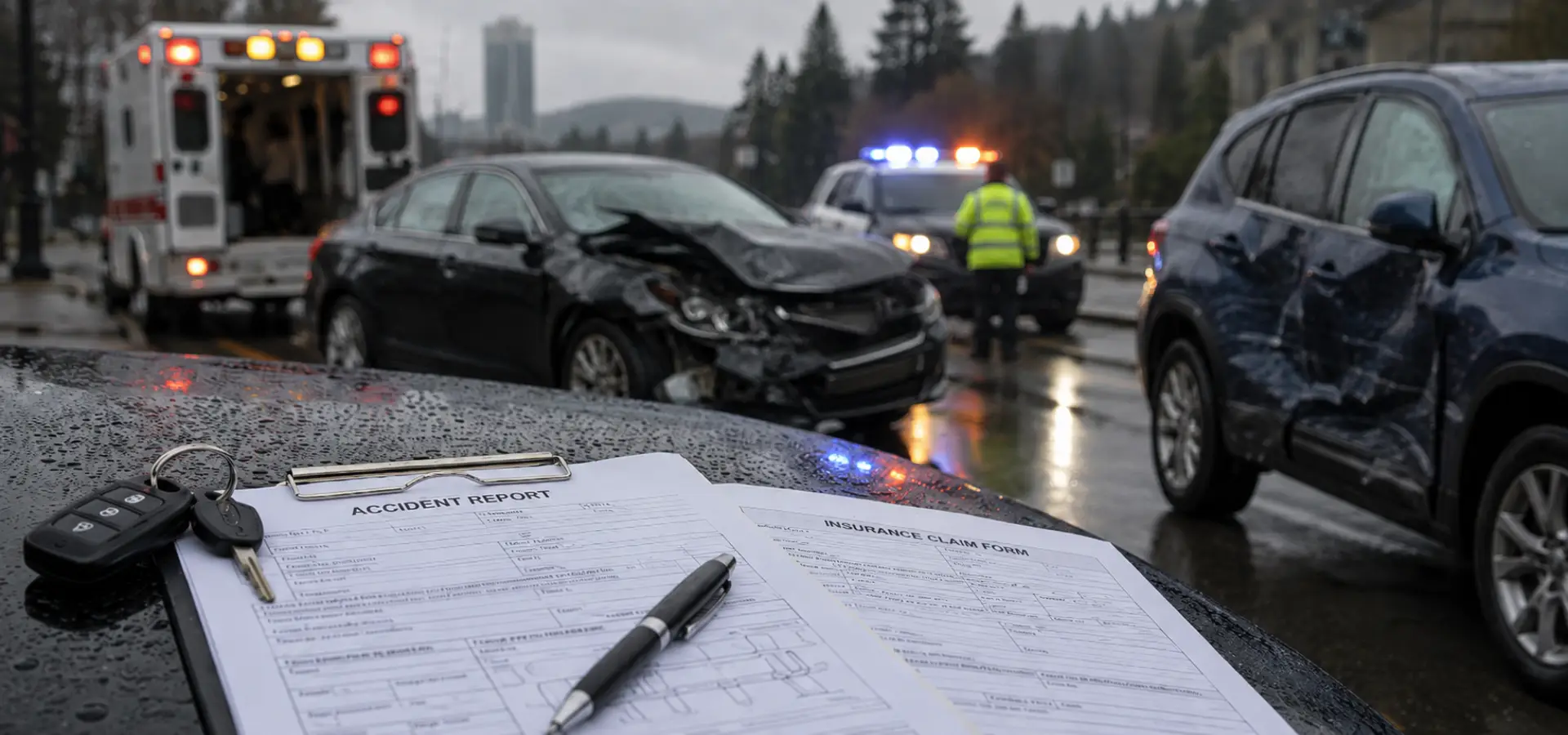
Personal injury is a wide field, and the right approach depends heavily on how you were hurt. We represent injured people and grieving families across the full range of serious-injury claims in Portland. Each of these has its own rules, its own defenses, and its own page with Oregon-specific detail:
- Car accidents: the most common claim, and the one where Oregon’s insurance rules (PIP, UM/UIM, the 25/50/20 minimums) quietly shape what you can recover.
- Truck accidents: governed by federal safety rules and far larger insurance policies than a car case, with evidence that can vanish fast.
- Motorcycle accidents: where riders face both real injuries and a built-in bias insurers exploit.
- Pedestrian accidents: the injuries behind that 51% figure, often on Portland’s dangerous arterials.
- Bicycle accidents: in one of the country’s most-cycled cities, with specific rights Oregon law protects.
- E-scooter accidents: a newer claim with a tangled web of who’s actually responsible.
- Uber and Lyft accidents: where which insurance applies depends on what the app was doing at the moment of the crash.
- Bus and public transit accidents: with a shortened 180-day notice deadline when a public body like TriMet is involved.
- Premises liability: slip-and-falls and unsafe-property injuries that turn on what the owner knew.
- Dog bites: where Oregon splits economic and non-economic recovery under different rules.
- Traumatic brain injuries and spinal cord injuries: catastrophic cases measured in lifetime cost, not just current bills.
- Burn injuries: where the cause decides who’s liable.
- Sexual assault and abuse: civil claims survivors can bring separately from any criminal case.
If your situation isn’t listed, it’s still worth asking. The common thread in all of these is simple: someone else’s negligence caused harm you didn’t deserve, and Oregon law gives you a path to make it right.
The Oregon Rules That Will Shape Your Portland Case
A Portland injury claim runs on Oregon law, and a few rules have a great impact in determining the outcome of a personal injury claim. With that in mind, it is important to be aware of the following state laws.
You Generally Have Two Years to File
Oregon’s statute of limitations for most personal injury claims is two years from the date of injury under ORS 12.110, but wrongful death claims run three years under ORS 30.020. Miss the deadline and the strongest case in the world can be dismissed. Depending on the nature of the accident or who is involved there are some situations where the timeline becomes shorter, which matters below.
Public Bodies Get Special Protection, and Less Time
If a city vehicle, a TriMet bus, or another public entity is involved, the Oregon Tort Claims Act requires formal notice within just 180 days under ORS 30.275. That clock is much shorter than the general deadline, and it catches people off guard when filing a personal injury claim.
Being Partly at Fault Doesn’t Sink Your Claim, up to a Point
Oregon follows modified comparative negligence under ORS 31.600. This means you can recover compensation as long as you’re 50% or less at fault, though your recovery is reduced by your share. This is exactly the rule insurers try to weaponize by pinning as much blame on you as they can.
Your Recovery for Serious Harm Isn’t Capped
For a long time Oregon limited non-economic damages to $500,000. In 2020, the Oregon Supreme Court struck that cap down for injured survivors of private-defendant negligence in Busch v. McInnis Waste Systems, a case that grew out of a Portland pedestrian losing his leg to a garbage truck. For catastrophically injured Portlanders, that ruling can be worth an enormous amount.
Where a Portland Injury Case Actually Happens
Most claims settle, but the ones that settle well are the ones built as if they’re going to trial. A Portland injury lawsuit is filed in the Multnomah County Circuit Court, the Fourth Judicial District, whose Civil Division handles personal injury claims over $10,000.
Unlike a criminal case, a civil injury claim is decided on a “preponderance of the evidence”, meaning more likely than not, a lower bar than the criminal standard. That’s part of why you can win a civil case even where no one was ever criminally charged.
Preparing a case for a Multnomah County jury, rather than just firing settlement letters at an adjuster, is what changes an insurer’s math. When the other side believes you’re ready and able to try the case, the settlement offers tend to reflect it.
What Your Claim Can Recover
No settlement undoes a serious injury, but it can carry the financial weight so you don’t have to. A Portland personal injury claim can seek compensation for medical bills, both what you’ve already spent and the care you’ll need going forward, lost income and reduced earning capacity, property damage, and the non-economic harms that are just as real: pain, disability, disfigurement, and the parts of your life the injury took.
In cases of especially reckless conduct, punitive damages may also be on the table. Valuing all of it correctly, especially the future costs, is one of the most important things a lawyer does, and one of the easiest things to get badly wrong without help. If you want to get an estimate of how much your case may be worth, you can input your information in our personal injury calculator.
Hurt in Portland? Let Us Help You Take the Next Step.

After an injury, you may be facing pain, medical bills, missed work, and pressure from an insurance company that does not have your best interests in mind. Before you make any decisions, get clear answers from a legal team that understands Oregon personal injury law and knows how to protect your claim.
West Coast Trial Lawyers offers free, no-obligation consultations for injured people in Portland and throughout Oregon. Tell us what happened, and we will explain where your case stands, what compensation may be available, and what steps can help protect your recovery. You stay in control, and you pay nothing unless we win compensation for you..
Call our office today at (213) 927-3700 or through our online contact form for a free consultation.
Frequently Asked Questions
How Long Do I Have to File an Injury Claim in Portland?
Usually two years from the injury under ORS 12.110, and three years for wrongful death. But if a public entity like TriMet or the city is involved, you may have just 180 days to give formal notice, so it’s important to move quickly.
What if I Was Partly to Blame for the Crash?
You can still recover in Oregon as long as you were 50% or less at fault, though your compensation is reduced by your percentage of fault. Insurers push hard to inflate your share, which is one reason to have your own advocate.
Do I Have to Go to Court?
Usually not, most cases settle. But the cases that settle for full value are the ones prepared for trial from day one. If the insurer won’t be fair, we’re ready to file in Multnomah County Circuit Court and try it.
Is My Pain and Suffering Capped in Oregon?
Generally no, not for injury survivors. The Oregon Supreme Court struck down the $500,000 noneconomic cap for private-defendant cases in Busch v. McInnis Waste Systems (2020).
What’s My Portland Injury Case Worth?
It depends on the severity of your injuries, your economic losses, and the long-term impact on your life. Beware any quick number, a real valuation accounts for future medical needs and lost earning capacity, not just the bills on your kitchen table today.