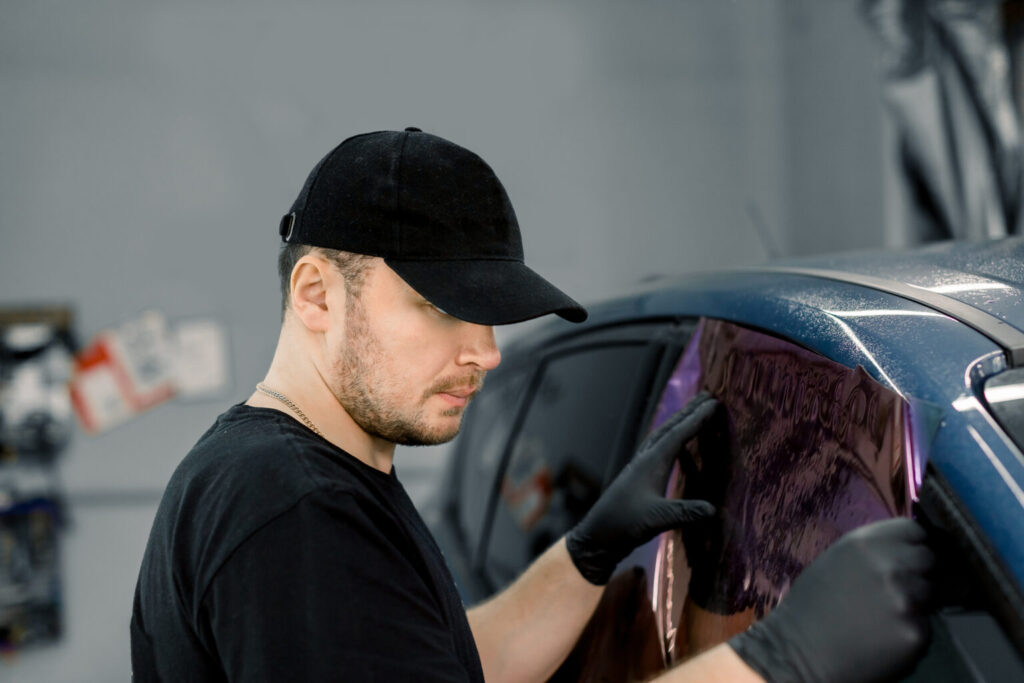
Whether it’s to beat the sizzling California sun, drive in-style, or simply for a bit of privacy, tinting your vehicle’s windows can be the best route to take. But it’s not as simple as picking out the darkest, coolest tint and slapping it on your windows. In the Golden State, there are specific laws and regulations regarding window tinting that drivers need to follow to avoid penalties.
If you drive in California, understanding window tinting laws can save you from unexpected tickets, higher fines, and serious liability problems after a crash. This guide breaks down every rule you need to know as of 2026, from legal VLT limits on different windows to how illegal tint can hurt you in a car accident claim.
Quick Answer: What Is Legal Window Tint in California Right Now?
California’s window tint regulations are governed by California Vehicle Code Section 26708. The state law has not loosened its front window rules in 2026, so here is what applies to the average driver right now:
These rules apply equally to sedans, SUVs, vans, and trucks and violating California window tint law typically results in a non-moving fix it ticket on the first offense. But if your tinted windows impair visibility during a car accident, the consequences extend well beyond a traffic citation.
How California Window Tint Law Works (VLT Basics)
Visible light transmission (VLT) is the single most important number in California window tint law. It measures how much light passes through a vehicle’s windows, expressed as a percentage. A VLT of 100% means perfectly clear glass and lower percentages mean a darker tint that blocks more visible light. California measures the combined result of both the factory glass and any tint applied on top of it. That means even a nearly clear film can make your front windows illegal.
Window-by-Window Legal Limits in California
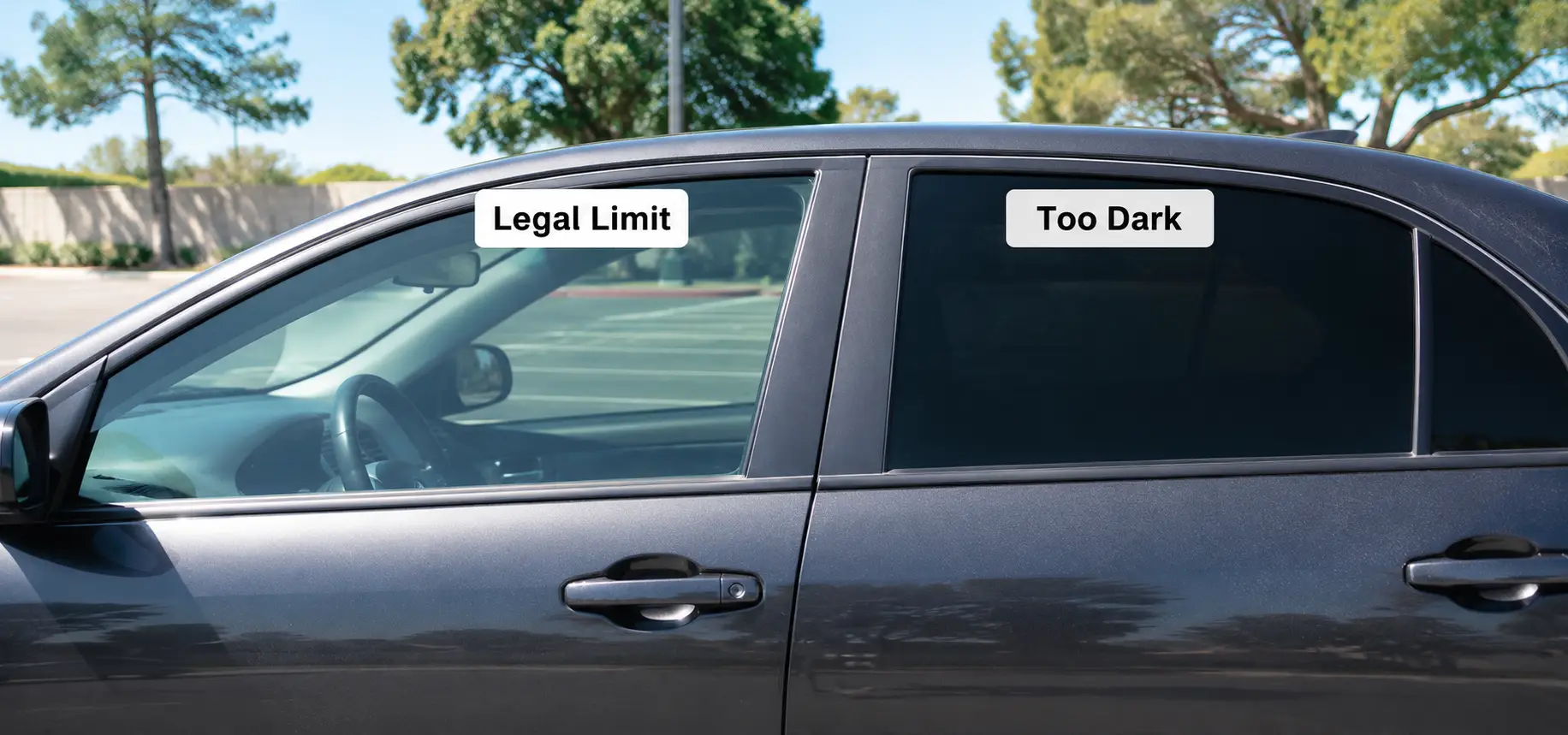
California window tint laws vary depending on which of the vehicle’s windows you tint. Misunderstanding these rules across different windows is the most common cause of illegal tint citations.
- Front windshield: Front windshield tinting with any aftermarket film is illegal in California. Only a non-reflective tint strip is allowed at the topmost portion of the windshield, above the AS-1 line (roughly the top four inches). Clear, colorless UV film over the full windshield or side windows must maintain at least 70% VLT.
- Front side windows: Front side windows must allow at least 70% visible light transmission (combined factory glass plus any film). Even a lightly tinted film can push you below the legal limits.
- Rear side windows and rear windshield: There are no VLT restrictions for rear side windows and rear windshields in California. Any darkness is allowed as long as the vehicle has dual side mirrors providing a clear rearward view.
- Body-colored or opaque panels: Panel vans and some motor vehicle configurations with non-glass rear panels fall under different considerations, but standard passenger vehicle rules apply to most readers
Medical Exemptions for California Window Tint Laws
To many people’s surprise, California allows medical exemptions for window tinting when a documented medical condition requires additional protection from ultraviolet rays or direct sun. This exemption permits darker tints on front side windows than the standard 70% VLT limit.
Under California Vehicle Code § 26708, a driver or front-seat passenger may qualify for certain sun screening devices if they have documentation for conditions such as photosensitivity disorders such as lupus erythematosus or xeroderma pigmentosum.
However, a medical exemption is not a free pass to install any tint you want. The documentation must be kept in the vehicle, the material must still comply with the applicable requirements, and some devices authorized by the statute cannot be used during darkness.
What are the Penalties for an Illegal Tint?
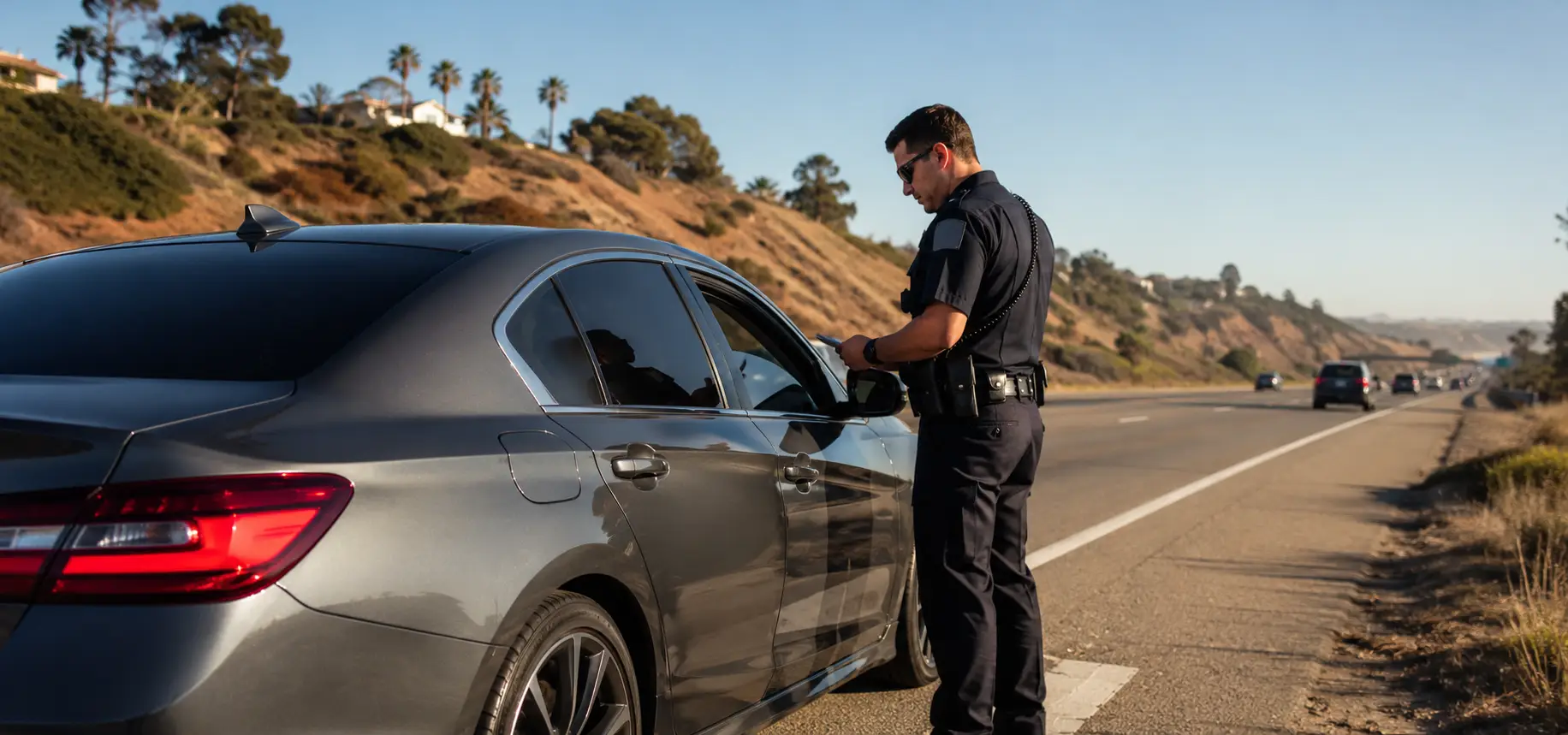
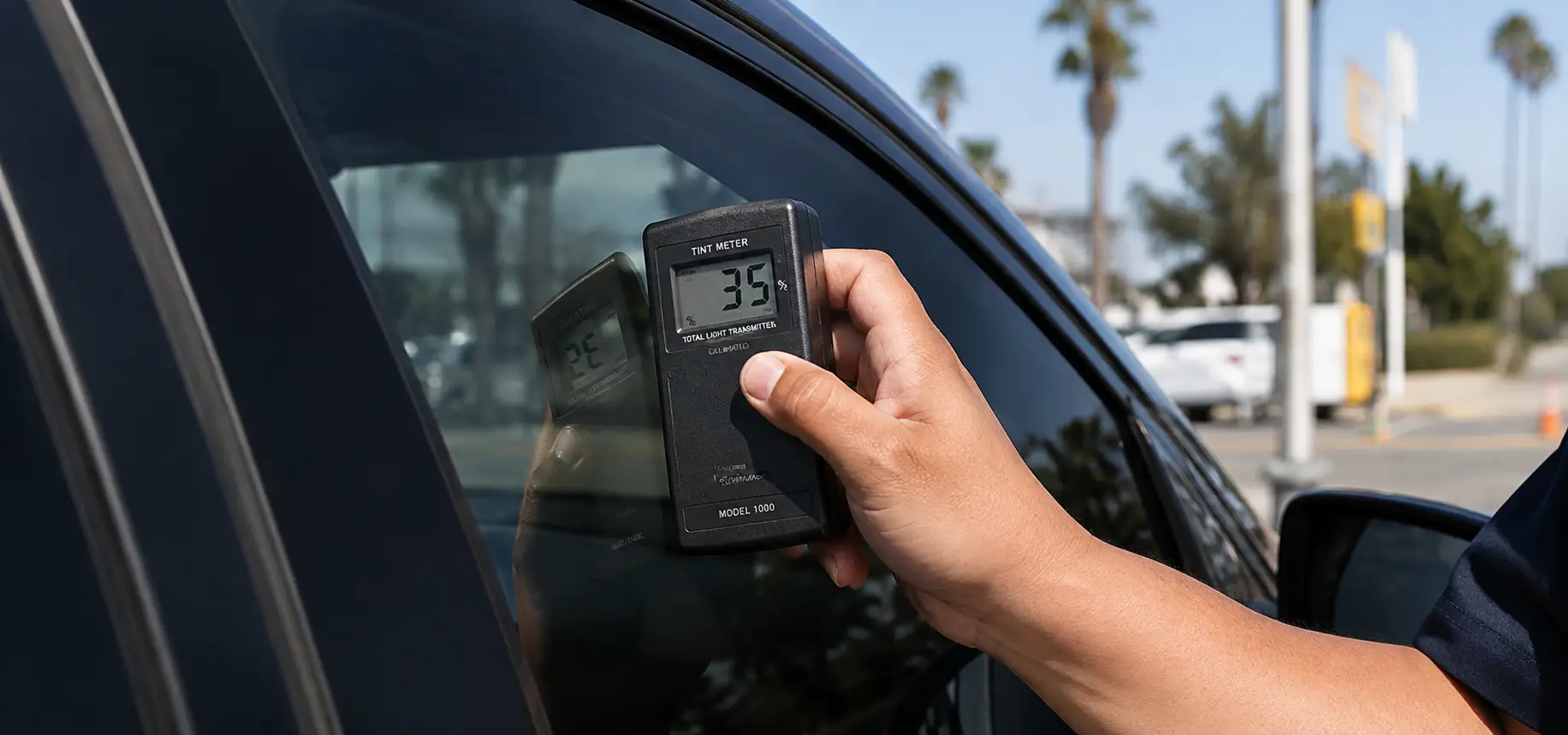
Police, the California Highway Patrol, and local officers routinely enforce California window tint laws during traffic stops and at checkpoints by using a handheld tint meter at the roadside to measure VLT objectively, particularly in metro areas like San Diego and Los Angeles. If an officer reasonably believes your window tint violates California law, they may stop the vehicle and issue a correctable violation, commonly called a fix-it ticket.
In many cases, the driver must remove or correct the illegal tint, have the vehicle inspected or signed off, and submit proof of correction to the court. If the violation is not corrected, the driver may face additional fines or penalties. Repeated violations can also create more problems, especially if the driver ignores court deadlines or fails to pay required fees.
Is Out-of-State Tint Legal in California?
Not always, because if you are driving in California with tint that is legal in another state, you may still be stopped if the tint appears to violate California law. This can be a common issue for drivers who move to California from states with more flexible tint laws, but regardless, if you recently moved to California, it is worth having your tint checked by a qualified installer before you run into problems.
How Much Is an Illegal Window Tint Ticket?
The base fine for illegal window tint is often relatively low but can exceed $197 with assessments on subsequent offenses. If the issue is not addressed, the ticket may receive additional fines and depending on the severity of the ticket, courts can note the violation on the driver’s record. A tint ticket may seem minor, but it can still cost money, take time to correct, and create an avoidable record of equipment violations.
How Illegal Tint Can Contribute to a Car Accident
California window tint laws exist because excessive tint impairs visibility, and impaired visibility causes crashes. For example, dark front side windows can limit a driver’s ability to spot pedestrians in crosswalks at night or in rain, and having very dark rear side windows can create large blind spots while changing lanes or merging with other vehicles. With that in mind, if an accident caused by poor visibility involves a driver with illegal tint, insurers and opposing attorneys will argue that the dark film constitutes negligence.
How Can an Illegal Window Tint Affect a Personal Injury Claim?
An illegal window tint can become an issue after a car accident, especially if visibility is disputed. In serious California car accident cases, attorneys and investigators may examine window tint as part of determining liability and legal compliance.
For example, suppose another driver runs a red light and hits you. If that driver had illegal windshield or front side window tint, your attorney may argue that the tint reduced their ability to see traffic, pedestrians, cyclists, or signal changes.
On the other hand, if you were driving with illegal tint and were injured in a crash, the insurance company may try to use it against you by arguing that your tint made it harder for you to see, react, or avoid the collision.
What Should You Do After a Crash Involving Tinted Windows?
If you were involved in an accident and window tint may be an issue, document the vehicles as soon as possible. Try to take photos of:
- The windshield
- Front side windows
- Rear side windows
- Rear window
- Interior visibility from the driver’s seat
- Damage to both vehicles
- Lighting and weather conditions
- Traffic signals, signs, and lane markings
- Any nearby cameras or businesses
You should also request a copy of the police report and seek medical attention if you were injured. If the other driver’s tint was unusually dark, reflective, or obstructive, tell your attorney. It may become relevant to proving negligence.
Got Into a Car Accident? Call WCTL Today!

Staying on the right side of California’s tinting laws is straightforward once you understand the rules for each window position. However, if you were injured in a car accident and believe illegal tint, poor visibility, or another driver’s negligence contributed to the collision, West Coast Trial Lawyers can help you understand your legal options.
Call (213) 927-3700 or fill out our contact form to schedule a free consultation with an experienced car accident attorney.
Frequently Asked Questions About California Window Tint Laws
How Much of the Front Windshield Can I Tint?
Only above the AS-1 line (roughly the top four inches) with a non-reflective strip. Clear UV film over the full windshield must maintain 70%+ VLT.
Are Colored or Reflective Tints Legal?
Highly mirrored finishes are prohibited on all windows. Red, amber, and blue colored tint films are explicitly banned. Films must not increase glare beyond what untreated glass produces.
What Is a Fix It Ticket, and How Long Do I Have to Remove Illegal Tint?
It is a correctable citation. You typically have about 30 days to remove the tint and obtain proof of correction, though exact deadlines can vary by court.
Can Illegal Tint Raise My Insurance Rates?
It can indirectly. If a visibility-related car accident is linked to excessive tint, insurers may reduce your payout or assign you greater fault, which affects future premiums.
Does California Treat Teslas and Vehicles With Glass Roofs Differently?
Panoramic glass roofs and back glass on modern vehicles are generally treated like rear windows, with no VLT restriction. But front windows and windshield rules remain identical regardless of make or model.