
Premises liability cases can happen all throughout Colorado, including busy areas, like 16th Street in downtown Denver, the Denver 16th Mall, Cherry Creek Shopping Center, and Colorado Springs’ Tejon Street corridor. High-traffic places like these may see a large number of pedestrians and visitors at restaurants, retail spaces, parking areas, and commercial buildings.
When property owners or other responsible parties do not address dangerous conditions, visitors may suffer injuries as a result of someone else’s negligence. Under Colorado law, property owners may have a duty to keep their premises safe and notify others of certain hazards nearby.
If you were injured because of unsafe spaces or the actions of negligent property owners, West Coast Trial Lawyers can assess what happened, identify potential liable parties, and discuss what options are available for you to pursue. Let our Colorado premises liability attorneys step in to review your situation, go over the next steps, and work diligently to get you the compensation you deserve.
To set up a FREE consultation, we invite you to reach out to us by calling (213) 927-3700 or filling out our quick online contact form.
Why Choose West Coast Trial Lawyers for Your Colorado Premises Liability Case?

If you were injured because of unsafe conditions on someone else’s property, choosing the right legal team can make a notable difference in how your claim is being handled. At West Coast Trial Lawyers, we have more than 25 years of combined experience and have secured over $2 billion in settlements and verdicts for thousands of personal injury victims.
Our law firm has secured significant case results across various personal injury matters, including multi-million dollar recoveries for victims and families experiencing serious injuries and losses. We are also proud of the positive feedback reflected in our testimonials, with past clients recognizing our communication, professionalism, and commitment throughout the legal process.
Along with our track record of success, we prioritize approachability by providing direct lawyer access from the first call with support available 24/7. Whether you need a Denver premises liability attorney or representation elsewhere in Colorado, our experienced team can help you understand your rights and look into your options to seek compensation for your losses.
What Is Premises Liability in Colorado?
Premises liability law is a legal concept under personal injury law that covers bodily harm caused by unsafe property conditions. Such claims are governed by the Colorado Premises Liability Act (C.R.S. § 13-21-115). This establishes legal standards for actions against landowners and considers whether the affected individual was an invitee, licensee, or a trespasser. The statute holds property owners responsible for injuries caused by poor conditions surrounding the property.
What Legal Obligations Do Property Owners Have to Follow Under the Colorado Premises Liability Act?
Property owners and landowners have a legal obligation to address dangers presented on their premises in accordance with the visitor’s legal status. Typically, an invitee may recover for injuries caused by a property owner’s failure to exercise reasonable care to protect against dangers they knew about or should have known about.
For licensees, property owners may have a duty to exercise reasonable care regarding known dangers or warn licensees about potential harm that is not ordinarily present on similar territories. When property owners fail to meet such duties and a hazardous condition causes an injury, they may be held accountable under Colorado’s premises liability law.
What Types of Accidents Fall Under Premises Liability?
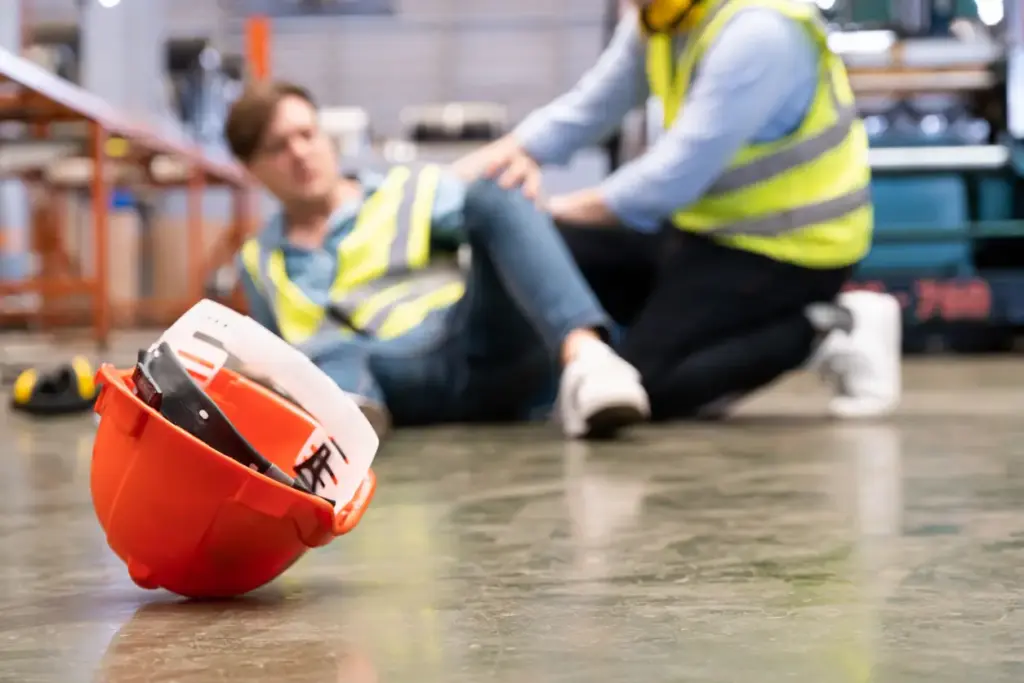
A premises liability accident often occurs when a person gets injured as a result of harmful conditions or negligent conduct on someone else’s property. These cases can take place in many settings, including grocery stores, commercial buildings, apartment complexes, hotels, and parking lots. Some common examples of issues that may result in a premises liability claim include the following:
- Slip and fall accidents caused by wet floors, uneven surfaces, or broken stairs.
- Inadequate property maintenance, such as broken handrails, bad lighting, or poorly maintained walkways.
- Dog bites, where property owners may be met with accountability when a person is attacked by someone’s pet on the premises.
- Falling objects, like items falling from shelves, balconies, or ceilings.
- Negligent security consisting of insufficient safety measures or broken surveillance systems.
These circumstances can result in anything from minor harm to other serious injuries that require medical attention. Whether an injury falls under premises liability depends on the facts surrounding the situation, the condition or activity that triggered bodily injury, and the legal status of the individual who was present on the property.
How Common Are Premises Liability Injuries in Colorado?
The severity of a property accident will vary based on the circumstances involved. Some people may suffer minimal harm whereas others may experience broken bones, head injuries, traumatic brain injuries, or other serious injuries that require extensive care and rehabilitation. The nature and extent of bodily harm will depend on certain factors, such as:
- Height of a fall
- The surface involved
- Whether you struck an object or another area
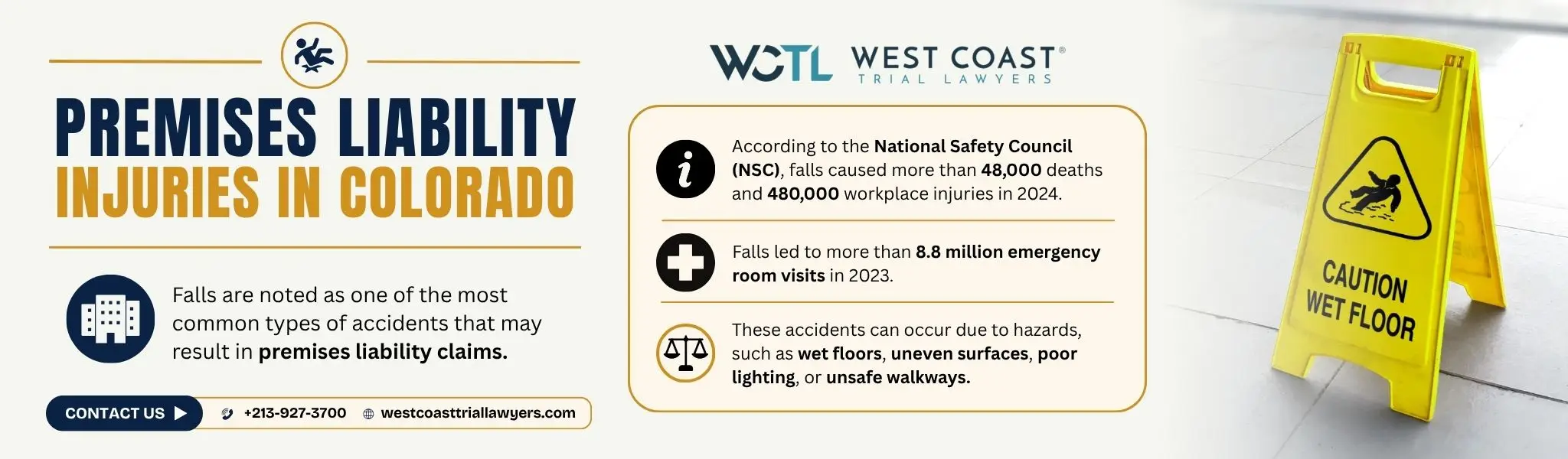
Premises liability injuries can happen in different settings such as stores, restaurants, parking lots, apartment buildings, and private properties. Falls are noted as one of the most common types of accidents that may lead to premises liability claims.
How Falls Result in Premises Liability Cases
Slip, trip, and fall accidents are among the most common causes of premises liability claims, with over 8.8 million people receiving treatment in emergency rooms for fall-related injuries in 2023. According to the National Safety Council (NSC), falls resulted in more than 48,000 deaths at home and work and roughly 480,000 workplace injuries requiring days away from work in 2024.
These accidents can happen because of certain hazards, such as wet floors, uneven surfaces, poor lighting, or unsafe walkways. When property owners do not address dangerous conditions, affected individuals may be able to pursue compensation for medical expenses, lost wages, and other damages.
What Should I Do After Suffering an Injury On Someone’s Property?
After a slip and fall or property injury, taking the following steps can help ensure your safety in addition to preserving evidence that may be important to use in a potential claim:
- Seek medical attention: Get immediate medical care even if you believe your injuries do not appear to be serious. Some forms of bodily harm may not be apparent right after the incident, and medical records can document the nature and extent of your injury.
- Report the accident: Let the property owner or manager know about the situation as soon as possible. Be sure to ask for a copy of the incident report for your records.
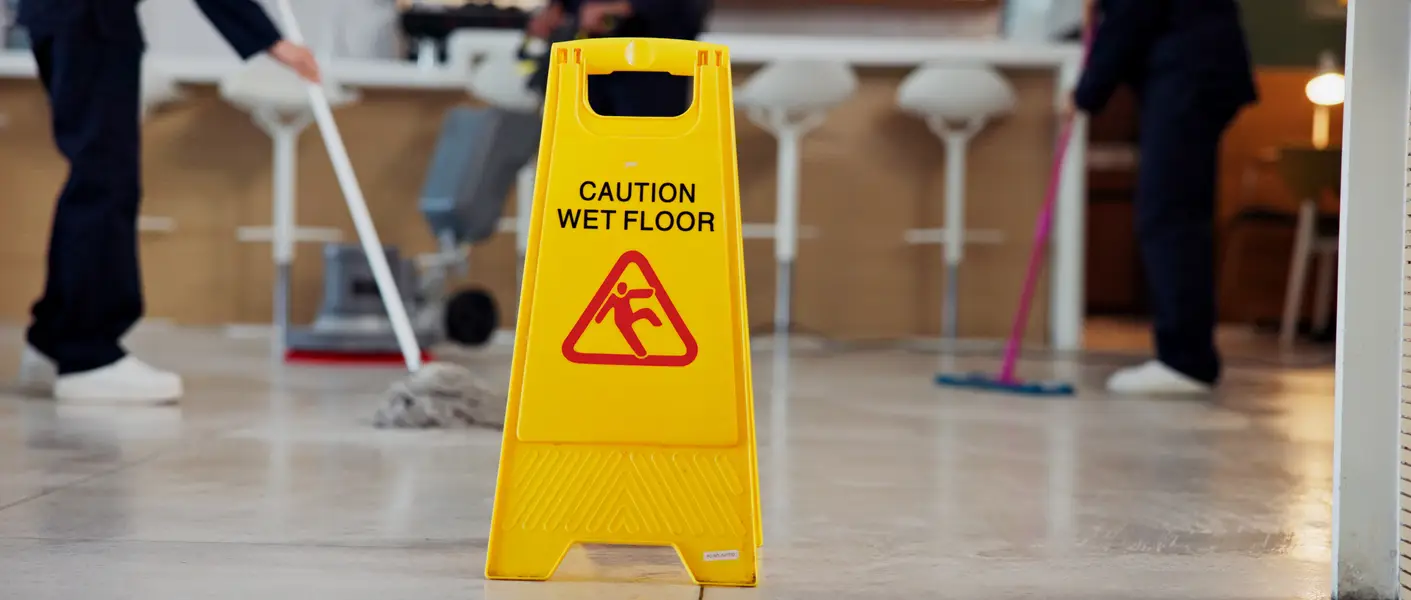
- Gather evidence: If you can safely do so, try to get witness statements from any bystanders who saw what happened. You should also take photos or videos of the condition that triggered you to sustain an injury. Make sure to capture the surrounding area, like any wet floors, inadequate lighting, or missing warning signs.
- Contact a Colorado premises liability lawyer: Consult with a legal expert who can look into the circumstances of your accident, explain your rights, and help determine whether you may have grounds to file a claim. They can also help you understand the legal process and what potential options are available for you to pursue compensation.
Who Can Be Held Liable for My Injuries?
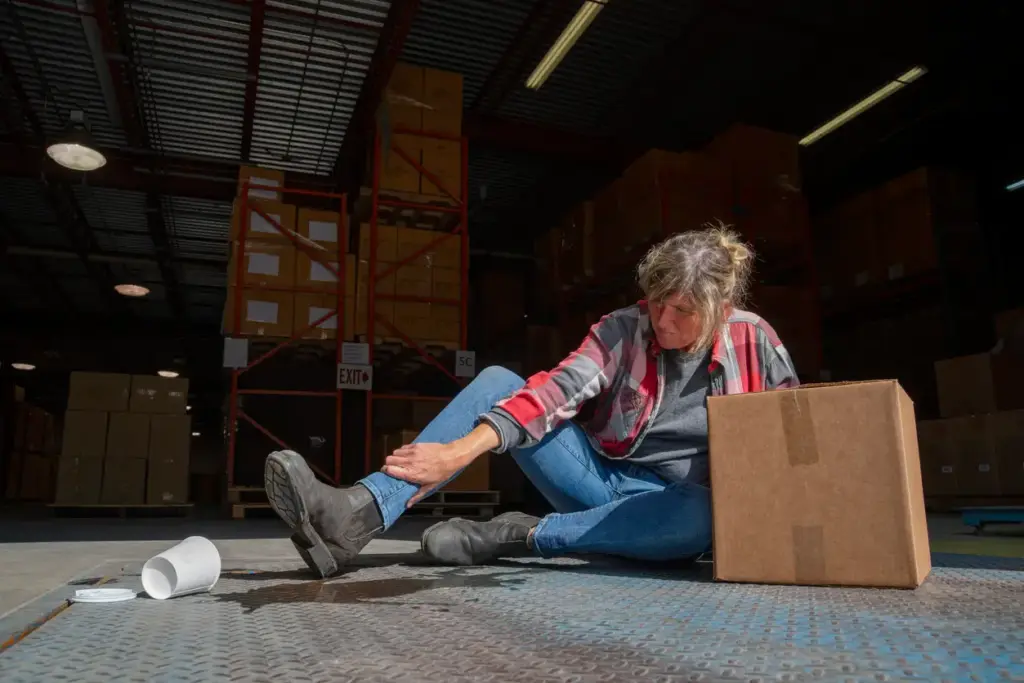
Based on the circumstances involved, one or more responsible individuals or entities can be held liable for injuries sustained on another person’s property. Responsible parties may include the following:
- Property owners/landlords
- Property management companies
- Businesses and operators
- Commercial property owners
- Maintenance and janitorial companies
- Security companies
Colorado follows a modified comparative negligence system, where an injured person’s compensation may be reduced by their percentage of fault if they contribute to their own injuries (C.R.S. § 13-21-111). A person who is found 50% or less at fault may still be entitled to recover damages, with the award adjusted to their degree of accountability. If the affected individual is more than 50% at fault, they may be barred from recovering damages.
Can I Sue a Government Entity for a Premises Liability Injury?
You may be entitled to pursue a claim against a government entity for a premises liability injury. Keep in mind, however, that special rules may apply. Under Colorado’s Governmental Immunity Act (C.R.S. § 24-10-106), public agencies usually have immunity from tort claims unless a specific statutory exception is applicable for your situation. Whether you have a valid claim will depend on what your legal status was at the time of the incident in addition to the type of government property involved and if the condition meets the statutory definition of dangerous conditions.
For instance, the law may apply to injuries involving public buildings, facilities in parks or recreation areas, or qualifying public roads and sidewalks. But not every accident on government property establishes liability, and certain types of public areas may be protected by governmental immunity.
Local safety codes and maintenance requirements can also be relevant to your case when figuring out whether an unsafe property existed or if the government entity was unable to have the situation properly addressed. However, going against a safety code does not automatically determine fault. The facts surrounding the condition of the premises, the government’s knowledge of the hazard presented, and the applicable immunity rules will all have to be taken into consideration.
How Long Do I Have to File a Premises Liability Claim in Colorado?
In Colorado, you will be given two years from the date of your injury to file a premises liability lawsuit for negligence (C.R.S. § 13-80-102(1)(a)). This deadline applies to all slip and fall claims and other premises liability cases involving injuries caused by unsafe conditions. Missing the applicable deadline will result in running into the state’s statute of limitations and barring you from recovering compensation, even if you have strong evidence.
The legal process may differ when claims are made against a government entity and may be subject to more requirements, including a written notice that must be provided within 182 days after discovering the injury (C.R.S. § 24-10-109(1)). Since the time period can affect your legal options, it is important to act quickly. Consulting with a Colorado premises liability lawyer can help you understand what specific deadline applies to your case and what steps are needed to seek fair compensation.
How Do You Prove Negligence in a Premises Liability Case?

Proving a property owner’s negligence in a premises liability case will require you to show that the responsible party failed to meet a legal duty and that this ultimately contributed to your injury. Under the state’s premises liability law, the duty owed may depend on the injured person’s status on the property at the time of the accident.
Evidence may include the following:
- Photographs
- Surveillance footage
- Witness statements
- Maintenance records
- Prior complaints
- Incident reports
Acquiring these critical details can help establish whether inadequate property maintenance or a dangerous condition contributed to losses. In cases that involve assaults or criminal activity, you should try to acquire proof of negligent security, like poor lighting, broken surveillance systems, or insufficient measures implemented.
What Compensation Can I Recover in a Premises Liability Claim?
If you are injured because of a property owner’s negligence, you may be able to pursue compensation. Based on the factors involved, damages may be divided into economic and non-economic damages. This means that you may be awarded for financial and personal losses you incurred as a result of the premises liability accident. This may include some of the following:
- Medical expenses: Costs for emergency treatment, doctor visits, rehabilitation, and future medical care.
- Lost wages: Income that is lost because your injury prevents you from attending work or requires you to miss your job for medical appointments or treatments.
- Pain and suffering: Compensation for the impact your injuries have on your daily life.
- Emotional distress: Damages for anxiety, emotional suffering, or other psychological effects caused by your injury.
The amount you are awarded will depend on the circumstances of the accident in addition to the losses you incurred. To get an estimate of what you may be entitled to, you can use our personal injury settlement calculator. You can also reach out to a Colorado premises liability lawyer to look into your situation, assess the extent of your injuries, and help determine what your case may be worth based on the specific factors involved. They can help you seek compensation and evaluate whether you are given a fair settlement offer to cover current and future damages.
Injured While on Someone Else’s Property? Get Legal Support From West Coast Trial Lawyers Today

If you were injured because of dangerous conditions on someone else’s property, you may be eligible to seek compensation for the losses you suffered, such as medical bills, lost wages, and pain and suffering. At West Coast Trial Lawyers, our Colorado legal team can take a look at the circumstances surrounding your injury, explain what options you have available to pursue, negotiate fair offers with the opposing side, and help you get the compensation you deserve.
To book a FREE consultation with one of our experienced premises liability attorneys, you can connect with us by calling (213) 927-3700 or completing our convenient online contact form.
Frequently Asked Questions About Colorado Premises Liability Claims
What If I Was Using My Phone When I Fell?
If you fell while using your phone, you will not be automatically barred from filing a premises liability claim. If your actions played a role in the situation, Colorado’s comparative negligence rules may lessen the amount of compensation you are awarded in accordance with your percentage of fault. The circumstances of the accident will be important, including whether:
- Dangerous conditions existed
- The property owner was responsible for having it addressed
- How much your phone use contributed to your fall
Evidence can help determine what essentially happened and how fault should be assigned.
What Happens If I Am Injured While Visiting a Friend’s Home?
If you are injured while visiting a friend’s home, you may still be entitled to seek compensation. The specifications revolving around the incident in addition to the condition that caused your injury and your status as a visitor can all affect whether the homeowner may be held accountable. For instance, if you are hurt because of hazardous conditions that they knew about but did not properly address or warn you of, you may have grounds to file a premises liability claim.
Who Is Liable for Items Left in a Store Aisle?
A store may be responsible for injuries caused by items left in an aisle if its employees created the hazard, knew about it, or should have reasonably discovered and corrected the issue. For example, a customer may sustain bodily harm after tripping over merchandise or other objects that were left in a walkway. Liability may be determined based on the factors involved and the affected individual’s status as a visitor.
If you were involved in a similar situation, seek medical attention and have the incident reported to store management. Documenting the scene and getting evidence can also help you effectively pursue a premises liability case.
Who Is Responsible for Injuries in an Apartment Complex Parking Lot?
Responsibility for an injury in an apartment complex parking lot will depend on who owns or manages the area. A landlord, property management company, or another liable party may potentially be held liable if a hazardous condition, such as poor lighting or pot holes, contributed to your injury. Similar to previous responses, fault will depend on the circumstances of the situation and the injured victim’s legal status on the property.
If you are injured in an apartment complex parking lot, documenting the surrounding condition and reporting the incident can help you acquire critical evidence. A Colorado premises liability attorney can assess your case and help determine which party may be responsible for your losses.
When Is a Hotel Responsible for Inadequate Security?
A hotel may hold potential responsibility for injuries caused by inadequate security when a guest or visitor is harmed as a result of improper care or warnings to address foreseeable safety risks. Certain factors, like poor lighting, malfunctioning locks, or insufficient measures, may all be relevant.
Whether a hotel can be held accountable will depend on the facts of the incident, such as the nature of the property, what particular elements were involved in the injury, and whether the hotel knew or should have known about a possible safety risk.
If you are involved in a similar situation, documenting your experience and getting medical attention can help preserve important evidence. Legal guidance and support from experienced attorneys, specifically those who specialize in premises liability claims, can help determine whether the hotel or another party may be legally at fault for the damages you endured.
What If I Am Injured by a Dog While Visiting Someone’s Property?
If you are injured by a dog while visiting someone’s property, you may be able to seek compensation for the injuries you suffered. Colorado law may apply when a dog causes serious harm or death by biting someone who is lawfully on a public or private property. In other situations, liability may depend on whether the opposing side knew the animal posed a risk and if reasonable steps were taken to prevent an attack.
If you have been hurt as a result of an aggressive dog, be sure to seek immediate medical care to get yourself treated and get documentation to use as evidence if you plan to pursue legal action.
What Happens If I Slip on a Restaurant’s Spilled Food or Drink?
If you slip on spilled food or drink at a restaurant, you may be entitled to file a claim if the establishment or its employees created the hazard, knew about it, or should reasonably have discovered or addressed the situation. If you suffered bodily harm as a result of a spilled food or drink, get checked as soon as you can and report the incident to restaurant management. If possible, try to take photos of the spill and surrounding area, and collect contact information from those who witnessed the incident.
How Does Poor Lighting Contribute to a Premises Liability Claim?
Poor lighting can make it difficult to notice hazards nearby, like wet floors, broken stairs, or uneven walkways. If such conditions contribute to an injury, the property owner or responsible party may be held liable based on the factors surrounding the situation in addition to what legal responsibilities they had. An experienced premises liability attorney can assess the circumstances involved and help determine the at fault party.
Does Signing a Waiver Prevent a Premises Liability Lawsuit?
Signing a waiver does not necessarily mean that you are not allowed to file a premises liability lawsuit. The effect of a waiver is based on its language, the circumstances under which it was signed, and the property owner’s actions that contributed to the incident. A waiver may limit liability for certain types of risks that were disclosed, but it cannot protect a property owner in every situation.
For instance, issues surrounding gross negligence or intentional misconduct may affect whether a waiver can be enforced. A legal expert can review the document you signed and determine whether you may still have legal options available to pursue.