
Colorado’s roadways see thousands of traffic collisions each year, from crashes taking place on Interstate 25 and Interstate 70 to collisions happening on local streets in communities across the state. Such cases can leave victims with physical, emotional, and financial hardships. Recovering from a car accident usually involves more than just medical treatment, it may also require victims to manage insurance claims and liability disputes, in addition to other legal complications.
At West Coast Trial Lawyers, our Colorado personal injury attorneys are dedicated to helping car accident victims acquire a fair settlement. Backed by more than 25 years of combined legal expertise, our firm has recovered over $2 billion in settlements and verdicts for injury victims. From rear-end collisions and intersection crashes to catastrophic accidents leading to severe injuries, we handle a wide range of personal injury cases.
If you were involved in a car accident with a negligent driver, it is important to know your legal rights and options. Reach out to our team today to book a FREE consultation by calling (213) 927-3700 or completing our quick online contact form.
Why Choose Our Colorado Car Accident Attorneys?

Our personal injury law firm knows the challenges that injury victims experience after a serious collision. From dealing with insurance companies to gathering evidence against the other driver, the overall claims process can be difficult to manage on your own. Our team will provide dedicated legal representation that is tailored to the unique factors involved while helping you understand how Colorado law may apply to your situation.
We have a proven track record of advocating for individuals and families that have been impacted by motor vehicle accidents. Our Colorado car accident lawyers will work diligently to pursue compensation for medical bills, lost income, and pain and suffering. By thoroughly assessing claims and negotiating with insurance companies, we aim to help our clients seek the justice and compensation they deserve.
What Does Colorado Fatal Crash Data Show?
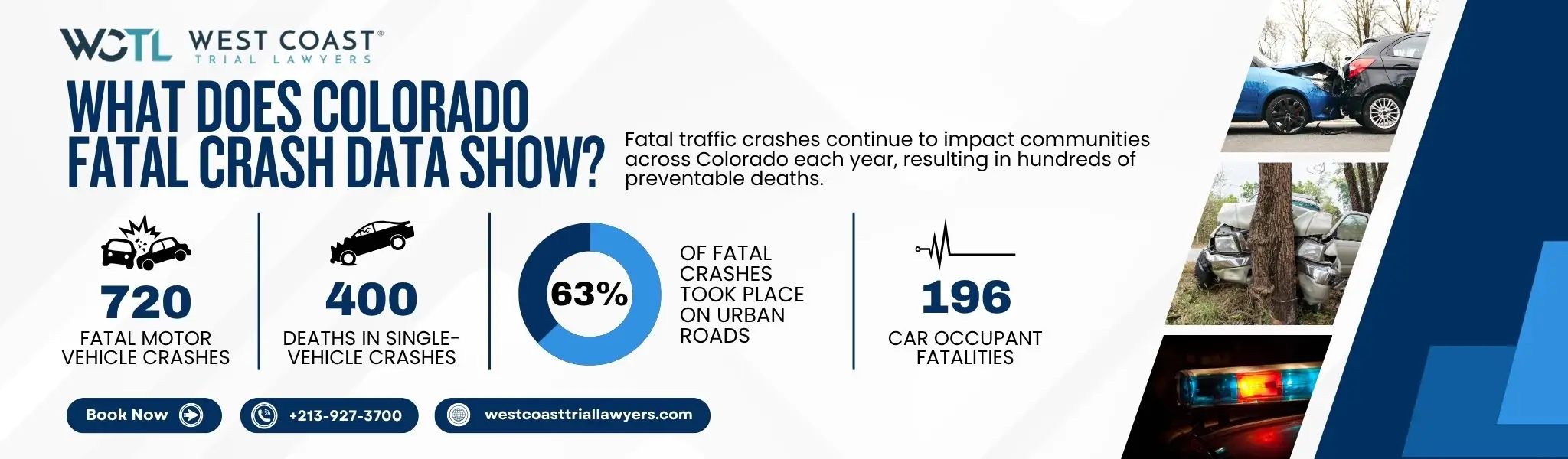
According to the Insurance Institute for Highway Safety (IIHS), Colorado recorded a total of 720 fatal motor vehicle crashes in 2023. Of those deaths, 400 occurred in single-vehicle crashes, contributing to roughly 56% of all traffic fatalities during the study year. The data also indicates that 196 passenger vehicle occupants lost their lives in fatal traffic crashes. About 63% of these deadly collisions took place on urban roads.
Which Colorado Counties Experience the Most Motor Vehicle Accidents?
Certain counties in Colorado report higher crash volumes than others. Denver County recorded about 195,000 crashes between 2020 and 2025, the highest total in the state within that given period. El Paso, Adams, and Arapahoe counties followed with each reporting more than 130,000 crashes. Jefferson and Larimer counties also experienced heavy accident activity, with nearly 106,000 and 81,000 crashes. The data further suggests that many collisions happen along Colorado’s Front Range urban corridor.
What Are the Most Common Causes of Car Accidents?

Car accidents can happen in a matter of seconds and often result from preventable factors. From distracted driving and speeding to impaired driving and traffic violations, many instances can raise the likelihood of a crash.
- Distracted Driving- According to a Colorado traffic safety data report, 676 people lost their lives in distracted driving accidents between 2014 and 2024. While distracted driving can happen to anyone, younger drivers ages 18-44 had higher percentages of committing such behavior than their older counterparts.
- Impaired Driving- The Colorado State Patrol claims that DUI/DUID offenses are one of the most common factors of fatal traffic crashes investigated throughout the state. As driving under the influence of alcohol or drugs can impair a person’s judgement, reaction time, and ability to safely operate a vehicle, even a brief lapse in judgement can lead to serious or fatal collisions.
- Speeding- The Colorado State Patrol recognizes how speeding continues to be a major factor in serious and fatal collisions across Colorado, because higher speeds can also increase the strength of impact during a collision, resulting in more serious injuries and property damage
- Dangerous Driving Maneuvers- Colorado crash data indicates that lane violations continue to contribute to a high number of fatal and injury-related cases each year. However, aggressive driving behaviors can increase the risk of accident to others on the road at risk of a motor vehicle accident due to how anger can cloud rational judgement.
What Types of Injuries Commonly Result From Car Accidents?

The severity of car accident injuries will vary based on the factors such as the speed of the vehicles involved, the force of impact, and the location of the collision. Some affected individuals may experience minor harm whereas others may suffer from life-altering conditions that require ongoing medical treatment and rehabilitation.
Even crashes that seem small at first can lead to serious physical injuries that may not be immediately apparent. Traumatic brain injuries and spinal cord injuries are other possibilities in a motor vehicle accident. These conditions can result in long-term complications, such as chronic pain and permanent disabilities.
In severe cases, victims may require ongoing medical attention and assistance performing daily activities. Car wrecks can also lead to other catastrophic injuries, like severe burns, internal damage, and permanent neurological impairments.
Since such harm can carry heavy physical, emotional, and financial consequences, accident victims may need to seek compensation to help cover immediate and future losses.
What Should You Do After a Car Accident?
After a car accident, it is important to take certain steps to protect your health, preserve evidence, and support any future insurance or legal claims. Consider the following actions:
- Contact law enforcement: If you notice any injuries or damages, you should contact local authorities right away. They will document the incident and create an official police report in which you can request a copy to use if you plan on pursuing legal action.
- Seek prompt medical attention: Your health should be your first priority after a car crash. Getting medical attention can help identify any serious injuries you may have sustained and also create medical records that document your condition.
- Document the accident scene: If it is safe to do so, take photographs of the accident scene, vehicle damage, and any visible injuries. This information can help preserve critical evidence related to the collision.
- Gather evidence: Obtain contact information from witnesses, exchange details with the other driver(s), and acquire copies of any documents pertaining to the incident. Evidence gathered early on may be valuable when pursuing a car accident claim.
- Speak with a Colorado car accident lawyer: A legal expert can help injured victims understand their rights and options following a car crash. Their guidance and support may be especially beneficial when dealing with insurance companies or pursuing compensation for damages incurred.
How Does Comparative Negligence Work in Colorado?
Colorado follows a modified comparative negligence system under Colorado Revised Statutes § 13-21-111. This law allows an injured person to recover compensation even if they were partially at fault for the incident. But, the amount of damages awarded will generally be reduced based on the degree of fault committed.
The state’s comparative negligent law also includes the “50% bar rule.” This means that the injured party may acquire compensation only if negligence is less than that of the party from whom recovery is sought. If the injured individual is found to be more than 50% liable for the incident, they will be barred from recovering losses.
Since insurance companies tend to raise comparative negligence arguments to minimize or deny claims, establishing fault can turn into a difficult issue in a car accident case. Evidence may be used to determine each party’s percentage of responsibility for the impact.
How Long Do You Have to File a Car Accident Lawsuit?
Colorado law establishes deadlines for filing legal claims after a motor vehicle collision. Under C.R.S. § 13-80-101(1)(n), individuals usually have three years from the date of the incident to file a lawsuit seeking damages stemming from the use or operation of a motor vehicle. Failing to file within this time period may result in the loss of right to pursue compensation for damages incurred.
An experienced auto accident attorney can assess the circumstances surrounding your case, identify applicable filing deadlines, and help ensure that legal requirements are met. Under most circumstances, parties may attempt to have the issue resolved through negotiations before a lawsuit becomes necessary.
What Damages May Be Available in a Colorado Car Accident Lawsuit?
The damages available in a lawsuit will usually depend on the nature of the event and the extent of losses incurred by the affected party. Colorado car accident victims may be entitled to recover compensation for both economic and non-economic damages resulting from someone else’s negligence.
Economic damages are intended to compensate individuals for measurable financial losses. This includes lost income, rehabilitation costs, property damage, diminished earning capacity, and current and future medical expenses.
Meanwhile, non-economic damages are intended to address the personal impact of a car accident, such as emotional distress, loss of enjoyment of life, and pain and suffering. Since every case has its own unique factors involved, the damages available will depend on the specific facts presented and the circumstances surrounding the situation.
Involved in a Car Accident? West Coast Trial Lawyers Is Here to Help

Managing the aftermath of a car accident can be difficult and confusing, especially when bodily harm, financial losses, and insurance disputes are involved. Whether you are dealing with medical bills, lost wages, or other accident-related damages, knowing your legal rights can be an important step toward protecting your interests.
At West Coast Trial Lawyers, our Colorado car accident attorneys can assess your situation, explain your available options, and help you pursue compensation for the losses you suffered. Reach out our law firm today to book a FREE consultation by calling (213) 927-3700 or filling out our easy contact form.
Frequently Asked Questions About Colorado Car Accidents
Who Can File a Wrongful Death Claim After a Fatal Car Accident?
Colorado law limits who may pursue a wrongful death claim after the loss of a loved one. Under C.R.S. § 13-21-201, qualifications will depend on the claimant’s relationship to the deceased victim and the circumstances involved. In many cases, the surviving spouse has the primary right to pursue a wrongful death action during the first year following the death, although Colorado law recognizes certain exceptions.
During the second year after the individual’s passing, the surviving spouse, heirs, and other eligible parties may have the right to file a claim (depending on the matters surrounding the case). If there is no surviving spouse, children, designated beneficiaries, parents, siblings, or other individuals identified under Colorado law may take legal action in certain situations.
When Does It Make Sense to Hire a Lawyer?
Not every car accident case requires legal representation. But there are some instances where speaking with a personal injury lawyer may be beneficial. Those who suffered serious harm or are met with disputes regarding liability may find it helpful to seek legal guidance. Complicated cases involving multiple parties or significant damages may also present challenges that may be tough to manage alone.
The process following a car accident usually involves victims acquiring evidence, communicating with insurance companies, and assessing total damages. Mistakes made throughout these stages can affect a person’s ability to acquire full and fair compensation.
How Much Does It Cost to Hire a Colorado Car Accident Lawyer?
Many car accident attorneys represent clients on a contingency-fee basis. Under this arrangement, attorney’s fees are usually calculated as a percentage of the compensation recovered through a settlement or court award. This fee structure permits accident victims to get legal representation without paying attorney’s fees upfront, allowing individuals to focus on their recovery while the attorney handles critical matters.
Before hiring a car accident lawyer, it is important to assess the terms of representation agreement and ask questions about fees, costs, or expenses that may apply. Knowing the financial aspects of the services provided can help you make informed decisions before moving forward with the legal process.
What Happens If the Other Driver Is Uninsured?
Being involved in a car accident with an uninsured driver can lead to additional complications for affected individuals seeking compensation. Even though Colorado law requires drivers to have minimum liability insurance coverage (C.R.S. § 42-4-1409), some motorists still operate vehicles without having the required coverage. When this happens, recovering compensation directly from the negligent driver may be more difficult.
One potential source of recovery may be uninsured motorist coverage. Under C.R.S. § 10-4-609, insurance companies generally must offer uninsured and underinsured motorist coverage to policyholders, although drivers may choose to reject this coverage in writing. If applicable, uninsured motorist coverage can help cover damages caused by an uninsured driver.
Based on the circumstances involved, car accident victims can also pursue a personal injury claim against the at fault party. But the availability of compensation will depend on the driver’s financial resources in addition to other factors.
Does a Minor Fender Bender Still Need a Police Report?
Not every collision requires a police report. But obtaining one can be beneficial even after a minor incident. In many Colorado auto accidents, a police report may provide a notable record of the situation, like information about the parties involved, witness statements, and the responding officer’s observations. This documentation can become valuable if disputes arise over fault or damages.
Even when vehicle damages seem minor, injuries and other related issues may not appear immediately after and may take days after the collision to become noticeable. A police report can help preserve critical details while the events are still fresh in a person’s memory. Having documentation can also help when dealing with insurance companies and assessing the factors surrounding the car accident case.
What If the Insurance Offer Is Too Low?
Insurance companies may not always offer an amount that reflects the extent of a victim’s losses. An initial settlement offer may fail to consider medical expenses, lost wages, property damage, or future treatment needs. Because of this, it is important to assess any offer you are presented with before agreeing to a car accident settlement.
When negotiations do not result in a fair resolution, you may have other legal options available. Based on the factors presented, pursuing a car accident claim may become necessary to seek compensation that accurately mirrors the losses you incurred as a result of the accident.
Can You Still Recover Damages If You Were Not Wearing a Seatbelt?
In most cases, you can still recover damages if you were not wearing a seatbelt. Failing to have yourself secured will not automatically bar you from pursuing compensation after a car accident. If another driver’s negligence caused the collision, you may still have the right to seek damages for the losses you suffered. But the use of a seatbelt may play a factor when assessing the extent of certain injuries.
Colorado recognizes “seatbelt” defense under C.R.S. § 42-4-237(7). In some cases, evidence that an occupant was not wearing a seatbelt may be considered when determining whether certain injuries could have been avoided or may have resulted in less intense damage. Since the impact of seatbelt-related evidence can differ based on the facts surrounding the case, the failure to wear one will not necessarily eliminate your ability to recover compensation.
What If You Didn’t See a Doctor Right After the Accident?
If you do not seek medical treatment immediately after a car accident, it does not necessarily mean that you no longer qualify to pursue compensation. However, keep in mind that delays can create challenges when it comes to proving that your injuries were caused by the car crash. Insurance companies may try to argue that bodily harm could have been triggered by another event or was not as serious as initially claimed.
Sometimes, accident-related injuries do not show symptoms right away. Certain conditions, like internal organ damages or soft tissue injuries, can take hours or even days to become noticeable. Getting medical attention as soon as you notice signs of harm can help you document your condition and create a connection between your injuries and the car accident.
How Does a Pre-Existing Condition Affect Your Claim?
Having a pre-existing medical condition does not restrict you from seeking compensation after a car accident. If the situation made your existing condition worsen, you may still be entitled to pursue damages related to the harm caused by the incident. Insurance companies may attempt to argue that the symptoms or limitations existed prior to the impact and were not caused by the other driver.
Medical records and physician opinions can play a major role in distinguishing pre-existing conditions from accident-related injuries. Documentation that demonstrates a change in symptoms or the worsening of a condition may be particularly relevant for a car accident injury case.